Micro Sword Care Guide: How to Plant, Grow, and Carpet Your Aquarium

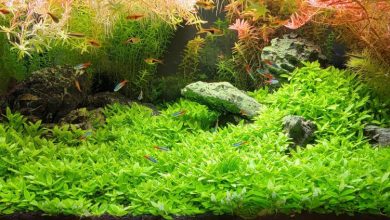
A lush green carpet can completely transform the look of a planted aquarium, and Micro Sword (Lilaeopsis brasiliensis) is one of the best plants for creating that natural effect. With its slender, grass-like leaves and creeping growth habit, this South American species gradually spreads across the substrate, producing a soft, meadow-like foreground that complements rocks, driftwood, and larger aquatic plants. While it takes patience to establish, the long-term results are well worth the wait.
This guide covers everything you need to know about Micro Sword care, including lighting, substrate, CO₂, fertilization, planting techniques, propagation, trimming, and practical tips for growing a healthy, vibrant carpet in your freshwater aquarium.
What Is Micro Sword?
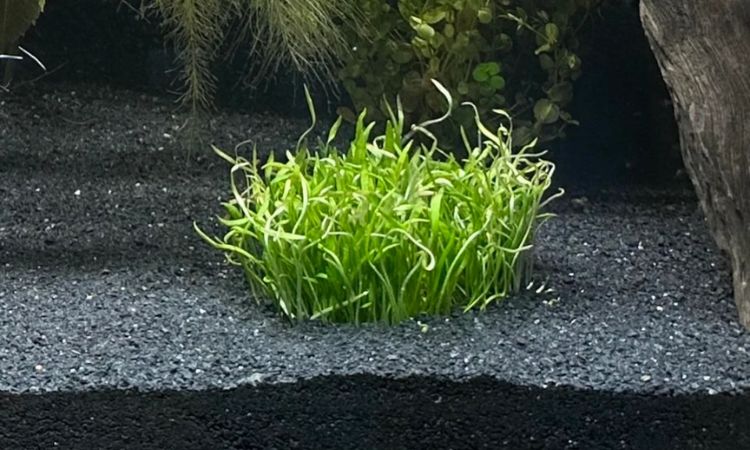
Micro Sword is a popular carpeting plant valued for its fine, grass-like appearance and ability to create a natural-looking foreground in freshwater aquariums. Instead of forming a perfectly uniform lawn, it develops small clusters of narrow leaves connected by creeping runners, giving planted tanks a softer, more organic look. Although it grows more slowly than many other carpeting species, its compact size and relatively simple care requirements have made it a favorite among aquascapers of all experience levels.
Scientific Name & Origin (Lilaeopsis brasiliensis / Lilaeopsis novae-zelandiae)
The name Micro Sword is most commonly associated with Lilaeopsis brasiliensis, a true aquatic plant native to South America, particularly Brazil and neighboring regions. It belongs to the Apiaceae family and naturally grows along shallow riverbanks, wetlands, and slow-moving streams.
You may also encounter Lilaeopsis novae-zelandiae in the aquarium trade. Native to New Zealand and parts of Australia, this closely related species has a very similar appearance and care requirements. Because the two species are difficult to distinguish when young, retailers sometimes use the common name “Micro Sword” for either one.
For most aquarists, their husbandry is virtually identical. Both species produce creeping stolons, develop narrow green leaves, and perform best as foreground plants in planted aquariums.
Appearance and Growth Habit
Micro Sword forms dense rosettes of slender, bright green leaves that typically grow 2–4 inches (5–10 cm) tall, though height varies depending on lighting and maintenance.
The plant spreads by producing horizontal runners, or stolons, beneath the substrate. Each runner develops new plantlets that eventually root and expand the carpet. Given enough time, individual clumps connect to form continuous ground cover across the aquarium floor.
Under stronger lighting and stable CO₂ levels, Micro Sword usually remains shorter and denser, producing a compact, lawn-like carpet. In lower-light aquariums, the leaves often grow taller and become more widely spaced as the plant reaches for available light.
Because of its naturally slow to moderate growth rate, Micro Sword requires patience during the first few months. Once established, however, it becomes much easier to maintain and steadily fills empty spaces through new runners.
Micro Sword vs. Dwarf Hairgrass vs. Dwarf Sagittaria
Choosing the right foreground plant depends on the appearance you’re trying to achieve, your aquarium setup, and how much maintenance you’re willing to perform.
| Feature | Micro Sword | Dwarf Hairgrass | Dwarf Sagittaria |
| Scientific Name | Lilaeopsis brasiliensis | Eleocharis parvula | Sagittaria subulata |
| Leaf Appearance | Flat, narrow, grass-like blades | Thin, hair-like leaves | Broader ribbon-shaped leaves |
| Typical Height | 2–4 in (5–10 cm) | 2–6 in (5–15 cm) | 4–12 in (10–30 cm) |
| Growth Rate | Slow to moderate | Moderate to fast | Fast |
| Spreads By | Underground runners | Underground runners | Underground runners |
| Lighting Needs | Medium to high | Medium to high | Low to medium |
| CO₂ Requirement | Optional but beneficial | Strongly recommended for dense carpets | Not required |
| Best Placement | Foreground | Foreground | Foreground to midground |
| Maintenance | Low to moderate | Moderate | Low |
If your goal is a natural meadow with slightly wider grass blades, Micro Sword is an excellent choice. For a finer, manicured carpet, Dwarf Hairgrass is often preferred, especially in high-tech aquariums with CO₂ injection. If you want a hardy plant that grows quickly and tolerates lower light, Dwarf Sagittaria offers an easier alternative, although it usually grows too tall to maintain a true carpet without regular trimming.
Ideal Tank Conditions
Creating the right environment from the beginning makes a huge difference in how quickly Micro Sword establishes itself. While this carpeting plant isn’t the most demanding species available, it performs best in stable, well-maintained aquariums with consistent lighting, healthy root nutrition, and minimal fluctuations in water chemistry. Once established, it spreads naturally through runners, gradually forming a lush foreground carpet.
Lighting Requirements (Low vs. High Light Comparison)
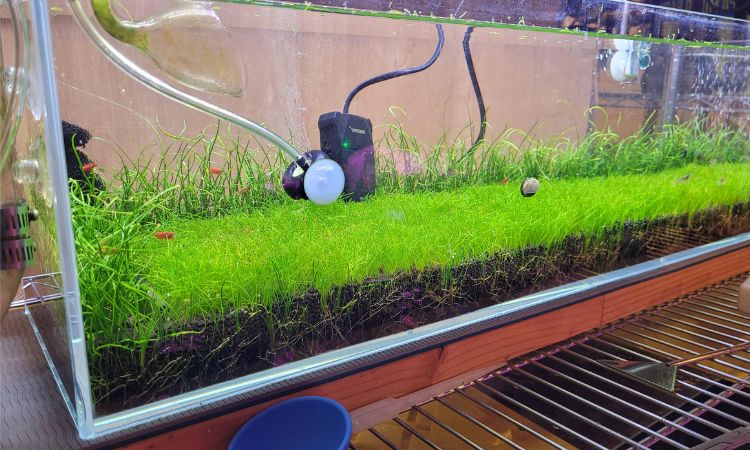
Lighting has the greatest influence on Micro Sword’s appearance and growth habit. Although it can survive under moderate conditions, stronger illumination produces a much denser and more attractive carpet.
| Light Level | Plant Response | Best For |
| Low Light (Below 20 PAR) | Survival is possible, but growth is very slow. Leaves become taller and more widely spaced, while runner production is limited. | Low-maintenance aquariums where carpeting speed is not a priority. |
| Medium Light (20–35 PAR) | Healthy growth with gradual runner formation. Leaves remain relatively compact, making this the minimum level recommended for most hobbyists. | Standard planted tanks and beginner-friendly setups. |
| High Light (35–60+ PAR) | Faster horizontal spread, shorter blades, and a much thicker carpet. Requires balanced nutrients and good maintenance to prevent algae. | High-tech aquascapes and dense foreground carpets. |
Aim for approximately 8–10 hours of light daily. Longer photoperiods rarely improve growth and often increase the risk of nuisance algae.
CO₂ — Is It Required?
Micro Sword can be grown successfully without supplemental CO₂, making it suitable for many low-tech planted aquariums. However, patience is essential because the plant establishes slowly and sends out runners at a much slower pace.
Adding pressurized CO₂ dramatically improves overall performance. A concentration of 20–30 ppm encourages quicker root development, tighter leaf spacing, and more frequent runner production. Instead of growing upward, the plant stays low against the substrate, creating the classic lawn-like appearance that aquascapers seek.
For hobbyists hoping to achieve a thick carpet within a few months rather than waiting much longer, stable CO₂ injection is one of the most effective upgrades.
Water Parameters (Temperature, pH, GH/KH)
Micro Sword adapts well to a broad range of tropical freshwater conditions, provided sudden parameter swings are avoided.
| Parameter | Recommended Range |
| Temperature | 70–82°F (21–28°C) |
| pH | 6.0–7.5 |
| General Hardness (GH) | 3–12 dGH |
| Carbonate Hardness (KH) | 2–8 dKH |
Rather than chasing exact numbers, prioritize consistency. Stable water chemistry supports healthy root systems and reduces transplant stress, especially during the first several weeks after planting.
Weekly water changes of 20–30% help replenish minerals, remove excess organic waste, and maintain favorable conditions for steady growth.
Substrate Type and Depth
Because Micro Sword feeds primarily through its roots, substrate quality plays a major role in long-term success.
A nutrient-rich aquarium soil provides the best foundation by supplying essential minerals directly to the root zone. Active substrates also make it easier for delicate roots to anchor securely while encouraging faster runner production.
If you’re using inert gravel or sand, supplement the substrate with root tabs every couple of months to replace depleted nutrients. Without adequate root nutrition, growth often becomes sparse, leaves may lose their rich green color, and carpeting slows considerably.
A substrate depth of approximately 2–3 inches (5–7.5 cm) gives the roots enough room to spread while keeping the foreground stable. Fine-grained substrates are generally preferred because they allow new runners to travel easily beneath the surface and produce evenly spaced daughter plants across the aquarium floor.
How to Plant Micro Sword (Step-by-Step)
Planting Micro Sword correctly is just as important as providing the right lighting and nutrients. Most carpeting failures happen because the plant is installed in large clumps, buried too deeply, or uprooted before the roots have a chance to establish. Taking a few extra minutes during planting will give you a healthier carpet that fills in much more evenly over time.
Preparing the Substrate
Start with a fine-grained substrate that allows delicate roots to penetrate easily. Nutrient-rich aquasoil is ideal because Micro Sword is a strong root feeder, but fine gravel or sand can also work when supplemented with quality root tabs.
Before planting, level the substrate and aim for a depth of 2–3 inches (5–7.5 cm). A smooth, even surface helps runners spread in every direction instead of encountering uneven areas that interrupt carpet formation.
If you’re using a tissue culture cup or potted specimen, rinse it thoroughly before planting. Remove all nutrient gel or rock wool, as any remaining material can interfere with root growth and water circulation around the crown.
Separating and Trimming Runners or Plugs
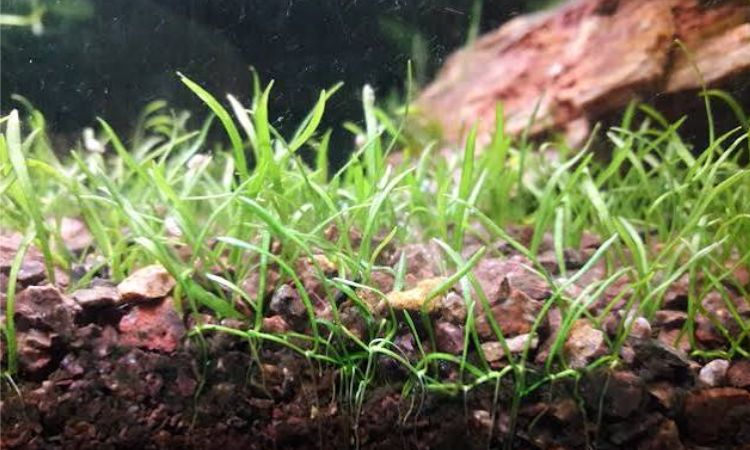
Avoid planting the entire pot as one large clump. Instead, gently divide the plant into many small portions, each containing 4–8 leaves with healthy roots attached.
Separating the plant may seem time-consuming, but it dramatically improves long-term coverage. Smaller plugs establish faster, receive better water circulation, and produce runners in multiple directions instead of competing with neighboring shoots.
Inspect the roots while dividing the plant. Trim away damaged, mushy, or unusually long roots, but leave healthy white roots intact. Removing dead material helps the new plant focus its energy on producing fresh growth.
Planting Technique with Tweezers
Long aquascaping tweezers make planting much easier and help prevent the fine roots from floating back to the surface.
Grip each small plug near its base, insert it into the substrate at a slight angle, and push the roots about 1–1.5 inches (2.5–4 cm) below the surface. Slowly pull the tweezers out while gently holding the plant in place so it remains anchored.
Keep the crown—the point where the leaves emerge—just above the substrate. Burying the crown can cause rot, while leaving too many roots exposed makes it difficult for the plant to establish itself.
Spacing for Faster Carpeting
Leave approximately 1–2 inches (2.5–5 cm) between each plug. Although the spacing may look sparse at first, this gives every section enough room to spread naturally through runners.
Planting too closely often creates unnecessary competition for light and nutrients, while overly large gaps increase the time needed to achieve full coverage. Even spacing encourages uniform growth and produces a smoother, more natural-looking carpet across the foreground.
If you’re working with a large aquarium, plant in a staggered pattern instead of perfectly straight rows. This creates a more organic appearance as the carpet matures.
Post-Planting Care (First 2 Weeks)
The first couple of weeks are all about helping the roots establish. During this period, avoid moving the plants unless they become completely dislodged.
Provide 8–10 hours of consistent lighting, maintain stable water parameters, and keep nutrient levels balanced. If you’re using CO₂, maintain a stable concentration rather than making frequent adjustments, as sudden fluctuations can slow acclimation.
Expect very little visible growth during the first week. Micro Sword typically invests its energy below the substrate by developing roots before producing new leaves or runners. Once the root system is established, fresh shoots begin appearing and horizontal runners gradually connect the individual plugs into a continuous carpet.
Perform 20–30% weekly water changes to maintain excellent water quality, and remove any melting or damaged leaves promptly. This helps direct the plant’s energy toward healthy new growth while reducing the chance of algae settling on older foliage.
How to Grow a Full Micro Sword Carpet
A lush Micro Sword carpet doesn’t happen overnight. This plant spreads by sending runners beneath the substrate, so steady growth depends on consistent care rather than quick fixes. With the right combination of lighting, nutrients, and regular maintenance, those small plugs gradually connect into a thick, natural-looking foreground.
Light and CO₂ Combos That Speed Up Carpeting
Micro Sword grows under moderate lighting, but stronger light paired with stable CO₂ produces the fastest results.
In a low-tech aquarium with medium light and no CO₂, expect slow but steady growth. The leaves tend to grow slightly taller, and new runners appear less frequently. This setup works well for hobbyists who don’t mind waiting longer for full coverage.
A high-tech planted tank with medium-high lighting and 20–30 ppm of stable CO₂ encourages the plant to stay short, produce tighter foliage, and send out runners much more aggressively. This combination creates the dense, lawn-like appearance seen in many professional aquascapes.
Regardless of your setup, maintain a consistent 8–10 hour photoperiod. Extending the lighting period rarely speeds growth and often leads to algae before it benefits the carpet.
Fertilization and Dosing Schedule (Root Tabs vs. Liquid Fertilizers)
Since Micro Sword absorbs much of its nutrition through its roots, the substrate should be the primary source of nutrients.
In aquasoil, newly planted carpets usually have enough nutrition for the first few months. Once growth begins to slow, replenish the root zone with fresh root tabs every 2–3 months, following the manufacturer’s recommendations.
If you’re using inert sand or gravel, root tabs become much more important. Place them a few inches apart beneath the carpet to ensure nutrients are available across the entire foreground rather than in isolated pockets.
Liquid fertilizers complement root feeding by supplying nutrients directly to the water column. A complete all-in-one fertilizer dosed 2–3 times per week, or according to the product label, helps provide nitrogen, phosphorus, potassium, iron, and trace elements needed for healthy leaves and steady runner production.
Trimming Technique to Encourage Lateral Spread
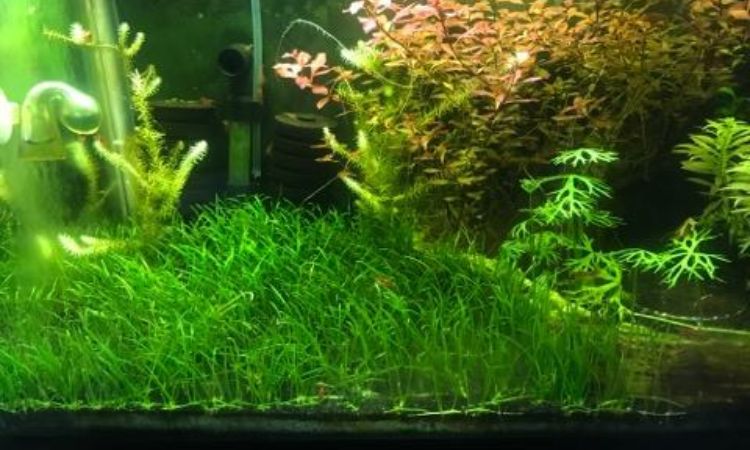
Regular trimming helps keep the carpet dense instead of allowing individual blades to become tall and uneven.
Once the leaves reach about 2–3 inches (5–7.5 cm), use curved aquascaping scissors to trim only the upper portion of the foliage. Avoid cutting too close to the crown, as this can temporarily slow growth.
Removing taller blades allows more light to reach younger shoots below, encouraging the plant to produce additional runners rather than directing energy into vertical growth. After each trim, the carpet gradually becomes thicker and more uniform.
During maintenance, remove loose clippings with a net or siphon so they don’t decompose among the plants or contribute to algae problems.
Timeline Expectations (Weeks to Full Carpet)
Micro Sword rewards patience more than speed. Most of the early growth happens below the substrate as the roots establish themselves.
Under moderate lighting without CO₂, expect the first noticeable runners after 4–8 weeks, with a well-developed carpet often taking 4–6 months or longer, depending on planting density and overall tank conditions.
In high-light aquariums with stable CO₂ and consistent fertilization, new runners typically appear within 2–4 weeks. A dense foreground can develop in approximately 8–12 weeks when healthy plugs are planted closely and maintained properly.
The quickest route to a full carpet isn’t simply increasing light or fertilizer—it’s providing stable conditions week after week. Consistent care allows Micro Sword to spread naturally, creating a thick, vibrant foreground that continues improving as the aquarium matures.