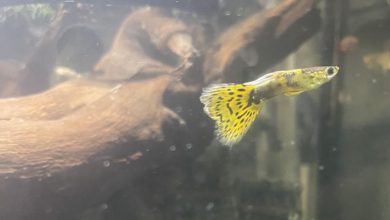
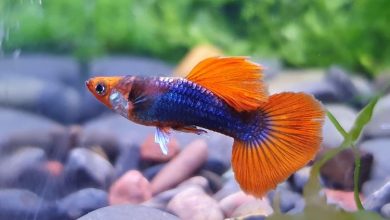
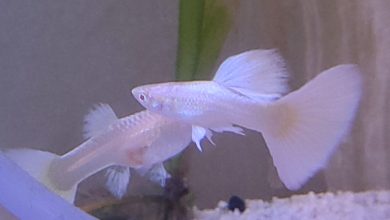
Endler guppies (Poecilia wingei) are small, colorful freshwater fish known for their peaceful nature, active behavior, and easy care requirements. With their bright patterns and simple breeding habits, they are a popular choice for both beginner and experienced aquarium keepers.
Although closely related to common guppies, Endler guppies are a separate species with unique traits. This guide covers everything you need to know about their tank size, water conditions, feeding needs, breeding, and daily care.
What is an Endler Guppy? Origins and Characteristics
Endler guppies, also known as Endler’s livebearers, are small freshwater fish scientifically known as Poecilia wingei. Native to Venezuela, these colorful livebearers were originally found in warm, shallow waters with dense vegetation, algae growth, and mineral-rich conditions. They became popular among aquarium hobbyists because of their vibrant colors, active personalities, and ability to thrive in a wide range of aquarium environments.
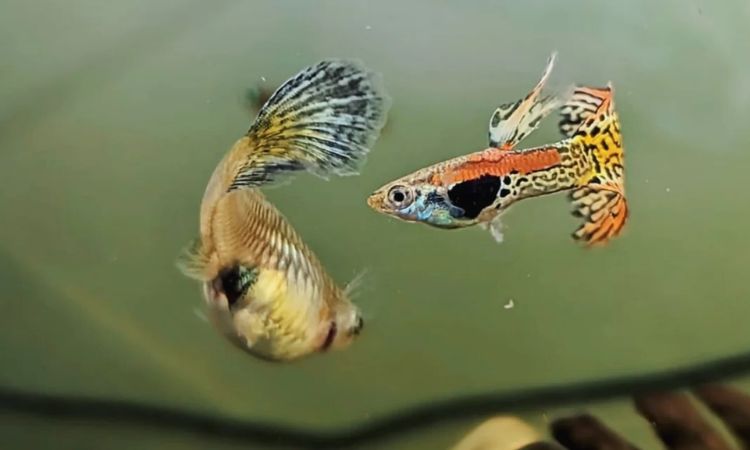
Although they are often sold alongside common guppies and are sometimes called “Endler guppies,” Endler’s livebearers are a separate species from the common guppy (Poecilia reticulata). The two species are closely related and can successfully breed together, producing fertile offspring, but pure Endlers have distinct traits that set them apart.
Scientific Profile
The main difference between Endler’s livebearers and common guppies is their size, body shape, and natural appearance.
Endler’s livebearers are typically smaller and more streamlined, with males reaching around 1 inch (2.5 cm) in length and females growing slightly larger at about 1.5–2 inches (4–5 cm). Their bodies are slim and athletic, allowing them to move quickly through the aquarium. Common guppies are usually larger, with bulkier bodies and more exaggerated fin shapes due to years of selective breeding.
Unlike many fancy guppy strains that have been heavily bred for specific colors and large tails, wild-type Endlers developed their appearance naturally. This has helped them maintain a reputation for being hardy, adaptable, and easy to care for.
Male Endlers are especially recognizable because of their compact size, intense coloration, and active display behavior. Females are larger, rounder, and much less colorful, making the difference between sexes easy to identify.
Appearance and Colors
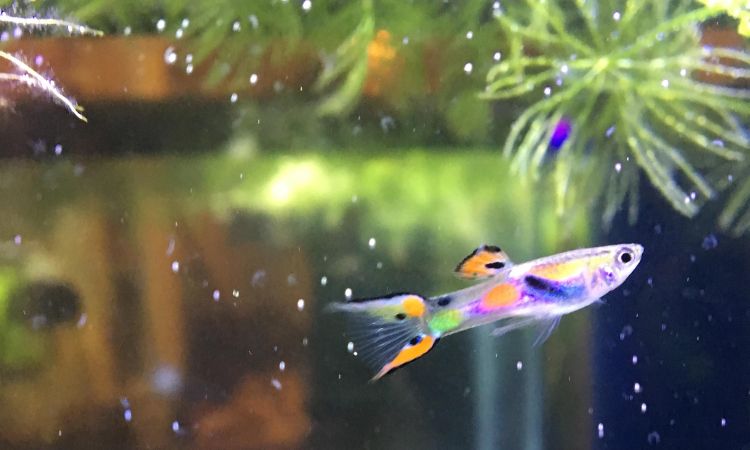
The biggest attraction of Endler guppies is their incredible coloration. Male Endlers look like tiny swimming jewels, often displaying bright combinations of neon orange, metallic green, blue, yellow, and black patterns across their bodies and fins.
Wild-type Endlers commonly show:
- Bright orange patches along the body and tail
- Metallic green or blue highlights
- Dark black bars or spots
- Iridescent patterns that shimmer under aquarium lighting
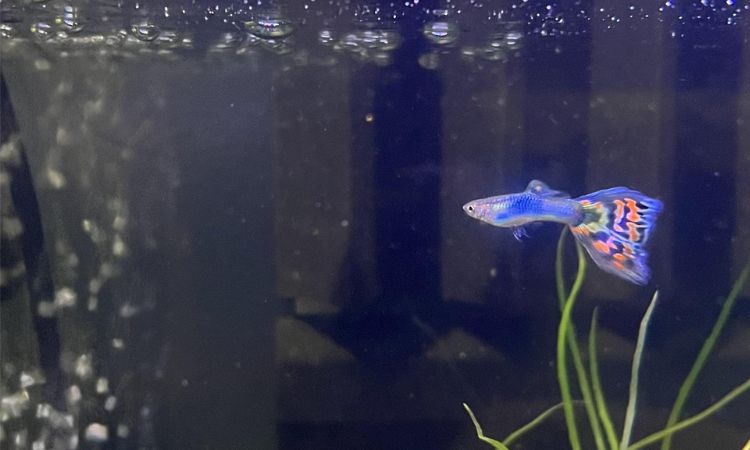
Selective breeding has also produced many beautiful varieties, including hybrid strains created by crossing Endlers with guppies. These hybrids can display a wider range of colors and patterns, such as tiger markings, cobra-like designs, and intense red or yellow coloration.
Female Endlers have a much simpler appearance compared with males. They are usually silver, gray, or pale gold with a rounded abdomen and a subtle appearance. While they may not have the flashy colors of males, females play an important role in maintaining a healthy breeding colony.
Lifespan and Temperament
With proper care, Endler guppies typically live around 2 to 3 years. Their lifespan depends on factors such as genetics, water quality, diet, and stress levels. Fish kept in clean, stable conditions with a balanced diet often remain active and healthy throughout their lives.
Endler’s livebearers are peaceful, social fish that enjoy swimming in groups. They spend much of their time exploring the upper and middle areas of the aquarium, searching for food, interacting with tank mates, and displaying natural behaviors.
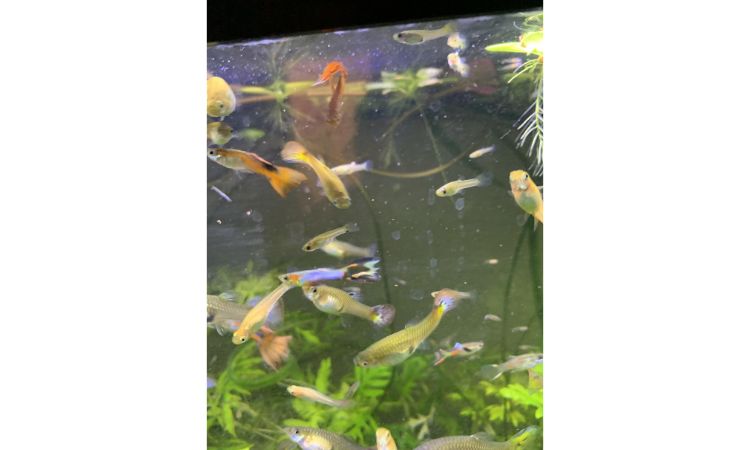
Because males are constantly interested in breeding, it is best to keep more females than males. A ratio of around two to three females for every male helps reduce stress and prevents females from being repeatedly chased.
Their calm nature makes Endlers excellent choices for peaceful community tanks. They can live alongside other small, non-aggressive species such as small tetras, rasboras, danios, and corydoras, as long as tank mates are not large enough to view them as food.
Small, colorful, and full of energy, Endler guppies offer many of the best qualities of livebearers without requiring complicated care. Their combination of beauty, personality, and resilience has made them one of the most popular nano fish among aquarium keepers.
Endler Guppy Tank Size and Setup Requirements
Endler guppies may be tiny, but they are active swimmers that appreciate a well-planned aquarium. A properly sized tank not only gives them enough room to explore but also helps maintain stable water conditions, which is especially important because Endlers breed quickly when kept in mixed-sex groups.
Minimum Tank Size
A 5-gallon aquarium is the absolute minimum for keeping a small group of Endler guppies, such as a trio consisting of one male and two females. However, this size requires careful maintenance because water conditions can change quickly in smaller tanks, and a breeding group can outgrow the space faster than expected.
For most hobbyists, a 10-gallon tank or larger is a better choice. A 10-gallon aquarium provides more swimming space, allows for better filtration, and gives fry more places to hide once breeding begins. If you plan to keep a growing colony, mix Endlers with other peaceful nano fish, or maximize their natural behaviors, a 20-gallon tank or larger will offer a much more comfortable environment.
Because Endler guppies reproduce frequently, it is always wise to plan ahead. A small group can quickly become a large population when conditions are ideal.
Water Parameters for Endler Guppies
One reason Endler guppies are popular with beginners is their adaptability. They can tolerate a range of water conditions, but they perform best when their aquarium closely matches the warm, mineral-rich environments where they originated.
Temperature
The ideal temperature range for Endler guppies is:
72°F to 82°F (22°C to 28°C)
Keeping the temperature around 76–78°F (24–26°C) is a good balance for most aquariums. Warmer water can encourage faster growth and breeding, while cooler temperatures may slow their metabolism and reproduction.
Although Endlers can tolerate room-temperature aquariums in some homes, using a reliable aquarium heater helps prevent sudden temperature changes that can stress fish.
pH Level
Endler guppies generally prefer:
pH: 7.0 to 8.0
They naturally thrive in slightly alkaline water, although they can adapt to a wider range of pH levels. Stability is more important than chasing a perfect number, so avoid making sudden adjustments unless necessary.
Water Hardness
Endlers prefer harder water with plenty of dissolved minerals.
Recommended hardness:
15–30 dGH
Hard water supports their overall health, coloration, and breeding success. While they can survive in softer water, long-term exposure may make them more vulnerable to stress and health problems.
Regular water testing helps ensure parameters remain stable, especially in smaller aquariums.
Filtration and Water Flow
Endler guppies produce a relatively small amount of waste, but clean water is still essential for keeping them healthy. A good filtration system helps remove toxins, maintain oxygen levels, and support beneficial bacteria.
A sponge filter is one of the best choices for Endler tanks because it provides gentle filtration without creating strong currents. This is especially useful in breeding tanks because the soft sponge material prevents tiny fry from being pulled into the filter.
Hang-on-back filters can also work well, especially in larger aquariums, but the water flow should not be too strong. Endlers are energetic swimmers, but constant exposure to powerful currents can exhaust these small fish.
For fry protection, always consider adding a pre-filter sponge or covering filter intakes to prevent newborn fish from being accidentally pulled inside.
Aquascaping and Vegetation
A planted aquarium is one of the best setups for Endler guppies. In their natural habitat, these fish live among vegetation, algae, and calm waters where plants provide both shelter and feeding areas.
Dense planting offers several benefits:
- Creates hiding spaces for fry
- Reduces stress by providing cover
- Encourages natural grazing behavior
- Improves water quality by absorbing excess nutrients
Excellent plant choices include:
- Java moss – provides excellent cover for newborn fry
- Hornwort – fast-growing and easy to maintain
- Guppy grass – one of the best plants for breeding colonies
- Java fern – hardy and beginner-friendly
- Water sprite – provides floating cover and shelter
- Floating plants – create shaded areas near the surface
A combination of floating plants and dense vegetation works especially well because Endlers spend much of their time in the upper and middle sections of the aquarium.
Endler Guppy Diet and Feeding Guidelines
Endler guppies are small but energetic fish with a healthy appetite. In the wild, they feed on a variety of foods, including algae, plant matter, tiny insects, microorganisms, and other small organisms found in their environment. Because they are omnivores, they benefit from a balanced diet that includes both plant-based nutrients and protein sources to support growth, immunity, and their bright natural colors.
As active surface feeders, Endlers often spend their time near the top and middle areas of the aquarium searching for food. Their small mouths mean they need appropriately sized meals, so choose foods that are easy for them to consume. A varied diet is especially important for breeding groups, growing juveniles, and males that need proper nutrition to maintain their intense coloration.
High-quality commercial foods should form the foundation of their daily diet. Small micro-pellets, finely crushed tropical flakes, and spirulina-based flakes are excellent choices because they provide essential nutrients while being small enough for Endlers to eat comfortably. Look for formulas designed for tropical fish that contain a good balance of protein, vitamins, and plant ingredients.
Spirulina flakes are particularly beneficial because they provide algae-based nutrition that supports digestion and helps enhance the vibrant greens, oranges, and blues commonly seen in male Endlers. Rotating between different quality foods can prevent nutritional gaps and keep fish interested during feeding time.
For additional variety, offer live or frozen foods as occasional treats. Protein-rich options such as baby brine shrimp, daphnia, bloodworms, and microworms can help improve growth, breeding condition, and overall coloration. Daphnia are especially useful because they provide nutrients while also supporting healthy digestion.
While Endlers are enthusiastic eaters, they do not need large meals. Their small stomachs are best suited to frequent but controlled feedings. Feed a small amount once or twice daily, providing only what they can finish within about two minutes. Any uneaten food should be removed because excess food quickly breaks down and can negatively affect water quality.
How to Breed Endler Guppies Successfully
Breeding Endler guppies is one of the easiest and most rewarding parts of keeping these colorful livebearers. Unlike many aquarium fish that require specific water conditions or breeding triggers, Endlers reproduce naturally when males and females are kept together in a healthy environment. With clean water, proper nutrition, and enough space, a small group can quickly become a thriving colony.
Because Endlers give birth to live young rather than laying eggs, there is no need for special spawning setups. Female Endlers carry developing fry internally and release fully formed babies that are immediately able to swim and search for food.
High Reproduction Rate
Endler guppies are known for their impressive breeding ability. Once mature males and females are introduced into the same aquarium, breeding usually begins without any additional effort from the aquarist.
A female can produce a new batch of fry approximately every 23–28 days, depending on factors such as water temperature, health, and nutrition. Each birth may produce anywhere from a few fry to several dozen babies.
This rapid reproduction is one of the reasons Endlers are so popular among breeders, but it also means population management is important. A small group can grow quickly, so always consider whether your aquarium has enough space for future generations.
How to Tell Male and Female Endlers Apart
Identifying the sex of Endler guppies is relatively simple because males and females look very different.
Male Endlers are much smaller, usually reaching around 1 inch (2.5 cm) in length. Their bodies are slim and covered with bright colors, including metallic greens, oranges, blues, reds, and black markings. These vibrant patterns are one of the main reasons hobbyists love keeping male Endlers.
Females are larger, often reaching 1.5–2 inches (4–5 cm), with a rounder body shape. Their coloration is much more subtle, usually appearing silver, gray, or pale gold. Mature females may also develop a dark gravid spot near the anal fin, which becomes more noticeable as they carry developing fry.
Choosing the Right Breeding Ratio
When keeping both male and female Endlers together, maintaining the correct ratio is important for the health and comfort of the females.
A good breeding ratio is:
1 male for every 2–3 females
Male Endlers are constantly interested in breeding and may repeatedly chase females. If too many males are kept together, individual females can become stressed and exhausted from constant attention.
Having more females spreads out the males’ attention and allows females enough time to rest between pregnancies. This creates a calmer environment and often leads to healthier adults and stronger fry.
Protecting Endler Fry
Although Endler guppies are excellent parents in terms of reproduction, they do not provide parental care after birth. Adult fish, including the parents, may eat newborn fry if given the opportunity.
To improve fry survival, provide plenty of hiding areas throughout the aquarium. Dense plant growth is one of the most effective natural solutions.
Excellent fry-protection plants include:
- Guppy grass
- Java moss
- Water sprite
- Hornwort
- Floating plants
These plants create small spaces where newborn fry can hide until they become large enough to avoid being eaten.
For breeders who want to maximize survival rates, a separate breeding tank or carefully used breeding box can also be helpful. However, moving females too frequently can cause unnecessary stress, so many hobbyists prefer a heavily planted main aquarium where fry can grow naturally.
Raising Endler Fry
Newborn Endler fry are small but relatively easy to raise compared with many other aquarium species. They are born fully developed and begin swimming immediately after birth.
During their first days, fry can feed on microscopic organisms such as infusoria and biofilm found naturally in mature planted tanks. However, providing additional food helps them grow faster and develop stronger bodies.
Good first foods include:
- Liquid fry food
- Powdered fry food
- Finely crushed flakes
- Newly hatched baby brine shrimp
- Microworms
Baby brine shrimp are especially valuable because they provide high-quality protein that supports rapid growth and healthy development.
Feed fry small amounts several times a day rather than one large feeding. Their tiny stomachs cannot handle large meals, and excess food can quickly reduce water quality.
With proper nutrition and clean water, young Endlers grow quickly. Males often begin developing their first colors within a few weeks, while females mature slightly later.
Important Note About Hybridization
Endler guppies can easily interbreed with common guppies (Poecilia reticulata) and other Endler varieties. While these crosses can create beautiful color combinations, they will no longer represent a pure Endler bloodline.
If preserving specific genetics or maintaining a pure strain is important, keep Endlers in a species-only aquarium. Avoid mixing them with common guppies or different Endler strains unless you intentionally want hybrid offspring.
Many hobbyists choose separate tanks for different varieties to maintain unique patterns and colors over generations.