How to Grow and Care for Micranthemum Carpeting Plants in Your Aquarium

Few things are as rewarding in aquascaping as watching a small group of tiny green plants slowly spread across the substrate and become a living carpet.
Micranthemum carpeting plants have earned a place in many freshwater aquariums thanks to their attractive appearance and relatively manageable care requirements. Whether you are building your first planted tank or refining an advanced aquascape, learning how these plants grow will help you create a healthier and more impressive foreground.
What Is Micranthemum?
Micranthemum is a group of small aquatic plants known for their fine leaves, compact growth, and use in planted aquariums. Many species are valued for creating natural-looking foreground areas because their delicate foliage adds texture without overpowering other plants or hardscape elements.
In the aquarium hobby, the most recognized varieties include Micranthemum tweediei “Monte Carlo” and Micranthemum umbrosum. Although they share a similar appearance, they have different growth habits and are used differently in aquascaping.
Botanical Background and Characteristics of Micranthemum
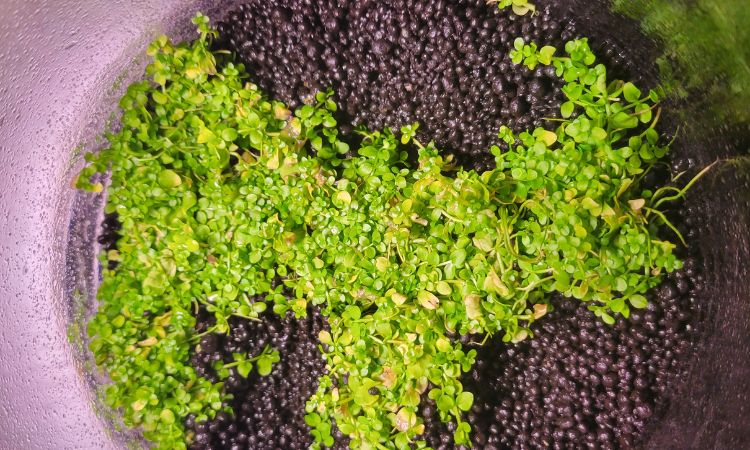
Micranthemum species belong to the family Linderniaceae and are small-growing plants that naturally occur in wet environments, including shallow freshwater areas and moist habitats. They typically have thin stems with small, rounded to oval leaves arranged along the growth points.
In aquariums, Micranthemum is appreciated for its fine leaf structure and ability to create dense plant growth. Depending on the species and growing conditions, it can either spread horizontally across the substrate or grow upward as a compact stem plant.
Growth quality depends heavily on lighting, nutrients, and carbon availability. Under stronger lighting and stable conditions, many Micranthemum varieties develop tighter growth with smaller spaces between leaves. In lower-light setups, stems may stretch upward as the plant searches for more light.
Micranthemum Umbrosum vs. Micranthemum Monte Carlo
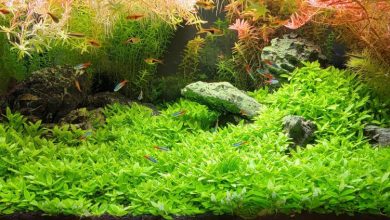
Micranthemum Monte Carlo (Micranthemum tweediei) is one of the most popular aquarium carpeting plants. It produces small, rounded green leaves on creeping stems that spread outward along the substrate. With proper planting and maintenance, it forms a dense carpet that works well in the foreground.
Monte Carlo is considered easier than many traditional carpeting plants because it can adapt to a wider range of aquarium conditions. It can grow without injected CO₂, although CO₂ supplementation, stronger lighting, and consistent fertilization will usually produce faster and denser coverage.
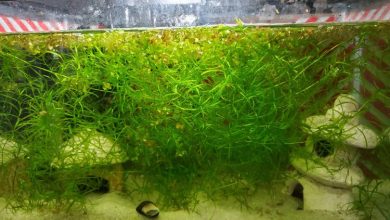
Micranthemum umbrosum, often called baby tears, has a different growth pattern. Instead of naturally creeping along the substrate, it tends to grow vertically as a stem plant with softer, rounded leaves. It is better suited for midground planting where it can create a bushy, delicate green background.
While Micranthemum umbrosum can be trimmed low, maintaining a true carpet requires more frequent pruning and stronger control over growth. Monte Carlo is generally the better choice for aquarists specifically looking for a low-growing foreground carpet.
Ideal Placement in Aquarium Layouts
Micranthemum Monte Carlo is primarily used in the foreground, where it can create a green carpet effect around rocks, driftwood, and open substrate. Its small leaves help create depth and make larger aquascapes appear more natural.
It is especially popular in Iwagumi-style aquariums, where a low carpet allows the hardscape to remain the main focal point. It can also be used in nature-style layouts to create grassy-looking slopes and transitions between different plant zones.
Micranthemum umbrosum is more commonly placed in the midground or background. Its taller growth adds volume and texture behind shorter foreground plants while maintaining a soft, natural appearance.
When choosing a placement, consider the final size and growth habit of the plant. Low-growing varieties like Monte Carlo are ideal for small aquariums and detailed aquascapes, while upright varieties like Micranthemum umbrosum are better for adding height and fullness to larger planted tanks.
Essential Requirements for Healthy Growth
Micranthemum ‘Monte Carlo’ is considered one of the more adaptable carpeting plants in the aquarium hobby, but achieving a thick, low-growing carpet requires more than simply placing it in the substrate. While it can survive in a variety of setups, its growth pattern is strongly influenced by lighting, carbon availability, nutrient supply, and overall aquarium stability. Providing the right conditions encourages the plant to spread horizontally instead of growing upward, creating the dense foreground carpet that makes Monte Carlo so popular.
Lighting
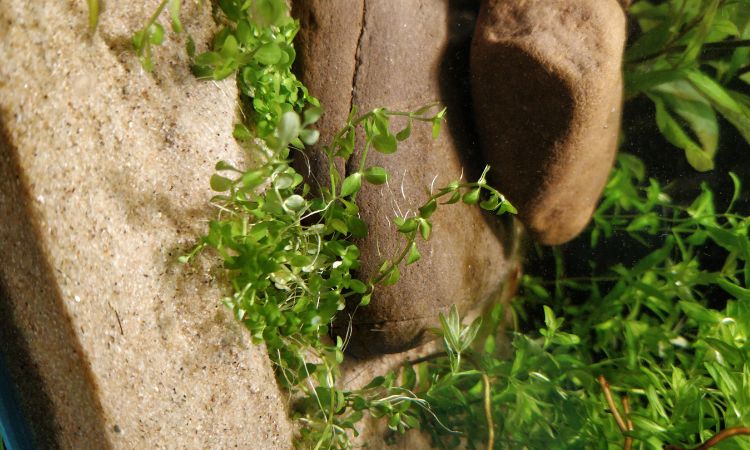
Lighting plays a major role in determining how Monte Carlo grows. In aquariums with sufficient light, the plant develops compact stems that creep along the substrate, while insufficient lighting often causes it to grow taller and more loosely as it reaches upward for energy.
For CO₂-injected aquariums, Monte Carlo generally performs well under moderate to high lighting. A light intensity around 50–60 PAR at the substrate level is often enough to encourage healthy carpeting growth when carbon dioxide and nutrients are consistently available. Stronger lighting, around 100 PAR or higher, can accelerate growth, especially in high-tech aquascapes, but it also increases the demand for proper CO₂ balance and fertilization.
In low-tech aquariums without added CO₂, higher light intensity is usually needed to improve the plant’s chances of spreading successfully. However, increasing light without addressing carbon availability can create algae problems because plants may not be able to use the available energy efficiently.
A photoperiod of around 6–8 hours per day is a practical starting point for most setups. Longer lighting periods do not always result in faster growth and can encourage algae if nutrient levels, CO₂, or maintenance routines are not balanced. Adjusting the lighting schedule based on plant growth and algae appearance is often more effective than simply increasing intensity.
CO2 Injection
Although Monte Carlo can survive without injected CO₂, additional carbon dioxide significantly improves its growth rate, density, and ability to form a tight carpet. Carbon is one of the most important building blocks plants use during photosynthesis, and supplying extra CO₂ allows Monte Carlo to produce new growth more efficiently.
In a CO₂-injected aquarium, Monte Carlo typically develops smaller, more compact leaves and spreads across the substrate more quickly. The plant is also better able to recover after trimming and compete with algae because it can maintain stronger, healthier growth.
Without CO₂ supplementation, Monte Carlo may still grow, especially in stable aquariums with good lighting and regular fertilization. However, the growth rate is usually slower, and the plant may be more likely to grow upward rather than form a dense horizontal mat. Success in non-CO₂ tanks depends heavily on maintaining strong lighting, consistent nutrients, and stable water conditions.
When using pressurized CO₂, stability is more important than simply adding large amounts. Rapid fluctuations in carbon levels can stress plants and contribute to algae issues. A consistent supply during the lighting period helps Monte Carlo maintain steady photosynthesis and encourages reliable carpet formation.
Water Parameters
Monte Carlo is relatively tolerant of different water conditions, making it suitable for many freshwater aquarium setups. It can adapt to a wide range of chemistry values, but stable parameters help reduce stress and promote healthier long-term growth.
A temperature range of approximately 68–82°F (20–28°C) works well for this species, with many planted aquariums maintaining temperatures around 72–78°F (22–26°C). Avoiding sudden temperature changes is more important than maintaining an exact number.
For pH, Monte Carlo can tolerate a broad range, roughly from 5.0 to 8.5, although slightly acidic to neutral water is commonly used in planted aquariums. A pH between 6.0 and 7.5 provides a comfortable range for most setups and works well alongside many community fish species.
The plant is also adaptable to different hardness levels and can grow in both soft and moderately hard water. Maintaining stable mineral levels is more important than trying to match a specific hardness value. Sudden changes in water chemistry can slow growth and may trigger melting or leaf loss as the plant adjusts.
Beyond basic water parameters, a mature and stable aquarium environment greatly improves Monte Carlo’s success. Consistent fertilization, adequate water circulation, and avoiding major disturbances around the substrate allow the plant to establish strong roots and gradually spread into a healthy foreground carpet.
Step-by-Step Planting Guide
Proper planting technique is one of the most important factors in successfully growing Micranthemum ‘Monte Carlo’. This plant spreads through creeping stems, but it needs time to develop a strong root system before it can create a stable carpet. Poor planting methods, such as placing large clumps too deeply or loosely anchoring stems, often result in pieces floating away before they have a chance to establish.
Whether you are starting with a tissue culture cup or a traditional potted portion, taking the time to prepare and plant Monte Carlo correctly will greatly improve its ability to grow horizontally across the substrate.
Preparing Tissue Culture Cups or Potted Bunches
Monte Carlo is commonly sold in two forms: tissue culture cups and nursery-grown pots. Both can grow successfully, but they require slightly different preparation before planting.
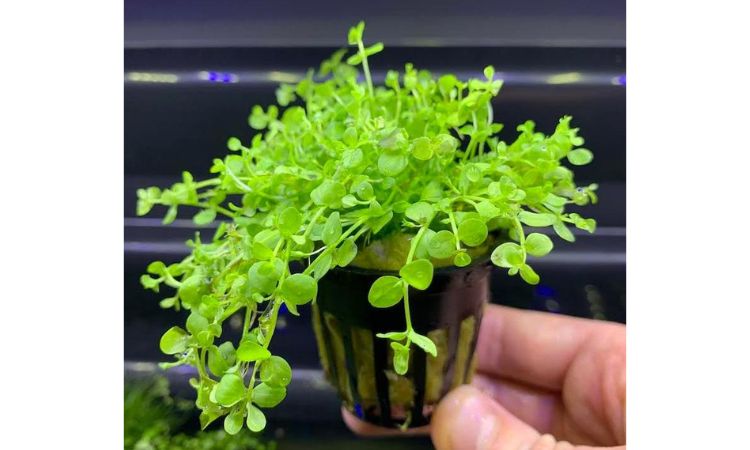
For tissue culture plants, begin by removing the plant from the container and gently rinsing away the nutrient gel under clean water. Separate the plant material carefully into smaller portions, removing any excess gel trapped around the roots. Tissue culture Monte Carlo often arrives as many small stems growing together, so avoid planting the entire mass as one large piece.
For potted plants, remove the plant from the plastic pot and gently separate the roots from the growing medium. Most aquarium plants are grown in rock wool or a similar material, which should be removed or reduced as much as possible before planting. Leaving a small amount behind is usually harmless, but large amounts can prevent the roots from reaching the substrate.
Before planting, inspect the plant for damaged or yellowing growth. Removing unhealthy sections allows the plant to focus energy on producing fresh roots and new leaves after being introduced to the aquarium.
Breaking Plants Into Small Plugs for Spacing
Monte Carlo grows best when planted in small portions rather than large clusters. Dividing the plant into smaller plugs gives each section more access to light, nutrients, and water circulation, helping it spread evenly across the foreground.
Use your fingers, scissors, or aquascaping tools to separate the plant into small pieces containing a few stems each. Individual strands can also be planted, although this process takes more time. Smaller portions generally establish better because they are less likely to trap debris or become detached from the substrate.
Space each plug about 1–2 inches apart depending on how quickly you want the carpet to fill in. Closer spacing creates faster coverage, while wider spacing allows the plant to spread naturally over time.
Avoid planting large bunches tightly together. Dense clumps may appear faster at first, but the inner stems often struggle to receive enough light and nutrients. As the plant grows, these weaker sections can detach and float, leaving gaps in the carpet.
Proper Planting Technique Using Aquascaping Tweezers to Prevent Floating
The way Monte Carlo is placed into the substrate has a major impact on whether it grows flat and spreads or becomes loose and floats around the aquarium.
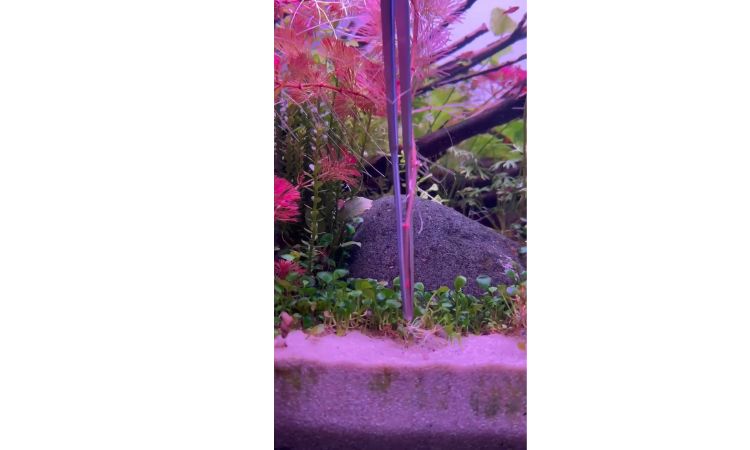
Using long aquascaping tweezers, gently grip each small portion near the base of the stems. Push the plant into the substrate until the roots and lower stems are covered, while keeping the leaves exposed above the surface. Planting too shallowly can allow the plant to lift out of the substrate, while burying the entire plant can slow growth or cause the lower portions to decay.
A nutrient-rich aquarium substrate is ideal because Monte Carlo develops a strong root system when it has access to available nutrients around the roots. Fine-grained substrates also make it easier for the plant to anchor securely compared with large gravel pieces.
After planting, avoid disturbing the substrate for several weeks. Fish, shrimp, or other animals that constantly dig through newly planted areas can easily uproot young Monte Carlo before it becomes established.
Once planted correctly, the initial growth period may seem slow as the plant focuses on root development. After the roots become established, new runners will begin spreading outward, gradually connecting the individual plugs into a continuous green carpet. Good planting technique during the first few days can make the difference between a struggling carpet and a healthy, evenly growing foreground.
Maintenance and Trimming Techniques
Once Micranthemum ‘Monte Carlo’ becomes established, regular maintenance is essential for keeping the carpet dense, healthy, and close to the substrate. Unlike slow-growing foreground plants that require little intervention, Monte Carlo can grow quickly under favorable conditions and may eventually form thick layers of overlapping stems. Without proper trimming, the upper growth can block light from reaching the lower sections, causing weaker growth and increasing the risk of the carpet lifting away from the substrate.
A consistent maintenance routine helps direct the plant’s energy toward lateral spreading while preventing common issues such as floating mats, decaying lower stems, and algae buildup.
Regular Trimming Schedules to Encourage Horizontal Runner Growth and Prevent Vertical Leggy Stems
Monte Carlo naturally wants to grow upward toward available light, especially when it is not trimmed regularly. While some vertical growth is normal during the early establishment phase, allowing the plant to grow too tall can result in a loose, uneven appearance instead of a compact foreground carpet.
Begin trimming once the plant reaches around 1–2 inches (2.5–5 cm) in height, depending on the desired aquascape style. Use sharp aquascaping scissors to cut across the top of the carpet, removing the taller growth and encouraging new shoots to spread outward along the substrate.
Regular trimming stimulates branching from the remaining stems, creating a thicker and more connected carpet over time. In high-light, CO₂-injected aquariums, Monte Carlo may require more frequent maintenance because faster growth leads to quicker vertical expansion. Lower-tech tanks typically need less frequent trimming because growth is slower.
When trimming, avoid removing too much plant material at once. Heavy pruning is possible with healthy Monte Carlo, but leaving some established growth behind helps the plant recover faster and continue spreading.
Preventing Floating Mats and Dead Zones at the Substrate Level
One of the most common problems with Monte Carlo carpets is the plant detaching from the substrate and floating upward. This usually happens when the carpet becomes too thick and the lower layers no longer receive enough light or water circulation.
As the upper layers continue growing, they can shade the older stems underneath. These buried sections may gradually weaken, lose their connection to the substrate, and begin to decay. Once the lower growth deteriorates, the entire mat can separate and float.
To prevent this issue, keep the carpet relatively thin through occasional trimming. Removing excess height allows light to reach the base of the plant and improves water movement through the carpet. Good circulation is especially important because dense carpets can trap organic waste and create areas with reduced oxygen levels.
If a section has already become detached or the lower growth appears unhealthy, remove the damaged portions with scissors or tweezers. Healthy top growth can often be replanted into the substrate to restart the carpet in affected areas.
Avoid allowing debris, dead leaves, or uneaten food to accumulate inside the carpet. Gentle maintenance with a siphon or careful cleaning around the foreground helps prevent the buildup of organic material that can weaken plant growth.
Dealing With Algae Control in High-Light and High-Nutrient Setups
Monte Carlo can grow quickly in high-energy aquariums, but faster plant growth also means the tank requires better balance between lighting, nutrients, and carbon availability. Excessive light combined with inconsistent CO₂ or nutrient levels can create conditions where algae takes advantage.
Newly planted Monte Carlo often goes through an adjustment period. During this time, older leaves may deteriorate while the plant produces new growth adapted to the aquarium environment. These older sections are more likely to collect algae because they are no longer actively growing. Removing heavily affected leaves and stems helps the plant focus energy on healthier new growth.
If algae appears on the carpet, avoid simply increasing maintenance without addressing the cause. Check whether the aquarium is receiving too much light, whether CO₂ levels are stable, and whether nutrients are being supplied consistently. Reducing the photoperiod slightly or improving circulation can often help restore balance.
In established aquariums, maintaining steady plant growth is one of the best forms of algae prevention. Healthy Monte Carlo competes with algae by actively using available nutrients and light. Regular trimming, stable water conditions, and careful observation will keep the carpet attractive while reducing long-term algae problems.