The Complete Guide to Dwarf Hairgrass: Care, Planting, and Carpet Growth Tips

Dwarf Hairgrass (Eleocharis) is one of the most popular carpeting plants for freshwater aquariums, thanks to its fine green blades and ability to spread through runners. Whether you are designing your first planted tank or adding texture to an established aquascape, this versatile aquatic grass can create a beautiful foreground when provided with suitable growing conditions. Learning how to plant, trim, and care for Dwarf Hairgrass is the key to developing a dense, healthy carpet.
What Is Dwarf Hairgrass?
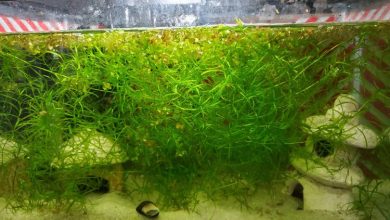
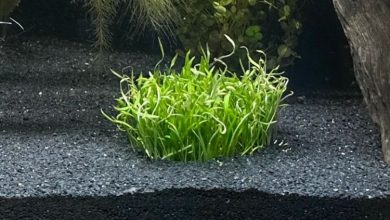
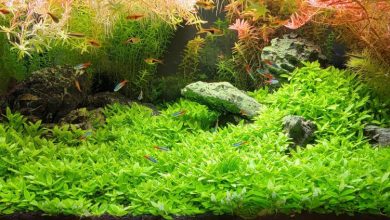
Dwarf Hairgrass is a freshwater carpeting plant from the Eleocharis genus, valued for its thin, grass-like leaves and spreading growth habit. Unlike traditional aquarium plants that grow from upright stems, Dwarf Hairgrass expands through underground runners that produce new shoots across the substrate. Over time, these runners can create a dense green carpet that resembles a miniature underwater meadow.
Several Eleocharis species are sold under the name Dwarf Hairgrass, with Eleocharis parvula and Eleocharis acicularis being among the most common in the aquarium trade. Depending on the variety and growing conditions, the plant may stay compact for a low foreground carpet or grow taller for a more natural grassy appearance.
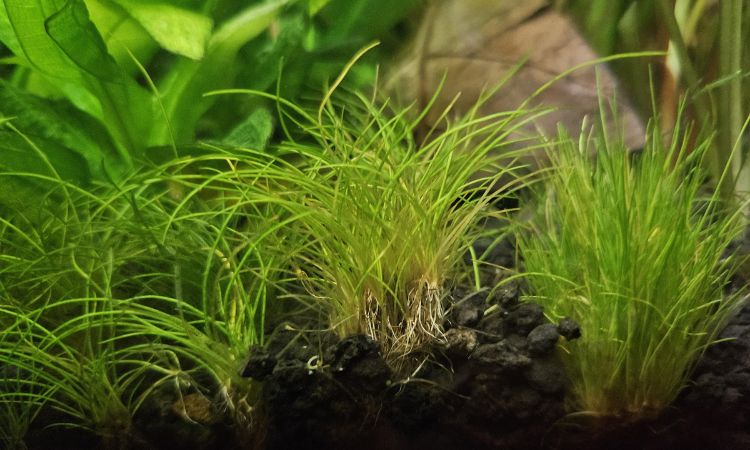
Dwarf Hairgrass is popular because it offers a balance between visual impact and manageable care requirements. It can grow in both low-tech aquariums and CO₂-injected setups, although stronger lighting, consistent nutrients, and added carbon typically produce faster spreading and a thicker carpet.
In aquascaping, this plant is mainly used in the foreground to add texture, depth, and a natural appearance. Its fine blades contrast well with larger-leaved plants, rocks, and driftwood, making it a versatile choice for beginner planted tanks, shrimp aquariums, and advanced aquascapes alike.
Dwarf Hairgrass Care Requirements
Dwarf hairgrass (Eleocharis species) is considered one of the more approachable carpeting plants, but achieving a dense, lawn-like appearance depends on providing the right growing conditions. While this grass can survive in a wide range of aquariums, it spreads most successfully when lighting, nutrients, substrate, and carbon availability are properly balanced. A healthy setup encourages the plant to produce runners across the substrate instead of growing tall and sparse.
Lighting Needs (PAR/Intensity, Duration)
Lighting is one of the most important factors for growing dwarf hairgrass into a compact carpet. This plant requires moderate to strong illumination to maintain short, dense blades and encourage horizontal runner growth. Under weak lighting, it may survive but often grows upward toward the light source, creating a thin, uneven appearance instead of a full foreground lawn.
For a planted aquarium, aim for approximately 35–50+ PAR at the substrate level for reliable carpeting results. Lower light setups can keep dwarf hairgrass alive, but growth will typically be slower and the blades may become taller. Higher light intensity can speed up spreading, especially when combined with CO₂ injection and consistent fertilization.
A photoperiod of around 8–10 hours per day is generally suitable for most aquariums. Longer lighting periods do not always improve growth and may increase the risk of algae problems if nutrients and carbon availability are not balanced. If algae begins appearing on the blades, reducing the lighting duration slightly is often more effective than simply increasing maintenance.
CO₂ Requirements (Injected vs. Non-CO₂ Feasibility)
Dwarf hairgrass does not strictly require supplemental CO₂, making it a popular choice for beginner and low-tech planted aquariums. Without added carbon, the plant can still grow and spread through runners, but the process is slower and the final carpet may take several months to develop.
For aquarists aiming for a thick, fast-growing foreground, pressurized CO₂ injection provides a noticeable advantage. Additional carbon improves photosynthesis, allowing the plant to produce new shoots more efficiently and form a denser carpet. In high-light aquariums, CO₂ becomes especially valuable because stronger lighting increases the plant’s demand for carbon and nutrients.
A non-CO₂ aquarium can still succeed with dwarf hairgrass by using moderate lighting, nutrient-rich substrate, and patience. However, growth expectations should be realistic. Instead of expecting a complete carpet within weeks, allow the plant time to establish roots and gradually expand.
Water Parameters (Temperature, pH, GH/KH, Hardness Tolerance)
Dwarf hairgrass is adaptable and can tolerate a fairly broad range of freshwater conditions. Stable water quality is usually more important than chasing exact numbers. Sudden changes in temperature, pH, or hardness can stress newly planted grass and slow its transition into submerged growth.
Recommended conditions include:
- Temperature: 60–82°F (15–28°C), with around 70–78°F (21–26°C) ideal for steady growth
- pH: Approximately 6.0–7.5, though many Eleocharis varieties tolerate slightly wider ranges
- Hardness: Soft to moderately hard water is generally acceptable
Dwarf hairgrass can adapt to both softer and harder water environments, making it suitable for many community aquariums. Maintaining stable parameters, regular water changes, and good circulation will usually have a greater impact on plant health than minor adjustments to water chemistry.
Good water movement is also helpful because dense carpets grow close to the substrate, where stagnant areas can develop. Gentle circulation ensures that nutrients and dissolved carbon reach the lower portions of the plant.
Substrate Requirements (Nutrient-Rich vs. Inert, Grain Size)
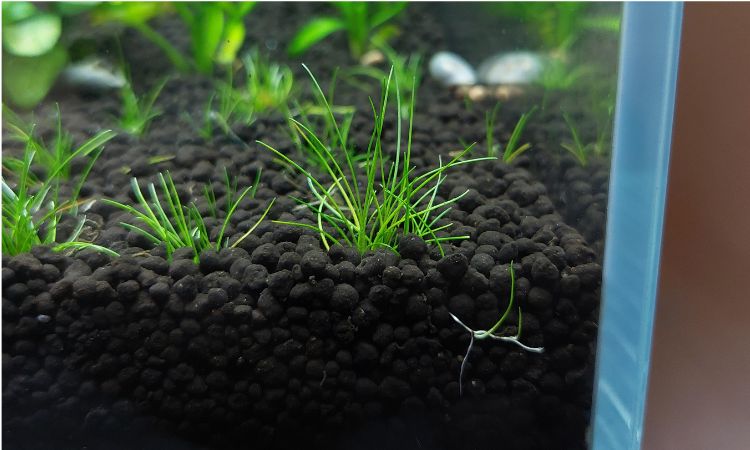
A suitable substrate plays an important role in helping dwarf hairgrass establish itself. The plant develops a network of roots and spreads through underground runners, so it benefits from a substrate that allows easy root growth and provides access to nutrients.
A nutrient-rich planted aquarium substrate, such as aquasoil, is often the easiest option because it supplies minerals directly to the roots. Fine-grained substrates are preferred because the runners can travel through them more easily, allowing the grass to expand across the aquarium floor.
Dwarf hairgrass can also grow in inert substrates such as sand or gravel, but additional supplementation is usually needed. Without nutrients available in the substrate, the plant may survive but spread slowly or show signs of deficiency.
Avoid extremely coarse gravel because large gaps between particles can make it difficult for the delicate roots to anchor properly. A medium to fine substrate gives the plant a better foundation and reduces the chance of newly planted sections floating loose.
Fertilization & Root Tabs
Dwarf hairgrass is primarily a root-feeding plant, meaning it absorbs many essential nutrients through its root system. A nutrient-rich substrate often provides enough support during the early stages, but long-term growth usually benefits from additional fertilization.
For aquariums with inert substrates, root tabs are one of the most effective supplements. Placing nutrient capsules beneath the planting area provides a steady source of minerals directly where the roots are developing. Refreshing root tabs every few months can help maintain consistent growth.
Liquid fertilizers can also be useful, especially in high-tech aquariums with strong lighting and CO₂ injection. A balanced fertilizer containing macronutrients such as nitrogen, phosphorus, and potassium, along with trace elements like iron, supports healthy blade production and prevents nutrient deficiencies.
Common signs of insufficient nutrients include:
- Yellowing or pale blades: often linked to nutrient shortages, especially nitrogen or iron
- Slow runner production: may indicate limited nutrients, weak lighting, or insufficient carbon
- Thin, weak growth: can result from an imbalance between light, CO₂, and fertilization
The goal is not to add as much fertilizer as possible, but to maintain a consistent supply that matches the aquarium’s lighting and plant growth rate. A balanced approach helps dwarf hairgrass develop into a thick, natural-looking carpet without encouraging algae outbreaks.
How to Plant Dwarf Hairgrass
Planting dwarf hairgrass correctly is one of the most important steps in creating a successful carpet. Many failures happen during the initial setup because the grass is planted in large clumps, placed too shallowly, or given an unsuitable substrate. Taking time to prepare the aquarium floor and separate the plant properly allows the roots to establish faster and encourages runners to spread evenly across the foreground.
Preparing the Substrate
Before adding dwarf hairgrass, prepare the substrate so the roots can anchor securely and access nutrients. A clean, evenly leveled substrate makes planting easier and helps the grass spread in a consistent pattern.
For the best results, use a planted aquarium substrate that contains nutrients, such as aquasoil. These substrates provide essential minerals for root development and allow runners to travel through the material more easily. If you are using an inert substrate like plain sand or gravel, add root tabs before planting to provide nutrients directly to the root zone.
The substrate depth should generally be around 2–3 inches (5–7.5 cm), giving the grass enough room to establish a strong root network. A deeper layer is especially useful in larger aquascapes where the plant needs to spread across a wider area.
Before planting, remove any debris from the substrate and slightly moisten it if you are setting up a dry start method. A damp substrate helps keep small plant portions in place while allowing roots to develop before flooding.
Separating Bundles and Tissue Culture Portions
Whether you purchase dwarf hairgrass as a potted plant or a tissue culture cup, avoid planting the entire portion as one large mass. Dense clumps often struggle because the inner sections receive less light and may decay before the plant can spread.
For potted plants, carefully remove the plastic basket and gently separate the roots from the growing medium. Remove excess rock wool or packing material and rinse away any loose debris. Divide the plant into several smaller sections rather than keeping it together as one bundle.
For tissue culture plants, rinse away the nutrient gel completely before planting. Separate the grass into small plugs containing a few blades and roots each. Smaller portions may seem slower at first, but they establish more evenly and allow runners to expand throughout the substrate.
A good starting size is usually small plugs containing several blades, rather than large handfuls of grass. This creates more planting points and helps the carpet fill in from multiple directions.
Planting Technique (Spacing, Depth, Tweezer Method)
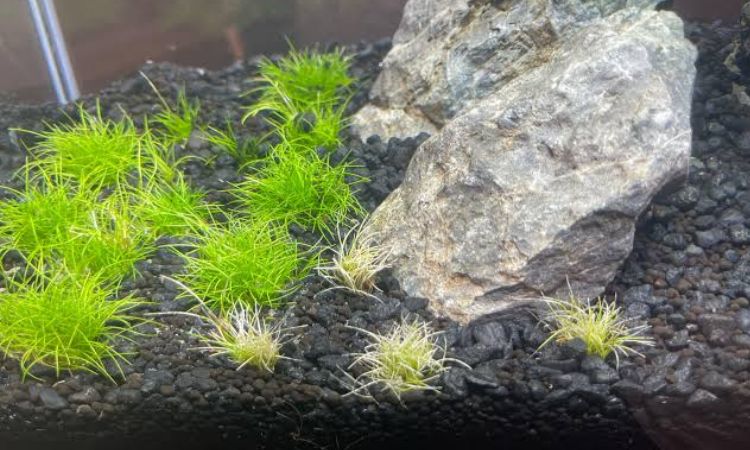
The right planting technique prevents one of the most common dwarf hairgrass problems: floating plants. Because the grass is lightweight, poorly anchored sections can easily lift from the substrate, especially after fish movement or during water changes.
Use long aquascaping tweezers to make the process easier:
- Hold a small portion of dwarf hairgrass with tweezers near the roots.
- Push the roots vertically into the substrate until they are fully covered.
- Gently pull the plant upward slightly so the crown remains visible above the substrate.
- Release the tweezers slowly to avoid pulling the plant back out.
The green blades should remain above the substrate while only the roots and lower section are buried. Planting too deeply can block growth points, while placing it too shallowly makes the grass more likely to uproot.
Space each portion about 0.5–1 inch (1–3 cm) apart depending on how quickly you want the carpet to develop. Closer spacing provides faster coverage, while wider spacing reduces the amount of plant material needed and allows runners to naturally fill the gaps.
Avoid planting large sections tightly together. Thick clusters often create dead areas underneath where older leaves receive little light and begin to decay.
Planting in Sand vs. Gravel vs. Aqua Soil
Dwarf hairgrass can grow in several types of substrate, but each option affects how easily the plant establishes and spreads.
Aqua Soil
Aquasoil is usually the easiest choice for growing dwarf hairgrass. It provides nutrients directly to the roots, has a texture that allows runners to spread, and makes anchoring small plugs much simpler. For aquascapers aiming for a dense carpet, nutrient-rich soil generally produces the most reliable results.
Sand
Fine sand can work well, especially in low-tech aquariums, but it contains little nutritional value on its own. Adding root tabs beneath the planting area is important because dwarf hairgrass relies heavily on root nutrients. Very compact sand may also limit runner growth, so avoid substrates that become extremely hard-packed.
Gravel
Dwarf hairgrass can survive in gravel, but coarse gravel is usually the least ideal option. Large spaces between stones make it harder for roots to grip, and runners may struggle to spread evenly. If using gravel, choose a smaller grain size and supplement regularly with root tabs.
Regardless of the substrate type, patience is essential after planting. Newly added dwarf hairgrass often spends the first few weeks developing roots before visible spreading begins. Once established, the plant will send out runners that gradually transform individual plugs into a connected green carpet.
Growing a Full Dwarf Hairgrass Carpet
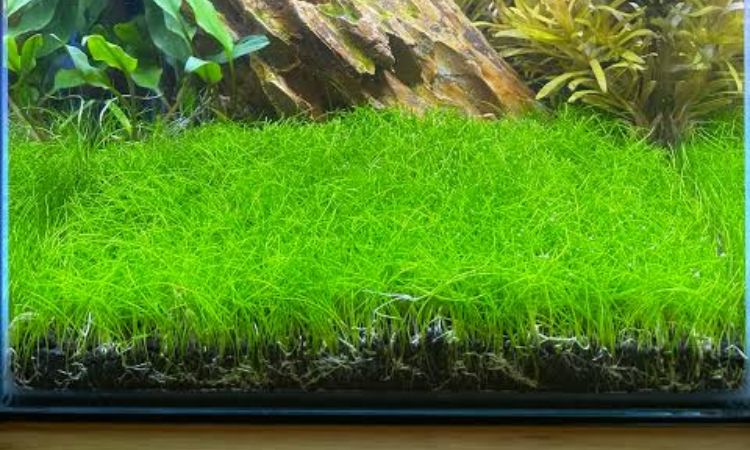
A dense dwarf hairgrass carpet does not happen overnight. Although this plant is considered easier than many other carpeting species, achieving a short, grassy foreground requires the right balance of light, nutrients, carbon, and maintenance. When conditions are favorable, dwarf hairgrass spreads through runners and gradually connects into a natural-looking underwater lawn.
The biggest goal is encouraging the plant to grow outward across the substrate rather than upward toward the light. Proper lighting, CO₂ availability, and regular trimming all play a role in creating the compact carpet effect many aquascapers want.
Ideal Light & CO₂ Combo for Carpeting
Lighting and carbon availability are the two main factors that determine how successfully dwarf hairgrass carpets. This plant needs enough energy to produce new runners and maintain short, healthy blades.
For a reliable carpet, provide moderate to high lighting, typically around 35–50+ PAR at the substrate level. Stronger light encourages denser growth and helps the grass remain compact. Under weak lighting, dwarf hairgrass often survives but produces longer blades as it stretches upward to capture more light.
A photoperiod of 8–10 hours per day works well for most planted tanks. More light is not always better, especially if CO₂ and nutrients cannot keep up. Excessive lighting without enough carbon can lead to algae problems and stressed plant growth.
While dwarf hairgrass can grow without added CO₂, injected carbon significantly improves carpet formation. In a CO₂-enriched aquarium, the plant typically produces runners faster, fills empty spaces more efficiently, and maintains a thicker appearance. A stable CO₂ level around 20–30 ppm is commonly used in high-tech planted tanks.
For non-CO₂ setups, success is still possible, but growth will be slower. Lower lighting, consistent fertilization, and patience become more important because the plant has fewer available resources for rapid expansion.
Trimming Techniques to Encourage Lateral Spread
Regular trimming is one of the best ways to encourage dwarf hairgrass to grow horizontally instead of becoming tall and untidy. Cutting the blades stimulates new growth from the base and helps maintain the appearance of a uniform lawn.
The first trim should usually happen once the grass reaches around 2 inches (5 cm) tall. Using sharp aquascaping scissors, cut the leaves down evenly to encourage the plant to focus energy on spreading through runners.
For an established carpet, trimming every few weeks helps maintain the desired height. Many aquarists keep dwarf hairgrass around 1–2 inches (2.5–5 cm) for a neat foreground appearance.
When trimming:
- Use clean, sharp scissors to avoid crushing the blades.
- Remove loose clippings after cutting to prevent debris buildup.
- Trim uneven areas slightly shorter to encourage balanced growth.
- Avoid removing too much plant material at once from newly established carpets.
A dense carpet can also become too thick over time. If the upper layers block light from reaching the lower sections, older growth may weaken and detach from the substrate. Occasional thinning or deeper trimming keeps the entire mat healthy.
Timeline: How Long Does It Take to Carpet?
The time required for dwarf hairgrass to create a full carpet depends heavily on the aquarium setup, planting density, and overall stability.
In a high-tech aquarium with strong lighting and CO₂ injection, noticeable spreading may begin within a few weeks, and a planted area can become mostly covered in approximately 4–8 weeks under ideal conditions.
In a low-tech aquarium without CO₂, the process is much slower. A complete carpet may take 2–6 months or longer, depending on lighting strength, nutrients, and starting plant density.
Several factors influence carpeting speed:
- More planting portions create faster initial coverage.
- Healthy root systems lead to quicker runner production.
- Stable water conditions reduce stress during establishment.
- Strong circulation improves access to nutrients and dissolved carbon.
Newly planted dwarf hairgrass may appear inactive at first. This is normal because the plant often focuses on root development before sending runners across the substrate.
Preventing Vertical (Leggy) Growth
One of the most common frustrations with dwarf hairgrass is when it grows tall instead of forming a compact carpet. This usually indicates that the plant is searching for more light or lacks the resources needed for dense growth.
Common causes of leggy dwarf hairgrass include:
Insufficient lighting:
When light intensity is too low, the blades grow taller and thinner as the plant attempts to reach stronger illumination. Increasing light intensity gradually can help improve growth direction.
Limited CO₂ availability:
In high-light aquariums, insufficient carbon can prevent the plant from using available light effectively. Adding CO₂ or reducing light intensity can help restore balance.
Lack of nutrients:
Dwarf hairgrass requires consistent access to nutrients, especially through the substrate. Poor nutrition can result in weak, slow-growing blades that fail to spread.
No regular trimming:
Untrimmed grass naturally grows taller. Cutting the blades encourages a shorter, more carpet-like appearance and allows light to reach new growth near the substrate.
Maintaining the right balance is more important than maximizing any single factor. A successful dwarf hairgrass carpet comes from matching lighting, CO₂, nutrients, and maintenance routines so the plant can grow steadily across the aquarium floor.