A thriving planted aquarium doesn’t require expensive equipment or a pressurized CO₂ system. Many freshwater plants naturally adapt to low-tech aquariums, growing steadily with nothing more than proper lighting, basic nutrients, and routine maintenance.
By choosing the right species, even beginners can create a lush, vibrant aquascape that’s easy to care for and affordable to maintain. In this guide, you’ll discover the best aquarium plants that grow successfully without injected CO₂, along with practical tips to help your planted tank flourish.
1. Anubias Nana (Anubias barteri var. nana)
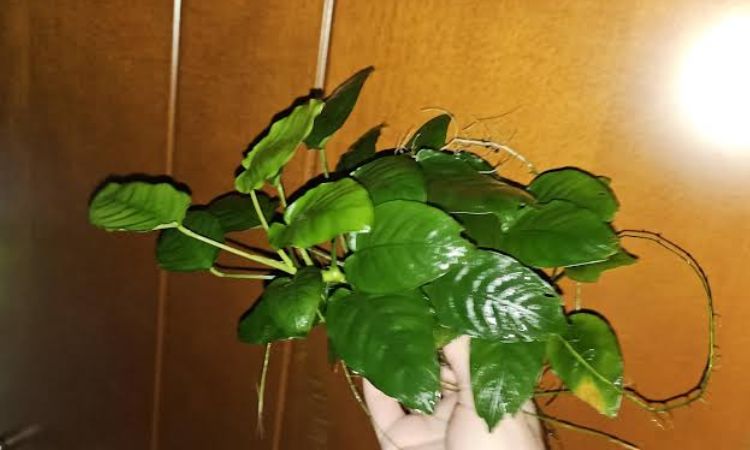
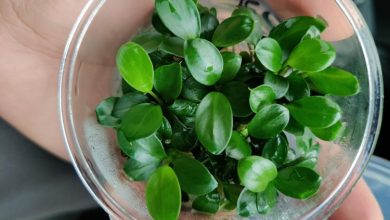
Anubias Nana is widely regarded as one of the most dependable plants for low-tech aquariums because it grows steadily without supplemental CO₂ and tolerates a broad range of water conditions. As an epiphytic species, it develops from a thick horizontal rhizome that should always remain above the substrate. Instead of planting it directly into gravel or aquasoil, attach the rhizome to driftwood, lava rock, or other hardscape using thread or aquarium-safe glue. Once established, its roots naturally anchor themselves to the surface.
This species thrives under low to moderate lighting, making it an excellent option for beginner aquariums where intense lighting isn’t necessary. Bright light isn’t required for healthy growth and may encourage algae to develop on its slow-growing leaves if nutrients and lighting become unbalanced.
The thick, leathery foliage is one of Anubias Nana’s biggest advantages. Many herbivorous fish leave the sturdy leaves alone, allowing the plant to maintain its attractive appearance even in community aquariums that include species known to nibble on softer vegetation. Although growth is relatively slow, the plant requires very little maintenance beyond occasionally removing older leaves and cleaning away algae if needed.
- Growth Habit: Epiphyte with an exposed rhizome that should never be buried.
- Light Requirement: Low to moderate.
- Placement: Foreground or midground attached to driftwood, lava rock, or other hardscape.
- Why It Works: Durable leaves, excellent tolerance of low-light conditions, and minimal maintenance requirements make it one of the easiest aquarium plants to grow without CO₂ injection.
2. Java Fern (Microsorum pteropus)
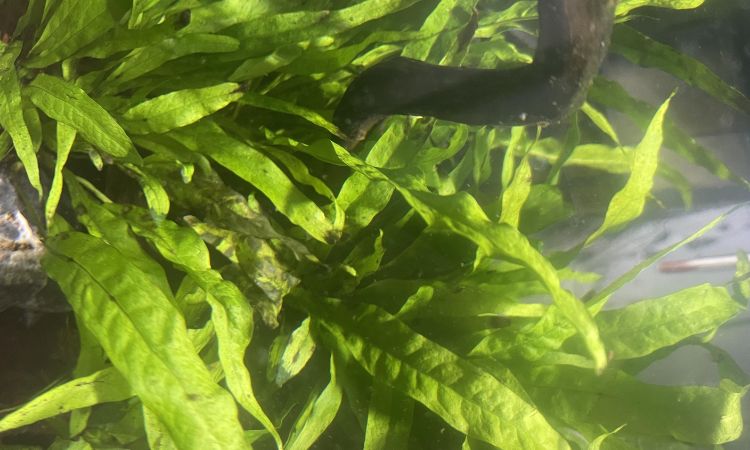
Java Fern has remained a favorite among freshwater aquarists for decades because of its exceptional adaptability and forgiving nature. Like Anubias, it is an epiphyte rather than a rooted plant, meaning the rhizome should be secured to rocks or wood instead of buried beneath the substrate. Burying the rhizome often leads to rot, while attaching it to hardscape allows the plant to establish naturally over time.
One of Java Fern’s greatest strengths is its ability to grow successfully in low-light aquariums where many other species struggle. It performs well without injected CO₂ and generally prefers stable, moderate conditions over high-intensity planted tank environments. Its long, arching leaves create natural movement within the aquascape while providing shelter for shrimp, fry, and small community fish.
Java Fern is also remarkably tolerant of varying water parameters. It adapts well to a wide range of pH levels, hardness, and tropical aquarium temperatures, making it suitable for many freshwater community setups. Mature plants frequently produce tiny plantlets along older leaves, allowing hobbyists to propagate new plants without special equipment.
- Growth Habit: Epiphyte with a creeping green rhizome attached to hardscape.
- Light Requirement: Low.
- Placement: Midground or background secured to driftwood, rocks, or decorations.
- Why It Works: Excellent adaptability, broad tolerance of common aquarium conditions, and extremely low maintenance make Java Fern one of the best beginner-friendly plants for low-tech aquariums.
3. Amazon Sword (Echinodorus amazonicus)
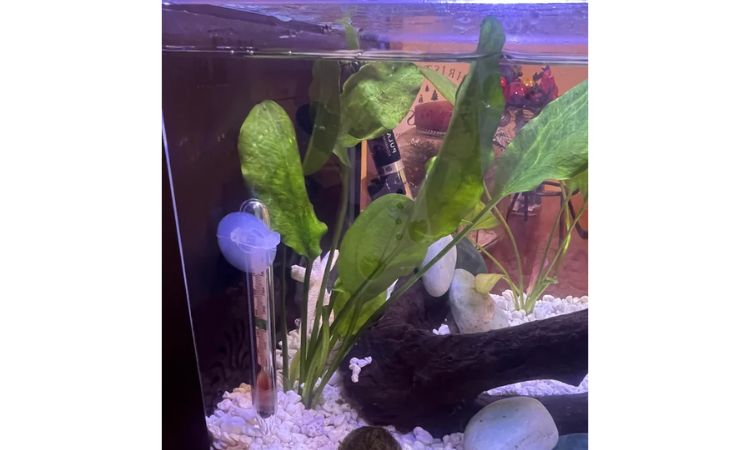
Amazon Sword is a classic rosette plant that serves as a striking centerpiece in medium and large planted aquariums. Unlike epiphytic species, it develops an extensive root system and obtains much of its nutrition directly from the substrate. For this reason, it performs best when planted in a nutrient-rich substrate or supplemented with root tabs, particularly in inert gravel or sand.
Although Amazon Sword benefits from moderate lighting, it does not require supplemental CO₂ to grow into a healthy specimen. Growth will be slower than in high-tech planted tanks, but under stable conditions the plant steadily produces large, broad leaves that create an attractive focal point and provide cover for fish.
As a vigorous root feeder, Amazon Sword efficiently absorbs nutrients from the substrate. When provided with adequate root nutrition, it can utilize excess organic waste released within the substrate, helping maintain nutrient balance while supporting healthy plant growth. Its large leaf mass also competes with algae by consuming available nutrients as it matures, although good overall aquarium maintenance remains essential for algae control.
Because mature specimens can become quite large, Amazon Sword is generally best suited for background planting or as a centerpiece in aquariums with sufficient open space.
- Growth Habit: Heavy root-feeding rosette plant with broad leaves.
- Light Requirement: Moderate.
- Placement: Background or centerpiece in medium to large aquariums.
- Why It Works: Strong root development, steady nutrient uptake, and large foliage allow Amazon Sword to thrive without injected CO₂ while contributing to a balanced planted aquarium when provided with adequate substrate nutrition.
4. Cryptocoryne Wendtii (Cryptocoryne wendtii)
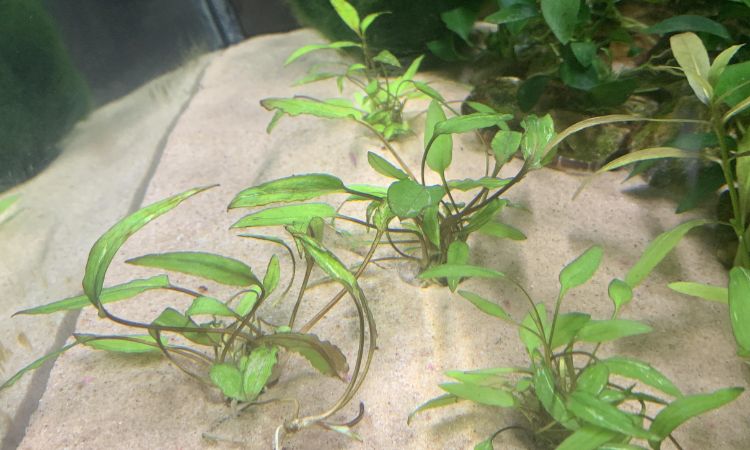
Cryptocoryne wendtii is one of the most dependable rosette plants for low-tech planted aquariums. Available in green, bronze, and reddish cultivars, it adds texture and subtle color variation without demanding high light or supplemental CO₂. Its broad adaptability and modest growth rate make it a popular choice for beginner and experienced aquarists alike.
This species performs well under low to moderate lighting and develops best when planted in a nutrient-rich substrate. Because it is primarily a root feeder, occasional root tabs can support stronger growth in inert gravel or sand. Newly introduced plants may experience “crypt melt,” where older leaves die back after being moved to a new aquarium. Although this can be concerning for beginners, it is a normal adaptation process. As long as the roots remain healthy and water conditions stay stable, fresh submerged leaves typically emerge within a few weeks.
Once established, Cryptocoryne wendtii requires very little maintenance. It tolerates a wide range of water hardness and common tropical aquarium conditions, making it suitable for many freshwater community tanks.
- Growth Habit: Rosette-forming plant available in green, bronze, and red varieties.
- Light Requirement: Low to moderate.
- Placement: Midground.
- Why It Works: After acclimation, it becomes exceptionally hardy, grows reliably under lower light levels, and adapts well to a variety of freshwater water conditions.
5. Java Moss (Taxiphyllum barbieri)
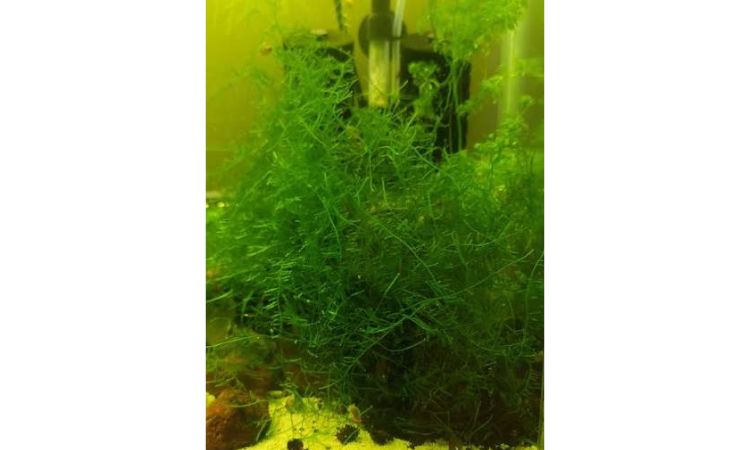
Java Moss is one of the most versatile aquatic plants available for low-tech aquariums. Rather than producing upright stems, it spreads by forming dense, branching mats that naturally attach to wood, rocks, mesh, and other hardscape. It can also be trained into moss walls or allowed to form a loose foreground carpet over time.
One of its greatest strengths is its ability to grow under low lighting without supplemental CO₂. Because it absorbs nutrients directly from the water column instead of relying on a specialized substrate, Java Moss can be incorporated into virtually any planted aquarium. Its slow to moderate growth rate also makes maintenance relatively simple, requiring only occasional trimming to preserve its desired shape.
The dense structure provides excellent shelter for newly hatched shrimp, fish fry, and small invertebrates while creating additional surface area for beneficial bacteria to colonize. Although it should not be viewed as a replacement for biological filtration, this added microbial habitat contributes to the overall biological stability of the aquarium.
- Growth Habit: Creeping moss that forms carpets, cushions, or vertical walls.
- Light Requirement: Low.
- Placement: Foreground carpet, attached to driftwood or rocks, or secured to spawning mesh.
- Why It Works: Grows without injected CO₂, offers valuable refuge for shrimp and fry, supports beneficial bacteria, and thrives without requiring a nutrient-rich substrate.
6. Marimo Moss Ball (Aegagropila linnaei)
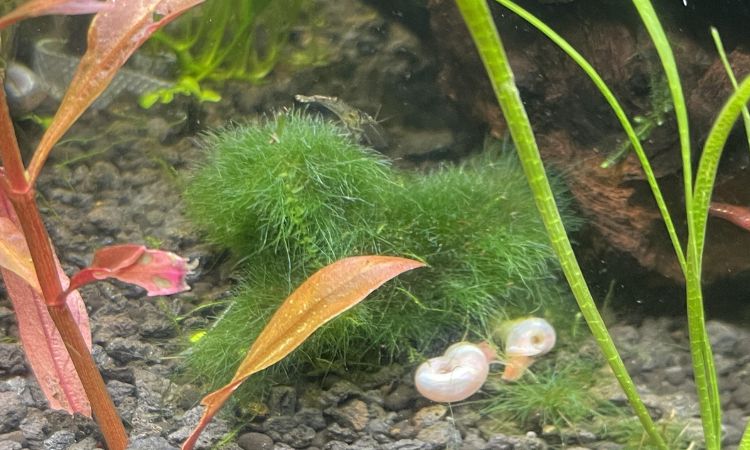
Despite its common name, the Marimo Moss Ball is not a true moss but a naturally occurring spherical colony of filamentous green algae. Its soft, velvety appearance and extremely slow growth make it a unique addition to low-tech freshwater aquariums.
Marimo prefers low lighting, cooler water temperatures, and indirect light exposure. Excessively bright lighting can encourage unwanted algae growth on its surface, while gentle water movement helps maintain its healthy appearance. Rolling the ball occasionally during routine maintenance promotes even light exposure and helps preserve its rounded shape.
Because it requires neither substrate nor supplemental CO₂, Marimo is exceptionally easy to care for. It rests directly on the aquarium bottom and demands very little ongoing attention beyond occasional cleaning if debris accumulates.
While many peaceful bottom-dwelling fish ignore Marimo Moss Balls, larger herbivorous species or fish that actively graze on algae may occasionally pick at them.
- Growth Habit: Slow-growing spherical colony of filamentous green algae with a soft, velvety texture.
- Light Requirement: Low; performs best under indirect lighting and in cooler freshwater aquariums.
- Placement: Foreground or bottom of the aquarium.
- Why It Works: Extremely low maintenance, requires no substrate or injected CO₂, and is generally left undisturbed by most peaceful bottom-dwelling aquarium species.
7. Water Sprite (Ceratopteris thalictroides)
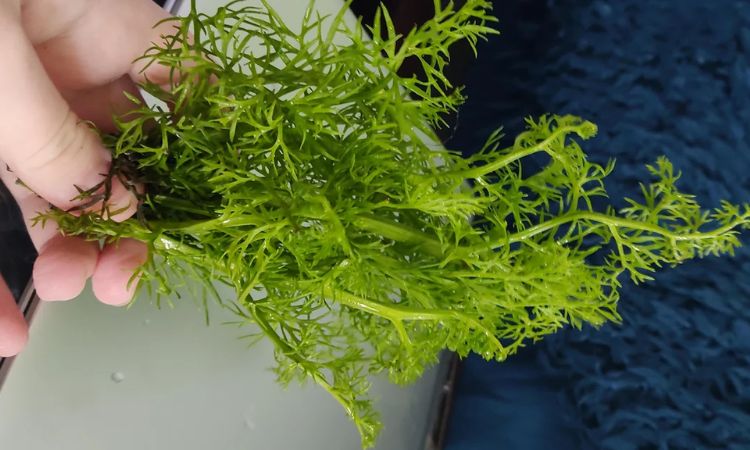
Water Sprite is a fast-growing aquatic fern valued for its delicate, lace-like foliage and remarkable adaptability. It can be planted in the substrate or allowed to float freely at the surface, making it one of the most flexible plants for low-tech planted aquariums.
Under moderate to high lighting, Water Sprite grows rapidly without supplemental CO₂, especially when floating, where it has unrestricted access to atmospheric carbon dioxide. Rooted specimens also perform well, although growth is typically somewhat slower than floating plants.
One of Water Sprite’s most useful characteristics is its rapid nutrient uptake. As it grows, it efficiently absorbs nitrate and other dissolved nutrients from the water column, helping reduce excess nutrients that could otherwise contribute to nuisance algae. Although no single plant can prevent algae on its own, vigorous growers like Water Sprite can play an important role in maintaining nutrient balance as part of a well-managed aquarium.
Its dense foliage also provides shade and creates secure cover for timid fish, shrimp, and newly hatched fry.
- Growth Habit: Fast-growing fern that can grow rooted or floating with finely divided foliage.
- Light Requirement: Moderate to high; performs well both rooted and floating.
- Placement: Background or floating at the water surface.
- Why It Works: Rapid nutrient uptake, excellent adaptability, and vigorous growth make it one of the most effective low-tech plants for supporting water quality and helping limit excess nutrients that may encourage algae growth.