A thriving planted aquarium doesn’t require pressurized CO₂, expensive equipment, or years of aquascaping experience. Many aquatic plants naturally adapt to low-tech setups, growing steadily with basic lighting, routine maintenance, and a stable environment. By choosing species that are both resilient and undemanding, beginners can enjoy vibrant greenery while spending less time troubleshooting algae, nutrient imbalances, or complicated equipment.
This guide highlights eight of the best low-tech aquarium plants for beginners in 2026. Each selection is known for its hardiness, ease of care, and ability to flourish without injected CO₂, making it simple to build a healthy, attractive freshwater aquarium regardless of your experience level.
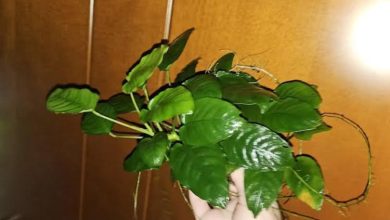
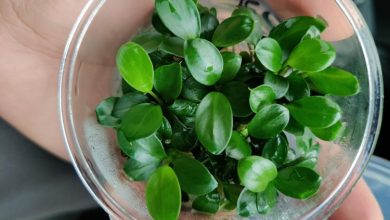
1. Anubias Nana (Anubias barteri var. nana)
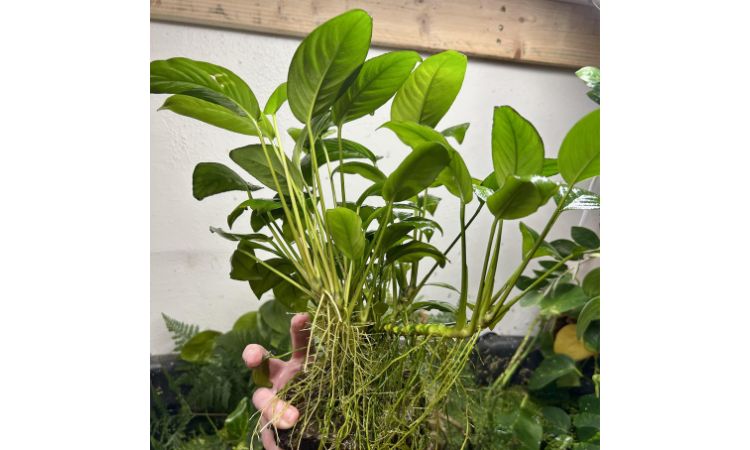
One of the most durable and widely recommended freshwater aquarium plants, Anubias Nana has earned its reputation as a favorite for beginners and experienced aquarists alike. Native to West Africa, this compact epiphytic species adapts well to a broad range of water conditions and thrives in low-tech aquariums without injected CO₂. Its thick, dark green leaves grow slowly but remain attractive for years, making the plant an excellent long-term addition to community tanks, shrimp aquariums, and aquascapes with minimal maintenance. Because the sturdy foliage is relatively tough, it is also less likely to be damaged by many herbivorous fish than softer-leaved species.
- Lighting Requirements: Low
- Growth Rate: Slow
- Placement: Foreground to midground, attached to driftwood, lava rock, or other hardscape.
Never bury the thick horizontal stem, known as the rhizome, beneath the substrate. Covering the rhizome restricts water circulation around the growing tissue and commonly leads to rot. Instead, secure the plant to wood or stone with aquarium-safe thread, fishing line, or cyanoacrylate gel glue until the roots naturally anchor themselves.
Although Anubias Nana tolerates dimly lit aquariums exceptionally well, it also adapts to moderate lighting when nutrients remain balanced. Under brighter conditions, algae may develop on its slow-growing leaves if excess nutrients or prolonged photoperiods are present. Maintaining stable water quality, avoiding excessive lighting, and providing a complete fertilizer when needed helps keep the foliage healthy and free of algae. Once established, Anubias Nana requires very little attention beyond occasional removal of older leaves and can remain a centerpiece in the aquarium for many years.
2. Java Fern (Microsorum pteropus)
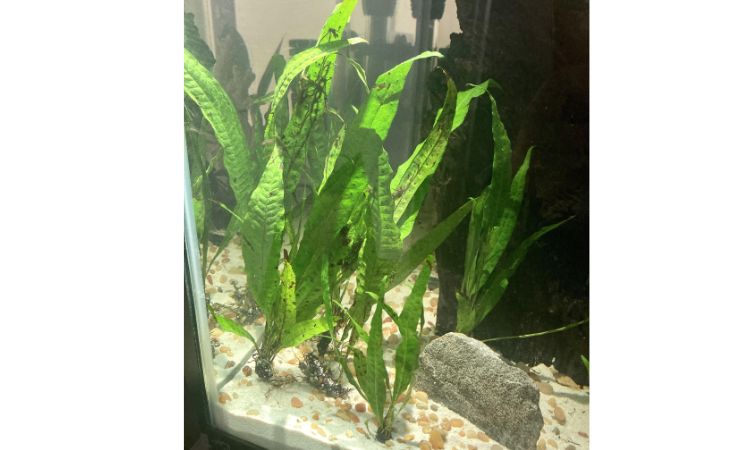
Java Fern is another classic low-tech aquarium plant valued for its adaptability and ease of care. Native to tropical Southeast Asia, it naturally grows attached to rocks, driftwood, and tree roots along streams and rivers rather than rooting directly in sediment. Its graceful, elongated leaves add height and texture to planted aquariums, while numerous cultivated varieties—including Narrow Leaf, Windelov, Trident, and Philippine Java Fern—allow aquarists to achieve different visual effects without increasing maintenance requirements.
- Lighting Requirements: Low to moderate
- Growth Rate: Slow to medium
- Placement: Midground or background, secured to hardscape.
Like Anubias, Java Fern should not have its rhizome buried beneath gravel or sand. Instead, attach it to rocks or driftwood until the roots naturally grip the surface.
Java Fern is well known for tolerating a wide range of water parameters, including varying pH levels and water hardness, making it an excellent choice for community aquariums. While it grows comfortably in low light, it can also adapt to brighter illumination provided algae remain under control through balanced nutrients and regular maintenance. Supplying complete water-column fertilizers supports healthier foliage and encourages deeper green coloration, although the plant remains undemanding compared with many stem species.
Propagation is straightforward. Mature specimens frequently produce small plantlets along the edges or tips of older leaves. Once these young plants develop several leaves and roots, they can be gently detached and secured elsewhere in the aquarium. Alternatively, larger plants may be divided by carefully cutting the rhizome into sections, with each portion continuing to grow independently.
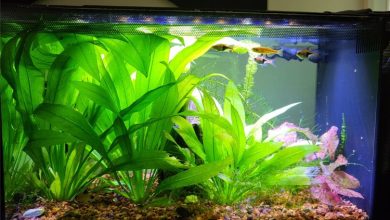
3. Amazon Sword (Echinodorus amazonicus)
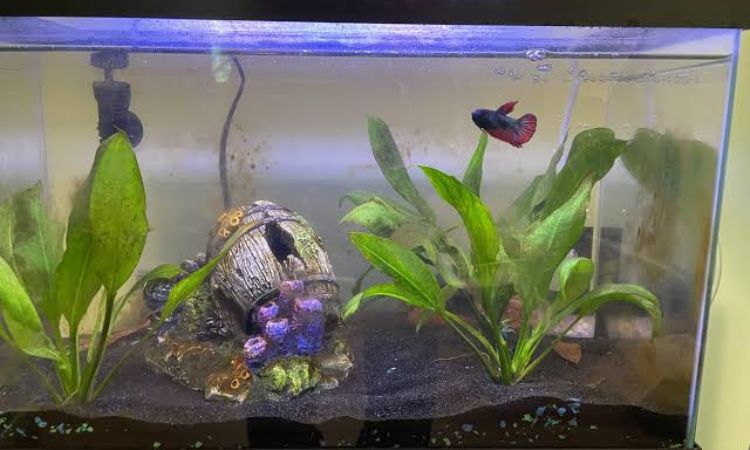
Amazon Sword is one of the most recognizable background plants in freshwater aquariums. Its broad, arching leaves create a lush centerpiece while providing shelter for fish and shrimp. Although this species grows larger than many beginner plants, it remains well suited to low-tech setups because it does not require injected CO₂ to produce healthy growth. Given sufficient nutrients and moderate lighting, an Amazon Sword develops into an impressive specimen that naturally fills empty space in medium and large aquariums.
- Lighting Requirements: Moderate
- Growth Rate: Medium to fast once established
- Placement: Background
Because Amazon Sword is a heavy root feeder, insert nutrient-rich root tabs beneath the substrate every few months if using inert gravel or sand. Aquasoil or other nutrient-rich substrates can also support long-term growth.
Unlike epiphytic species that absorb most nutrients from the water column, Amazon Sword relies heavily on its extensive root system. Adequate nutrition encourages larger leaves, stronger growth, and improved coloration. While the plant can survive under lower light levels, moderate illumination generally produces fuller foliage and steadier development. As the plant matures, remove older outer leaves at the base to encourage new growth while preventing overcrowding.
Since mature Amazon Swords can reach well over a foot in height and width under favorable conditions, they are best reserved for aquariums with enough space to accommodate their eventual size. Their dense leaves provide natural cover for shy fish while helping create a balanced, planted appearance.
4. Vallisneria (Vallisneria americana)
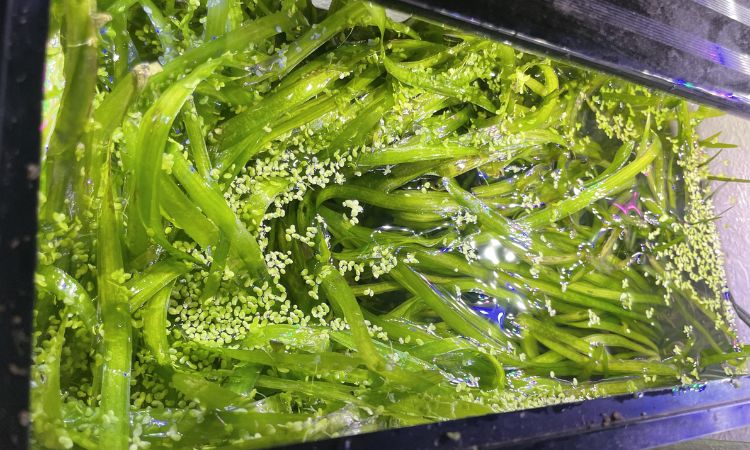
Vallisneria, often called Jungle Val or Tape Grass, is a fast-growing aquatic plant recognized for its long, ribbon-like leaves that sway naturally with water movement. Its graceful appearance creates a dense backdrop that mimics underwater grass beds found in nature. Because it grows vigorously without injected CO₂ and tolerates a variety of water conditions, Vallisneria is frequently recommended for beginners looking to establish a lush, low-maintenance aquarium.
- Lighting Requirements: Low to moderate
- Growth Rate: Fast
- Placement: Background
Vallisneria spreads by producing underground runners that generate new plants throughout the substrate. Instead of cutting leaves halfway along their length, remove entire older leaves near the base when trimming, as cut leaf tips often turn brown.
Once established, Vallisneria can expand rapidly across the aquarium floor, making it easy to create a dense background or natural privacy barrier for fish. The runners may be left in place to form a continuous stand or carefully separated and replanted elsewhere in the aquarium. Although it grows in various substrates, providing root nutrition through aquasoil or occasional root tabs generally supports healthier, more vigorous development.
The flowing leaves also provide valuable shelter for livebearers, tetras, rasboras, and many other community fish species. In addition, the extensive foliage offers spawning sites for certain fish while helping absorb excess nutrients from the water. With stable conditions and basic maintenance, Vallisneria remains one of the easiest and most rewarding background plants for a beginner-friendly low-tech planted aquarium.
5. Cryptocoryne Wendtii (Cryptocoryne wendtii)
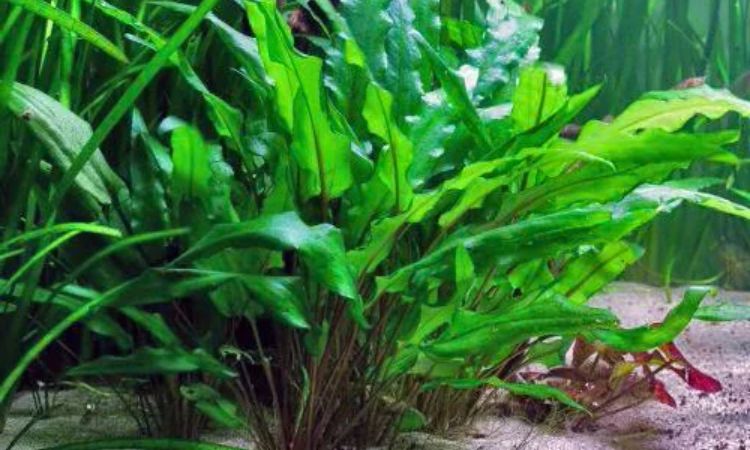
Cryptocoryne Wendtii is one of the most dependable aquarium plants for beginners thanks to its adaptability and understated beauty. Available in several color forms—including green, bronze, brown, and reddish-brown—it adds texture and depth without requiring specialized equipment. This rosette-forming species remains relatively compact, making it well suited for foreground and midground planting in low-tech aquariums. Once acclimated, it can thrive for years with minimal intervention, making it a staple in freshwater aquascaping.
- Lighting Requirements: Low
- Growth Rate: Slow initially, becoming steadier after establishment
- Placement: Foreground to midground
It is common for newly planted specimens to experience “Crypt melt,” where older leaves soften and deteriorate as the plant adjusts to different water conditions. Avoid removing the roots or disturbing the crown during this period. In most cases, healthy roots will produce new submerged leaves within several weeks.
Cryptocoryne Wendtii performs well in a wide range of water parameters and is especially tolerant of low-light environments where many other plants struggle. Because it primarily absorbs nutrients through its roots, it benefits from nutrient-rich aquasoil or occasional root tabs when grown in inert gravel or sand. Unlike many stem plants that require constant trimming, Cryptocoryne reaches a predictable mature height, reducing long-term maintenance. Established plants also spread naturally through underground runners, gradually forming attractive clusters that can be divided and replanted elsewhere in the aquarium.
6. Java Moss (Taxiphyllum barbieri)
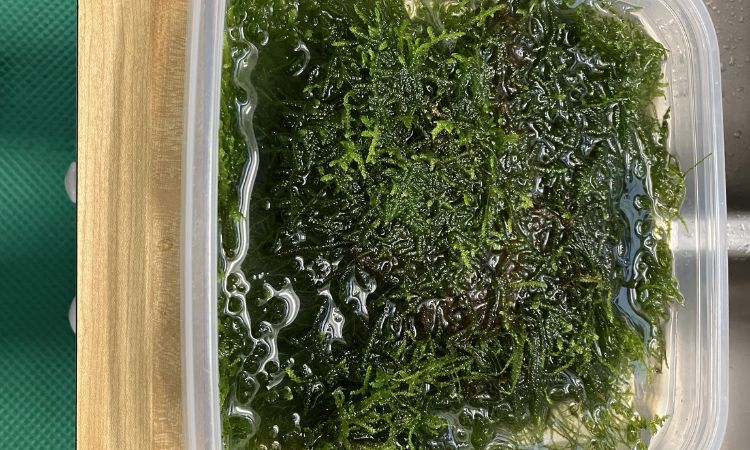
Java Moss is one of the most versatile aquatic plants available for low-tech aquariums. Its fine branching structure creates a natural appearance that complements driftwood, stones, caves, and other hardscape features. Because it tolerates a broad range of water conditions and requires very little specialized care, Java Moss is frequently recommended for beginner aquascapes, shrimp tanks, breeding aquariums, and community setups. Dense growth also provides valuable shelter for shrimp, newly hatched fry, and other small aquatic animals.
- Lighting Requirements: Low
- Growth Rate: Medium
- Placement: Foreground carpets, driftwood, rocks, aquarium walls, caves, or spawning mops
Secure Java Moss to hardscape using cotton thread, fishing line, or aquarium-safe gel glue. Within a few weeks, the moss naturally attaches itself and continues spreading over the surface.
Unlike rooted aquarium plants, Java Moss absorbs nutrients directly from the water and does not require a specialized substrate. It grows under both dim and moderate lighting, although brighter conditions generally increase growth while also requiring more frequent trimming. Regular pruning encourages denser growth, prevents excessive accumulation of debris, and helps maintain an attractive shape. Small trimmed portions can be attached elsewhere in the aquarium, making propagation both simple and inexpensive.
Because of its dense structure, Java Moss also functions as an excellent refuge for baby shrimp and juvenile fish, while its extensive surface area supports beneficial microorganisms that contribute to a healthy aquarium ecosystem.
7. Hornwort (Ceratophyllum demersum)
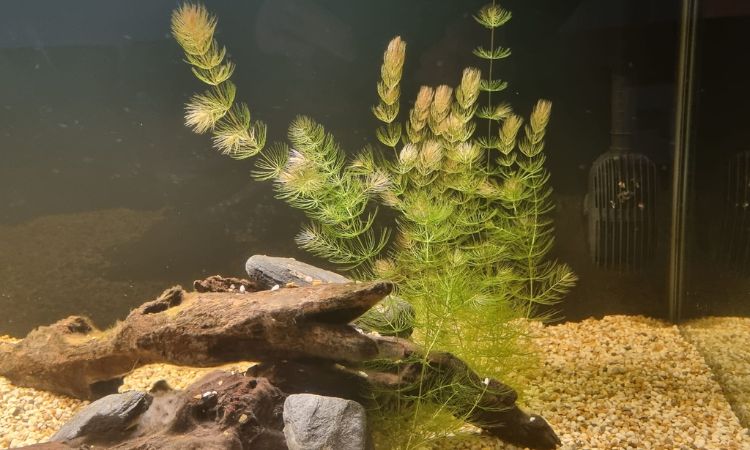
Hornwort is one of the fastest-growing freshwater aquarium plants and is highly valued for its ability to absorb excess nutrients from the water column. Its feathery stems develop quickly without injected CO₂, helping reduce nitrate accumulation while competing with nuisance algae for available nutrients. Whether allowed to float freely or loosely anchored in the substrate, Hornwort provides excellent cover for fish, fry, and shrimp while adding soft, natural texture to the aquarium.
- Lighting Requirements: Low to high
- Growth Rate: Very fast
- Placement: Background or floating near the surface
Trim stems regularly to prevent dense growth from shading slower-growing plants below. Healthy cuttings can be replanted or left floating to establish additional growth.
Hornwort does not develop true roots, allowing it to obtain nutrients directly from the surrounding water instead of the substrate. This characteristic makes it particularly useful in newly established aquariums or tanks with simple gravel substrates. Its rapid growth can help stabilize nutrient levels during the early stages of a planted aquarium, although frequent pruning may be necessary to keep it from occupying too much space.
The finely divided foliage also creates excellent hiding places for livebearer fry and timid fish species. While individual stems occasionally shed older needles during acclimation, stable water conditions typically minimize this behavior, allowing the plant to recover quickly and continue vigorous growth.
8. Water Sprite (Ceratopteris thalictroides)
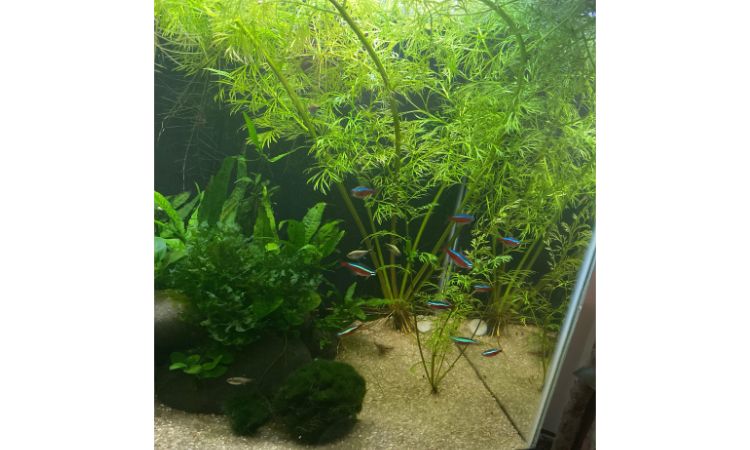
Water Sprite is a fast-growing aquatic fern recognized for its delicate, lace-like leaves and remarkable versatility. It can be rooted in the substrate or allowed to float at the water’s surface, giving aquarists flexibility when designing planted aquariums. Its bright green foliage creates a soft, natural appearance while providing valuable cover for small fish, shrimp, and fry. Because it grows readily without injected CO₂, Water Sprite is an excellent choice for beginners establishing low-tech freshwater aquariums.
- Lighting Requirements: Moderate
- Growth Rate: Fast
- Placement: Midground to background, or floating at the surface
Water Sprite absorbs significant amounts of nitrate and other dissolved nutrients from the water column, making it especially useful in recently cycled aquariums or tanks with moderate fish populations. Regular trimming prevents the plant from shading neighboring species as it expands.
When planted in the substrate, Water Sprite develops an extensive root system while producing broad, airy foliage that fills open spaces between taller background plants and lower-growing species. As a floating plant, its hanging roots create additional shelter for young fish and shrimp while helping diffuse bright lighting for more light-sensitive inhabitants.
Because of its rapid development, occasional pruning keeps the aquarium balanced and encourages fresh growth. Healthy cuttings and naturally produced plantlets can be replanted or floated elsewhere, making Water Sprite one of the easiest low-tech plants to propagate. Combined with consistent maintenance and stable water conditions, it provides both ornamental value and practical biological benefits in beginner-friendly planted aquariums.