Adding live plants to your aquarium doesn’t have to be complicated. While some aquatic plants require specialized lighting, CO₂ injection, and careful maintenance, many beginner-friendly species are surprisingly forgiving.
They adapt well to a wide range of water conditions, grow under standard aquarium lighting, and need very little attention once established. If you’re ready to swap artificial decorations for a more natural-looking aquascape, these 15 easy live aquarium plants are excellent choices that can thrive with minimal effort while helping create a healthier environment for your fish.
1. Anubias Nana (Anubias barteri var. nana)
Care Level: Extremely Easy
Lighting Requirement: Low
Growth Rate: Slow
Placement: Foreground or Midground (attached to driftwood or rocks)
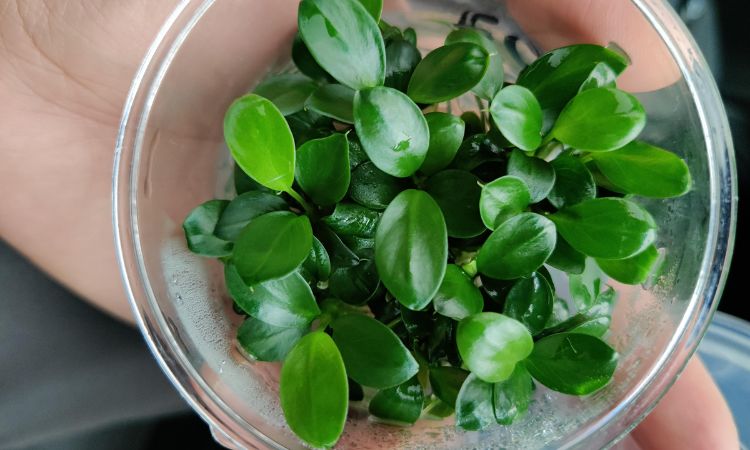
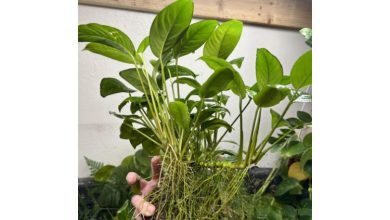
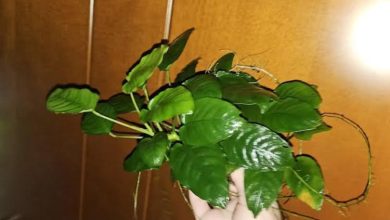
Anubias Nana is widely regarded as one of the easiest live aquarium plants for beginners because it tolerates a broad range of water conditions and requires very little maintenance. Its compact size and dark green, leathery leaves make it suitable for nano aquariums as well as larger planted tanks, where it can be attached to driftwood, rocks, or other hardscape to create a natural focal point.
One of its biggest advantages is durability. The thick leaves are less appealing to many herbivorous fish, including some goldfish and cichlids, making the plant more resistant to grazing than softer-leaved species. Anubias Nana also grows well in low-light aquariums and generally does not require supplemental CO₂, making it an excellent choice for low-tech setups.
The most important care requirement is keeping the rhizome exposed. While the roots may anchor to wood, stone, or even lightly rest on the substrate, the thick horizontal rhizome should never be buried. Covering it with gravel or sand can restrict water circulation around the stem and eventually lead to rot. Once attached properly, Anubias Nana requires little more than occasional cleaning and slow, steady growth makes trimming infrequent.
2. Java Fern (Microsorum pteropus)
Care Level: Extremely Easy
Lighting Requirement: Low to Medium
Growth Rate: Slow to Moderate
Placement: Midground or Background
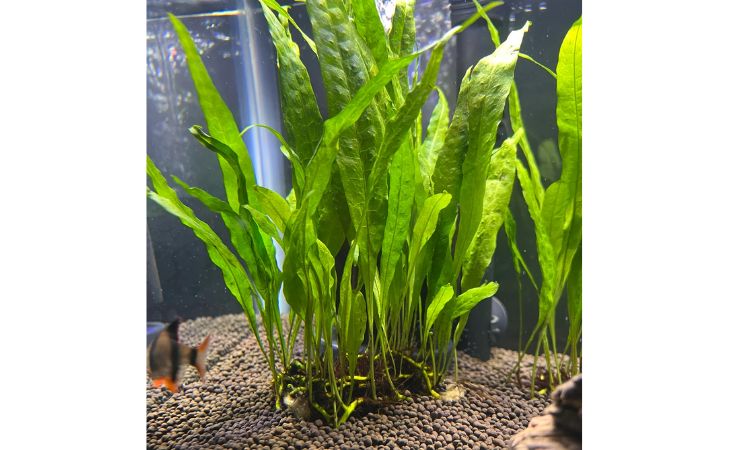
Java Fern has remained one of the most dependable freshwater aquarium plants for decades because it adapts well to a wide variety of aquarium conditions. Whether grown in soft or moderately hard water, tropical community tanks, or low-tech planted aquariums, it consistently performs with minimal intervention.
Like Anubias, Java Fern is an epiphyte rather than a rooted plant. Instead of planting it directly into the substrate, attach the rhizome to driftwood, rocks, or decorative hardscape using aquarium-safe glue, thread, or fishing line. Over time, the roots naturally secure themselves to the surface.
This species performs well under low to moderate lighting and typically does not require CO₂ injection. It absorbs most of its nutrients directly from the water column, so occasional liquid fertilization may support healthier growth in nutrient-poor aquariums.
A distinctive characteristic of Java Fern is its natural method of propagation. Mature leaves often develop tiny black spots on their undersides. These are reproductive structures that eventually produce miniature plantlets with their own leaves and roots. Once large enough, they can be gently detached and attached elsewhere in the aquarium, making propagation simple even for beginners.
3. Amazon Sword (Echinodorus amazonicus)
Care Level: Easy
Lighting Requirement: Medium
Growth Rate: Moderate to Fast
Placement: Background
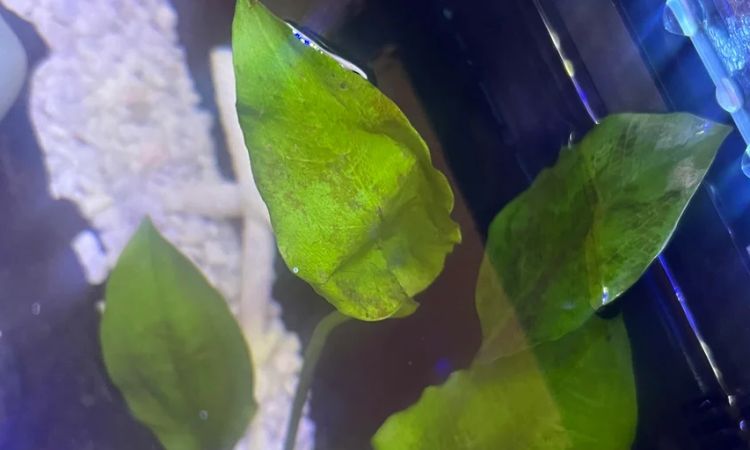
Amazon Sword is a classic background plant that quickly creates a lush, natural appearance in freshwater aquariums. Its broad, sword-shaped leaves provide excellent cover for fish while helping fill open areas with dense greenery, making it especially popular in medium and large community tanks.
Although Amazon Sword is considered beginner-friendly, it differs from many low-maintenance plants because it feeds primarily through its roots. A nutrient-rich aquarium substrate supports healthy growth, but the plant also performs well in ordinary gravel or sand when supplemented with root tabs placed beneath the crown.
Newly purchased plants often shed their original leaves after being introduced to a submerged aquarium. This process is normal because many commercial growers cultivate Amazon Swords above water before sale. As the plant adapts, fresh underwater foliage gradually replaces the older emersed leaves.
With adequate nutrition and moderate lighting, Amazon Sword develops into an impressive centerpiece that requires only occasional pruning of older outer leaves to encourage vigorous new growth from the center of the plant.
4. Marimo Moss Balls (Aegagropila linnaei)
Care Level: Bulletproof
Lighting Requirement: Low
Growth Rate: Extremely Slow
Placement: Foreground
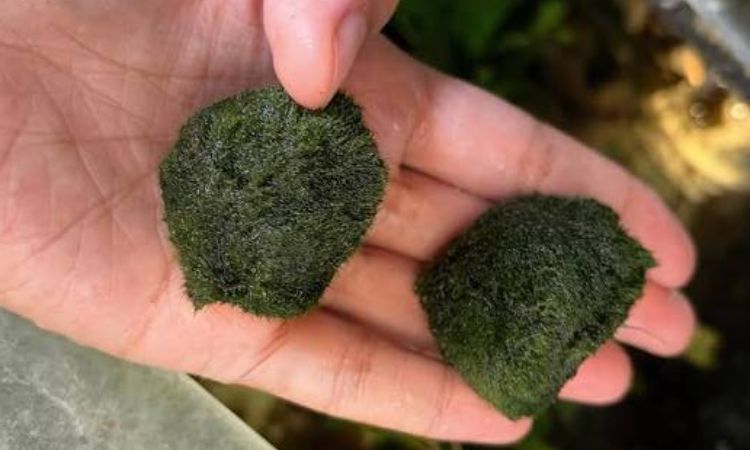
Despite their common name, Marimo Moss Balls are not true mosses or flowering plants. They are naturally occurring spherical colonies of filamentous green algae that have become one of the easiest and most recognizable additions to freshwater aquariums.
Their care requirements are remarkably simple. Because they do not need to be planted, they can be placed directly on the substrate, where they add texture and visual interest to foreground layouts. Low lighting is ideal, as prolonged exposure to intense illumination may encourage discoloration or unwanted algae growth.
Routine maintenance consists primarily of gently rolling the ball during water changes to help preserve its rounded shape while ensuring all surfaces receive light evenly. Occasionally rinsing or lightly squeezing the ball in aquarium water also removes accumulated debris.
Marimo Moss Balls are especially popular in shrimp aquariums and nano tanks, where they provide grazing surfaces for biofilm and beneficial microorganisms. Their extremely slow growth, exceptional durability, and minimal maintenance requirements make them one of the most beginner-friendly additions to almost any freshwater setup.
5. Hornwort (Ceratophyllum demersum)
Care Level: Easy
Lighting Requirement: Low to High
Growth Rate: Rapid
Placement: Floating or Background
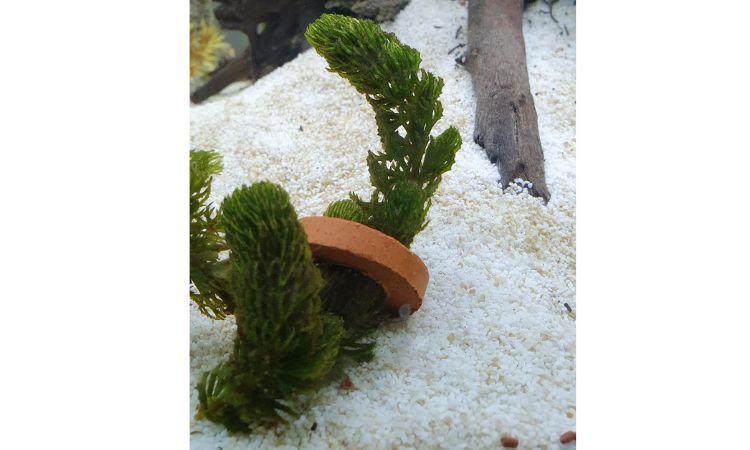
Hornwort is one of the fastest-growing freshwater aquarium plants available and is valued for its ability to thrive under an exceptionally wide range of conditions. It can be left floating freely at the water’s surface or loosely anchored in the background without developing a traditional root system.
Because Hornwort absorbs nutrients directly from the water column, it grows rapidly in established aquariums where fish naturally produce waste. This vigorous nutrient uptake helps reduce excess nitrates and other dissolved compounds that might otherwise contribute to nuisance algae growth, making Hornwort a useful addition to newly established planted tanks.
Its dense, feathery foliage also provides excellent shelter for shrimp, fry, and small community fish, creating secure hiding places throughout the aquarium. Newly introduced Hornwort may temporarily shed some of its fine needle-like leaves as it acclimates to a different environment, but healthy plants typically recover quickly once they adjust to stable water conditions.
With no substrate requirements, no supplemental CO₂, and the ability to grow under everything from low to bright lighting, Hornwort remains one of the most forgiving and practical live aquarium plants for beginners.
6. Cryptocoryne Wendtii (Cryptocoryne wendtii)
Care Level: Easy
Lighting Requirement: Low to Medium
Growth Rate: Slow
Placement: Foreground or Midground
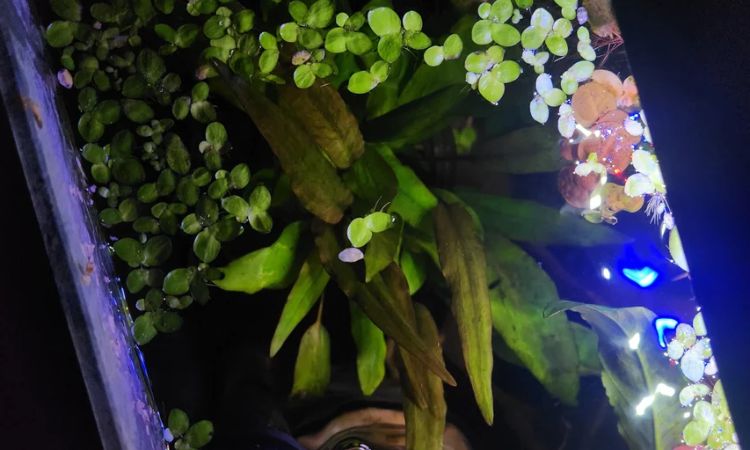
Cryptocoryne wendtii is one of the most dependable choices for aquarists who want attractive foliage without demanding maintenance. Available in green, bronze, brown, and reddish varieties, it introduces subtle color variation and texture that complements both natural and modern aquascapes. Its compact growth habit makes it well suited for filling open spaces in the foreground or midground without overwhelming the layout.
Once established, this species adapts well to a wide range of water parameters, including varying pH levels and moderate hardness. While it appreciates stable conditions, it doesn’t require high-intensity lighting, CO₂ injection, or advanced fertilization to remain healthy. Because it primarily absorbs nutrients through its roots, a nutrient-rich substrate or occasional root tabs can support stronger growth and richer leaf coloration.
Newly planted specimens may experience “crypt melt,” where older leaves die back after being introduced to a different aquarium. Although this can be alarming for beginners, the root system typically remains healthy. With consistent water conditions and a little patience, fresh submerged leaves usually emerge within a few weeks.
7. Vallisneria (Vallisneria americana)
Care Level: Easy
Lighting Requirement: Medium
Growth Rate: Fast
Placement: Background
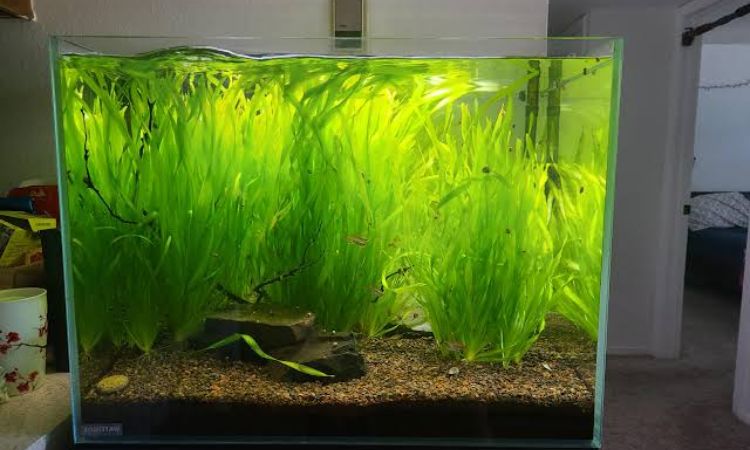
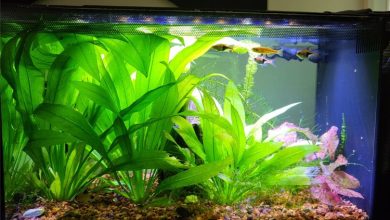
Often called Jungle Val or eelgrass, Vallisneria americana is an excellent background plant for beginners looking to create a lush, natural appearance. Its long, ribbon-like leaves sway gently with water movement, producing the look of underwater grasses found in rivers and lakes. As the plant matures, it spreads by sending out runners that gradually form a dense curtain of greenery across the back of the aquarium.
Vallisneria performs best under moderate lighting and generally grows more vigorously in moderately hard, alkaline water, though it adapts to many freshwater setups. Because it feeds through its roots, nutrient-rich substrates or periodic root tabs encourage faster growth and healthier foliage. Once established, it often requires little more than occasional trimming to prevent the leaves from covering the water’s surface.
One important consideration is avoiding liquid carbon products containing glutaraldehyde, which can damage or melt sensitive Vallisneria species. Aside from this precaution, it remains one of the easiest plants for beginners to maintain while quickly transforming an aquarium into a natural-looking aquascape.
8. Anacharis (Egeria densa)
Care Level: Easy
Lighting Requirement: Low to Medium
Growth Rate: Fast
Placement: Background or Floating
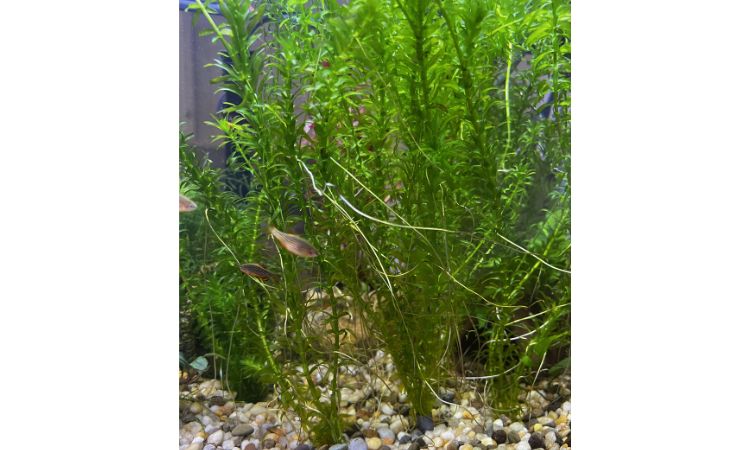
Egeria densa, commonly known as Anacharis or Brazilian waterweed, has long been recommended as one of the simplest stem plants for new aquarium keepers. Its bright green stems develop dense whorls of leaves that provide excellent cover for fish while adding vibrant color to the aquarium.
Unlike many rooted species, Anacharis can be planted directly into gravel or sand, or allowed to float freely near the surface. This flexibility makes it suitable for a wide range of aquarium styles, from beginner community tanks to shrimp aquariums. The plant grows rapidly under basic lighting and absorbs nutrients directly from the water column, helping reduce excess nitrate while competing with nuisance algae for available nutrients. Healthy growth also contributes oxygen during daylight hours through photosynthesis, although this should not replace proper filtration or aeration.
Because it grows quickly, regular pruning keeps stems compact and prevents them from shading neighboring plants. Trimmed sections can be replanted, making propagation simple and allowing hobbyists to expand their planted aquarium at little cost.
9. Water Sprite (Ceratopteris thalictroides)
Care Level: Easy
Lighting Requirement: Medium
Growth Rate: Fast
Placement: Midground, Background, or Floating
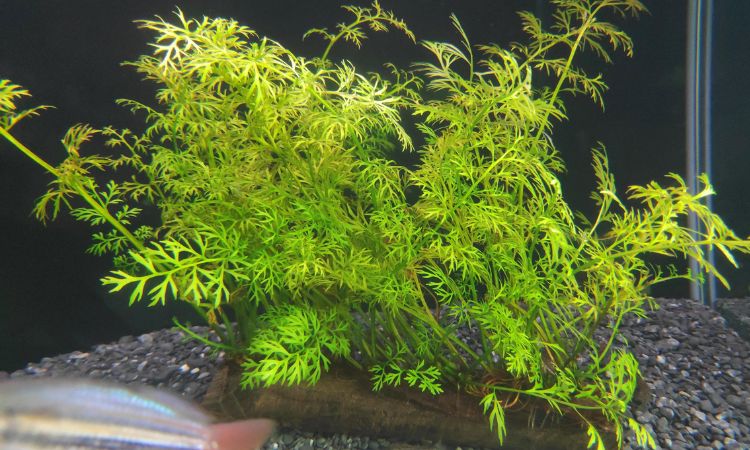
Water Sprite is a highly adaptable fern that performs well whether rooted in the substrate or floating at the water’s surface. Its finely divided, lace-like leaves create a soft, feathery appearance that contrasts beautifully with broader-leaved species such as Amazon Swords or Anubias.
As a fast-growing water-column feeder, Water Sprite readily absorbs dissolved nutrients, making it useful for limiting excess nutrients that might otherwise contribute to algae growth. Under favorable conditions, it develops dense foliage that provides valuable shelter for shrimp, fry, and timid fish species, increasing their sense of security in community aquariums.
This species grows best under moderate lighting and benefits from regular liquid fertilizer in low-nutrient aquariums. Because of its rapid growth rate, occasional thinning helps maintain good water circulation and ensures adequate light reaches surrounding plants. Its forgiving nature and versatility make Water Sprite an excellent addition for beginners experimenting with planted aquariums.
10. Java Moss (Taxiphyllum barbieri)
Care Level: Easy
Lighting Requirement: Low
Growth Rate: Moderate
Placement: Foreground carpet, driftwood wrap, or wall cover
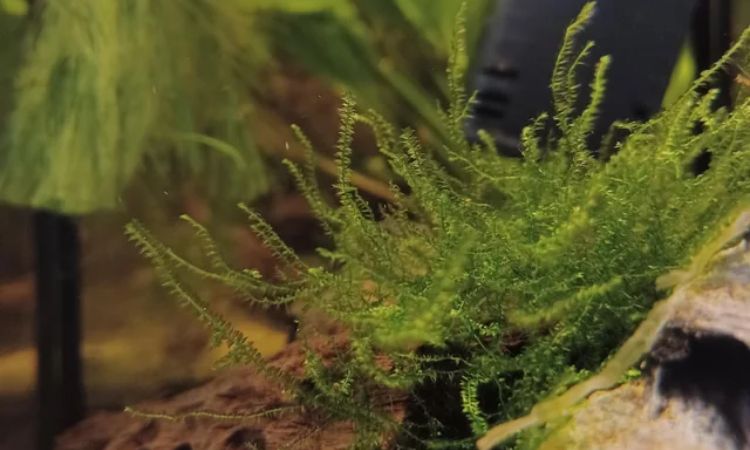
Java Moss remains one of the most versatile aquatic plants available for freshwater aquariums. Instead of requiring nutrient-rich substrate, it naturally attaches itself to porous materials such as driftwood, rocks, mesh panels, and decorative structures, making it easy to incorporate into almost any aquascape.
Its dense branching growth creates ideal shelter for shrimp, newly hatched fry, and small fish, while also providing additional surfaces where beneficial microorganisms can develop. For this reason, Java Moss is especially popular in shrimp breeding tanks and peaceful community aquariums.
The moss tolerates low lighting, requires no CO₂ injection, and generally grows well with only basic maintenance. Hobbyists typically secure it using cotton thread, fishing line, or aquarium-safe cyanoacrylate gel until it naturally anchors itself. Occasional trimming keeps the growth compact and prevents thick mats from trapping debris or lifting away from the hardscape. Thanks to its resilience and flexibility, Java Moss remains one of the most beginner-friendly plants for creating a mature, natural-looking aquarium.
11. Bucephalandra
Care Level: Easy
Lighting Requirement: Low to Medium
Growth Rate: Slow
Placement: Foreground or Midground (attached to hardscape)
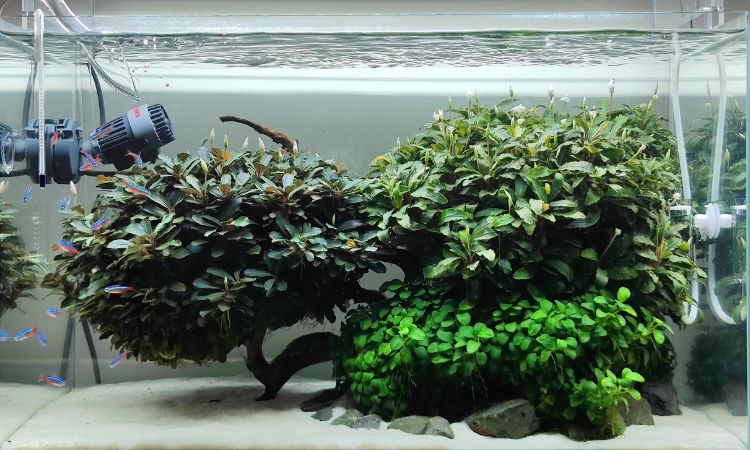
Bucephalandra, often shortened to “Buce,” has become increasingly popular among freshwater aquarists for its compact size, attractive foliage, and adaptability. Native to the streams of Borneo, this rhizome plant develops narrow or oval-shaped leaves that may display shades of green, blue, bronze, or even subtle iridescent highlights depending on the variety and growing conditions. Its slow growth and manageable size make it well suited for nano aquariums and carefully designed aquascapes.
Like Anubias and Java Fern, Bucephalandra should never have its rhizome buried beneath gravel or sand. Instead, it is best attached to driftwood, lava rock, or other porous hardscape using aquarium-safe glue or thread until its roots naturally anchor themselves. Once established, the plant tolerates a wide range of water parameters and performs well without supplemental CO₂, making it an excellent option for low-tech planted tanks.
Although Bucephalandra grows slowly, it benefits from stable aquarium conditions and consistent fertilization through the water column. With minimal maintenance, it provides long-lasting texture and visual interest while requiring little more than occasional removal of older leaves.
12. Brazilian Pennywort (Hydrocotyle leucocephala)
Care Level: Easy
Lighting Requirement: Low to Medium
Growth Rate: Fast
Placement: Midground, Background, or Floating
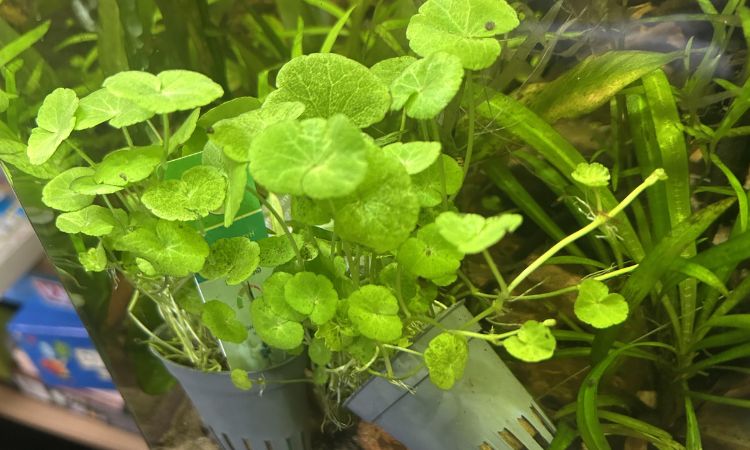
Brazilian Pennywort is one of the most versatile stem plants available for beginner aquariums. Its bright green, round leaves grow along flexible stems that can be rooted in the substrate, allowed to trail across driftwood, or left floating freely at the surface. This adaptability gives hobbyists numerous options when designing a planted aquarium.
The plant grows rapidly under moderate conditions and readily absorbs nutrients from the water column, making it useful in newly established aquariums where excess nutrients may otherwise contribute to algae growth. When floating, its stems create shaded areas beneath the surface that many fish and shrimp use as cover. When planted, it develops upright stems that can fill background or midground areas with lush greenery.
Because Brazilian Pennywort grows quickly, regular trimming helps prevent overcrowding and encourages fuller branching. Healthy cuttings can be replanted directly into the substrate, allowing the plant to propagate easily without specialized care.
13. Ludwigia Repens
Care Level: Easy
Lighting Requirement: Medium
Growth Rate: Moderate to Fast
Placement: Midground or Background
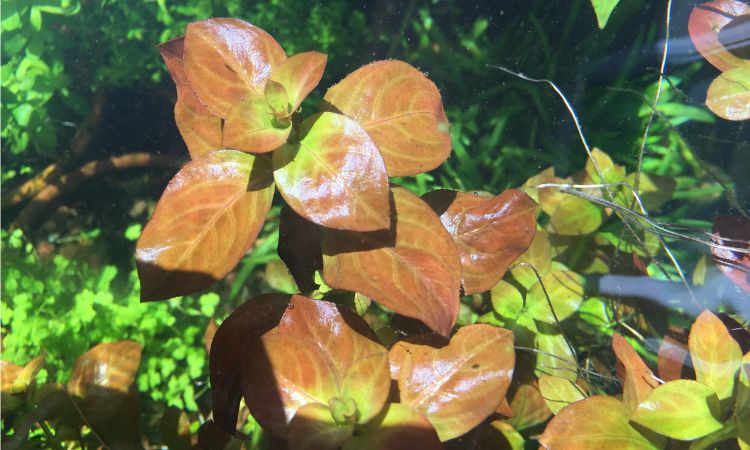
For aquarists looking to introduce warmer colors into a planted aquarium, Ludwigia repens is one of the most approachable choices. Its leaves range from olive green to shades of red, orange, or burgundy depending on light intensity, nutrient availability, and overall plant health. Even in moderately lit aquariums, it often develops attractive reddish tones that contrast beautifully with surrounding green plants.
This adaptable stem plant grows well in nutrient-rich substrates but also absorbs nutrients directly from the water column, making it suitable for a variety of freshwater setups. While additional CO₂ can enhance coloration and growth, it is not required for successful cultivation in most beginner aquariums.
Routine trimming encourages denser growth and prevents the stems from becoming sparse near the base. Cut stem sections root readily when replanted, making propagation simple and allowing hobbyists to gradually build colorful background groupings with minimal effort.
14. Pearlweed (Hemianthus micranthemoides)
Care Level: Easy
Lighting Requirement: Medium
Growth Rate: Fast
Placement: Foreground or Midground
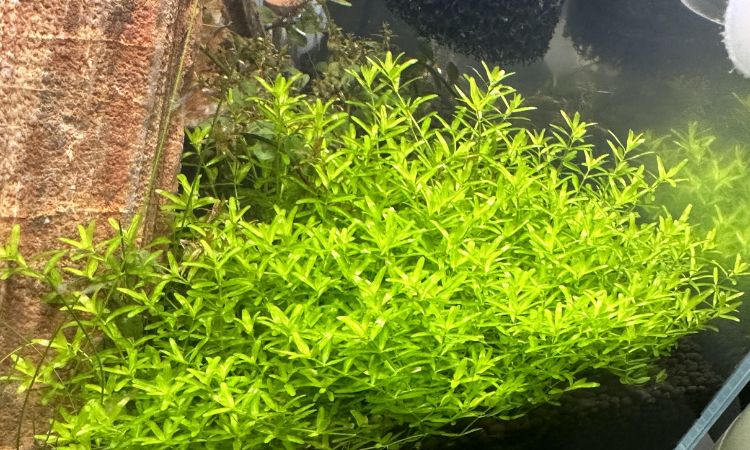
Pearlweed is valued for its small, bright green leaves and remarkable flexibility in planted aquarium layouts. Depending on how it is maintained, it can form a low-growing carpet across the foreground or develop into dense, bush-like clusters throughout the midground. This versatility makes it a favorite among beginners experimenting with aquascaping techniques.
Under moderate lighting, Pearlweed grows rapidly and responds well to regular pruning. Frequent trimming encourages compact, bushy growth, while less frequent maintenance allows the stems to grow taller and create a more natural appearance. Although supplemental CO₂ can produce tighter growth, the plant performs successfully in many low-tech aquariums with consistent lighting and balanced nutrients.
As a fast-growing species, Pearlweed also absorbs dissolved nutrients efficiently, helping maintain water quality while competing with algae for available resources. Simple stem cuttings root easily, allowing aquarists to expand planted areas quickly as the aquarium matures.
15. Amazon Frogbit (Limnobium laevigatum)
Care Level: Easy
Lighting Requirement: Low to High
Growth Rate: Fast
Placement: Floating Surface
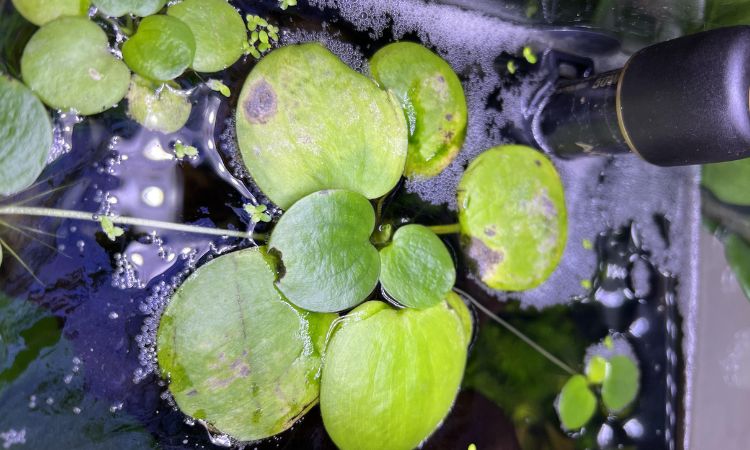
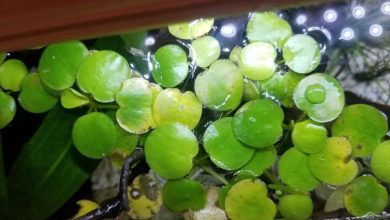
Amazon Frogbit is a floating freshwater plant prized for its attractive appearance and practical benefits. Its rounded leaves remain on the water’s surface while long, feathery roots extend downward, creating shelter for shrimp, fry, and small fish. These dangling root systems also provide additional surfaces for beneficial microorganisms to colonize.
Because Amazon Frogbit feeds directly from the water column, it absorbs dissolved nutrients efficiently and can help reduce excess nitrate levels when growing vigorously. As the floating leaves spread, they naturally diffuse bright overhead lighting, creating shaded areas that many tropical fish species prefer. This can be particularly beneficial in aquariums housing shy fish or species adapted to densely vegetated habitats.
Regular thinning is important because the plant reproduces rapidly through runners and can eventually cover the entire water surface. Maintaining open areas allows sufficient gas exchange and ensures adequate light reaches submerged plants below. With routine maintenance, Amazon Frogbit remains one of the easiest floating plants for beginners seeking both natural beauty and functional benefits in a freshwater aquarium.