If you’re looking for an aquarium plant that combines unusual colors with easy care, Bucephalandra is hard to beat. Native to the fast-flowing rainforest streams of Borneo, this slow-growing rhizome plant is prized for its shimmering foliage, compact growth, and ability to thrive in a wide range of freshwater aquariums. Whether you’re setting up your first planted tank or fine-tuning an intricate aquascape, Bucephalandra brings lasting beauty without demanding constant attention.
This guide covers everything you need to know about Bucephalandra plant care, including lighting, water parameters, planting methods, propagation, and practical tips for keeping it healthy and vibrant.
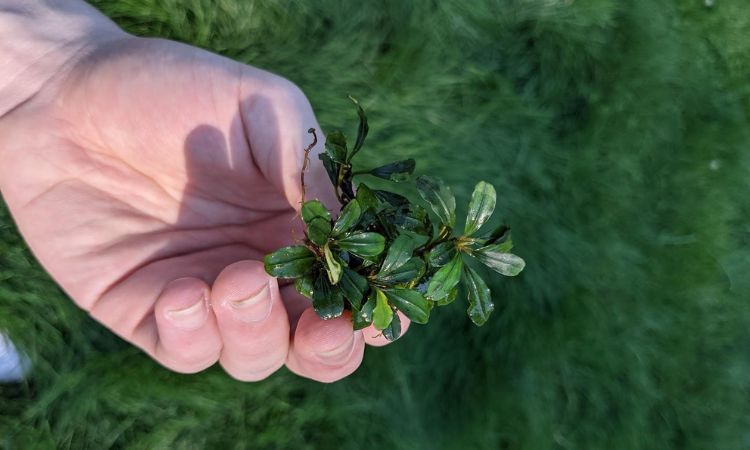
What Is Bucephalandra?
If you’re looking for an aquarium plant that stands out without demanding constant attention, Bucephalandra is hard to beat. Often called simply “Buce” by hobbyists, this slow-growing rhizome plant is prized for its striking leaf colors, compact growth, and ability to thrive in low-tech freshwater aquariums. While it shares many care requirements with Java Fern and Anubias, Bucephalandra offers far more variety in leaf shape, texture, and coloration, making it a favorite among aquascapers who want something truly distinctive.
Native to the Streams of Borneo
Bucephalandra belongs to a genus of flowering plants in the Araceae family and is naturally found only on the island of Borneo. In the wild, these plants grow along the edges of fast-flowing rainforest streams and rivers, where they anchor themselves to rocks, driftwood, and other submerged surfaces. This growth habit classifies them as epiphytic rheophytes—plants adapted to living on hard surfaces in areas with strong water movement.
Unlike rooted aquatic plants that rely heavily on substrate, Bucephalandra develops from a creeping rhizome that produces both leaves and roots. During seasonal flooding, many species spend months fully submerged, then continue growing above the waterline when water levels recede. This natural adaptability helps explain why Buce transitions well to aquarium life when introduced properly.
Why Bucephalandra Is So Popular
Although Bucephalandra entered the aquarium hobby much later than classics like Anubias and Java Fern, it has quickly become one of the most desirable aquascaping plants. Its appeal comes from combining attractive appearance with relatively simple care.
Some of the reasons aquarists choose Bucephalandra include:
- Wide variation in leaf shapes, from round and oval to long, narrow, and heavily rippled.
- Rich coloration ranging from deep green to bronze, purple, blue, and reddish hues, often with an iridescent metallic sheen.
- Tiny white or silver speckles that naturally appear on many varieties, giving the foliage extra visual depth.
- Slow, controlled growth that requires very little trimming.
- Excellent performance in low- to medium-light aquariums without requiring CO₂ injection.
- Compatibility with shrimp tanks, nano aquariums, community fish tanks, and nature-style aquascapes.
Healthy plants may also produce small underwater flowers, a rewarding sign that aquarium conditions are stable and the rhizome is well established.
A Perfect Plant for Low-Tech Aquariums
One of Bucephalandra’s biggest advantages is its flexibility. It grows successfully in aquariums with simple lighting and standard filtration, making it an excellent option for beginners who want an attractive planted tank without investing in complex equipment.
Like other rhizome plants, Buce should be attached to driftwood, lava rock, or natural stone rather than buried in the substrate. Once established, its roots gradually grip the surface, creating a natural appearance that only improves over time.
Because it grows slowly, Bucephalandra works especially well as a foreground or midground accent. It adds lasting detail to hardscape layouts without quickly outgrowing its space or requiring frequent maintenance.
A Plant That Keeps Improving
Perhaps the biggest reason experienced hobbyists collect Bucephalandra is that mature specimens become more beautiful with age. As the rhizome slowly spreads, it develops larger clumps, denser foliage, stronger root systems, and richer coloration. Instead of demanding constant pruning like fast-growing stem plants, Buce rewards patience by gradually transforming rocks and driftwood into natural-looking focal points.
If you’re planning a planted aquarium centered around wood and stone, Bucephalandra is one of the easiest ways to add long-lasting color, texture, and character. Many aquarium retailers also offer tissue-cultured or sustainably propagated varieties, giving hobbyists an environmentally responsible way to enjoy this remarkable plant while helping reduce pressure on wild populations.
Bucephalandra Light Requirements
Bucephalandra grows best under low to moderate light, where it develops healthy leaves with minimal algae. While many varieties can tolerate brighter lighting, they usually don’t need intense illumination to thrive. Stable lighting, balanced nutrients, and good water quality are far more important than using high-powered aquarium lights.
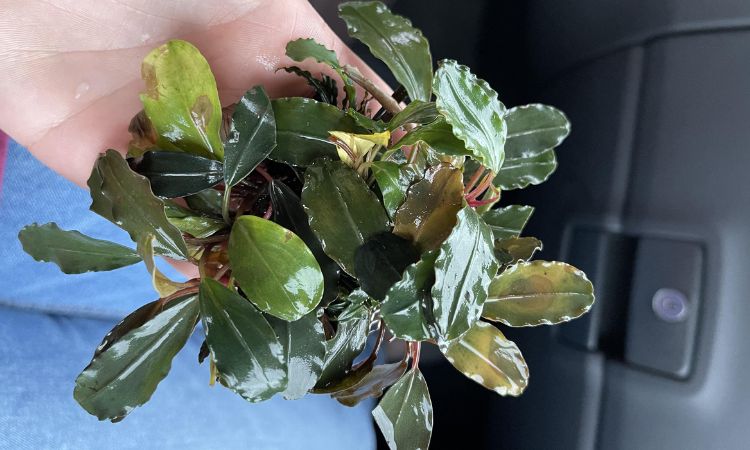
Ideal Light Intensity (Low to Moderate)
In nature, Bucephalandra grows along shaded rainforest streams, often attached to rocks and driftwood beneath overhanging vegetation. This explains why it performs so well in aquariums with modest lighting.
For most freshwater tanks, low to medium light is the sweet spot. Moderate illumination encourages steady growth while helping keep algae from covering the leaves. Since Bucephalandra grows slowly, excessive light often benefits algae more than the plant itself.
A daily photoperiod of 6–8 hours is usually enough for healthy development. If you’re using a brighter LED fixture, reducing the intensity or shortening the lighting period can help maintain a better balance.
Bucephalandra also makes an excellent choice for:
- Low-tech planted aquariums
- Nano tanks
- Shrimp aquariums
- Betta aquariums
- Shaded areas beneath taller plants or hardscape
Although CO₂ injection isn’t required, combining moderate lighting with CO₂ and balanced fertilization can increase growth speed and encourage richer coloration.
Signs of Too Much or Too Little Light
Lighting problems often appear gradually, so it’s worth paying attention to changes in both the leaves and overall growth.
Too much light may cause:
- Green spot algae or black beard algae forming on older leaves
- Pale or bleached foliage
- Leaf damage after sudden increases in brightness
- Slow growth despite strong lighting because algae outcompetes the plant
When this happens, reducing the light intensity or shortening the daily photoperiod is often more effective than adding chemicals to fight algae.
Too little light may cause:
- Extremely slow production of new leaves
- Duller coloration
- Longer gaps between leaf growth
- Smaller overall plant size over time
Unlike many stem plants, Bucephalandra rarely becomes tall and leggy under low light. Instead, it simply grows at a slower pace.
The goal isn’t maximum brightness—it’s providing enough light for healthy photosynthesis without creating conditions that encourage algae.
Best Light Spectrum and Color for Vibrant Leaves
The quality of light affects how Bucephalandra looks just as much as the intensity.
A full-spectrum LED designed for planted aquariums generally provides the best results. Balanced white light with adequate red and blue wavelengths supports healthy growth while allowing the plant’s natural colors to stand out.
Many prized Buce varieties display metallic blue, purple, bronze, or reddish iridescence. These colors become more noticeable under high-quality planted tank lighting, especially when viewed from different angles. The shimmering effect comes from the leaf’s surface structure rather than the light itself, so even healthy plants may appear to change color as you move around the aquarium.
Very cool white lighting can make colorful varieties look flatter, while overly saturated RGB settings may create an artificial appearance. For most hobbyists, a neutral full-spectrum planted aquarium light offers the best balance between natural color, healthy growth, and accurate viewing.
Remember that genetics ultimately determine leaf color. Even under ideal lighting, green varieties will remain mostly green, while colorful cultivars naturally display stronger metallic or reddish tones when grown in stable, healthy conditions.
Water Parameters for Healthy Bucephalandra
Bucephalandra is known for adapting to a wide range of aquarium conditions, but it performs best in a stable, well-maintained tank. Unlike fast-growing stem plants, it won’t quickly recover from sudden swings in temperature or water chemistry. Keeping the environment consistent is the key to healthy roots, vibrant foliage, and steady new growth.
Recommended Water Parameters
| Parameter | Recommended Range | Notes |
| Temperature | 70–79°F (21–26°C) | Slightly cooler water promotes healthy growth and reduces stress. |
| pH | 6.0–7.5 | Tolerates up to around 8.0 if conditions remain stable. |
| General Hardness (GH) | 5–12 dGH | Moderate hardness supplies essential minerals. |
| Carbonate Hardness (KH) | 2–8 dKH | Helps maintain stable pH. |
| CO₂ | Optional | Boosts growth and coloration but isn’t necessary. |
| Fertilizer | Liquid fertilizer recommended | Supplies nutrients from the water column. |
| Water Flow | Moderate | Encourages nutrient delivery and discourages debris buildup. |
Ideal Temperature Range
Bucephalandra naturally grows in tropical rainforest streams where water is cool, clean, and constantly moving. In the aquarium, a temperature between 70 and 79°F (21–26°C) generally produces the best results.
Although the plant can tolerate warmer tropical aquariums—including tanks kept for discus—extended temperatures above 80°F (27°C) may slow growth and increase the risk of stress, especially if water quality declines. If you live in a warm climate, maintaining good circulation and avoiding overheating can help keep the plant healthy.
Rather than chasing an exact temperature, focus on preventing large daily fluctuations.
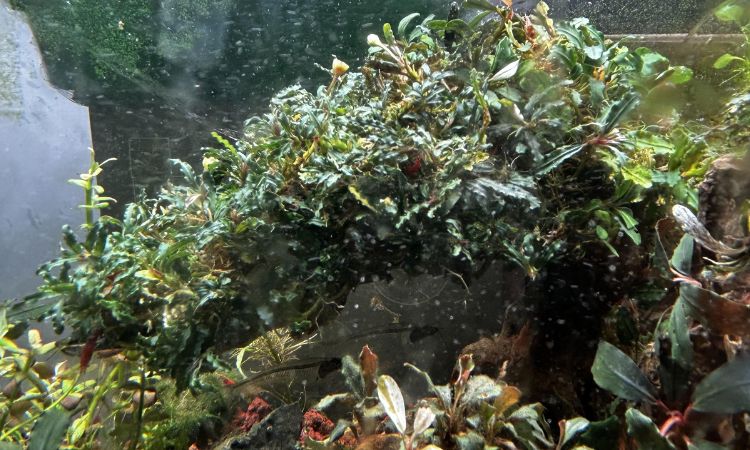
pH and Hardness (GH/KH)
One reason Bucephalandra is beginner-friendly is its ability to adapt to a fairly broad range of water chemistry.
A slightly acidic to neutral pH between 6.0 and 7.5 is ideal, although many aquarists successfully grow it in slightly alkaline water as long as the parameters remain consistent.
Moderate general hardness (GH) provides calcium and magnesium that support healthy growth and sturdy leaves. A GH of 5 dGH or higher is generally recommended, while 2–8 dKH offers enough buffering capacity to keep pH stable without making the water excessively hard.
Sudden shifts in pH or hardness are more likely to cause problems than maintaining values near the upper or lower end of the recommended range.
Does Bucephalandra Need CO₂?
No. Bucephalandra does not require CO₂ injection to grow successfully.
Its naturally slow growth allows it to thrive in low-tech aquariums with standard filtration and moderate lighting. This makes it an excellent choice for beginners or anyone who prefers a simpler planted tank.
That said, adding CO₂ offers several benefits:
- Faster leaf production
- Larger, fuller clumps over time
- Improved overall plant vigor
- More intense coloration in certain varieties
- Better ability to compete against algae
If you already run a high-tech planted aquarium, Bucephalandra will certainly benefit. If not, don’t feel pressured to add CO₂—the plant remains one of the easiest rhizome species to keep without it.
Fertilization and Nutrient Needs
Unlike rooted plants that obtain much of their nutrition from aquarium soil, Bucephalandra absorbs most of its nutrients directly from the water column. Because of this, a quality all-in-one liquid fertilizer is usually more beneficial than root tabs.
In a lightly stocked aquarium, regular fertilizer dosing helps replace nutrients consumed by plants and removed during water changes. Tanks with larger fish populations often provide additional nitrogen and phosphorus through fish waste, but trace elements such as iron, potassium, and micronutrients may still become depleted over time.
Healthy fertilization supports:
- Consistent new leaf growth
- Richer green, blue, bronze, or purple coloration
- Stronger root development
- Better resistance to algae and environmental stress
Avoid excessive fertilizer dosing in an attempt to speed up growth. Since Bucephalandra develops slowly, maintaining balanced nutrients and stable water quality is far more effective than adding large amounts of fertilizer. Combined with moderate lighting and regular maintenance, this approach encourages healthy, long-lasting plants without promoting nuisance algae.
How to Properly Place Bucephalandra in Your Tank
Proper placement is one of the biggest factors in long-term Bucephalandra success. Unlike rooted aquarium plants, Bucephalandra is an epiphyte that naturally grows attached to rocks and driftwood in fast-flowing rainforest streams. Instead of planting it deep into the substrate, focus on keeping the rhizome exposed while allowing the roots to anchor naturally. When positioned correctly, a healthy plant can thrive for years with very little maintenance.
Why You Should Never Bury the Rhizome
The most common beginner mistake is covering the rhizome with gravel or aquarium soil.
The rhizome is the thick horizontal stem that produces both leaves and roots. While the roots can grow into substrate or wrap around hardscape, the rhizome itself must remain above the surface. If it stays buried for long, oxygen cannot reach the tissue properly, increasing the risk of rot. Once the rhizome begins to decay, the entire plant may collapse even if the leaves initially appear healthy.
If you prefer placing Bucephalandra in the substrate, bury only the roots while leaving the rhizome completely exposed. Many aquarists gently pull the plant upward after planting to ensure the rhizome sits just above the gravel or sand.
A healthy rhizome should feel firm and produce new leaves from its growing tip. If it becomes soft, black, or mushy, remove the affected section before the damage spreads.
Best Hardscape to Attach It To
Because Bucephalandra naturally grows on solid surfaces, attaching it to hardscape closely mimics its habitat.
The best choices include:
- Driftwood, including spider wood, Malaysian driftwood, and Mopani wood
- Lava rock
- Dragon stone
- Seiryu stone
- River rocks with rough surfaces
Textured materials make it easier for the roots to grip over time. Smooth decorative stones also work, but they may take longer for the plant to establish itself.
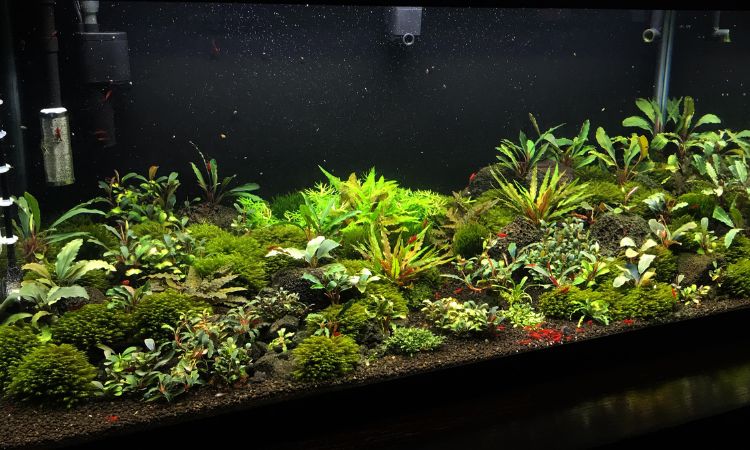
Many aquascapers combine several Bucephalandra varieties on a single piece of driftwood to create a mature, forest-like appearance. The contrasting leaf shapes and subtle color variations become even more attractive as the clumps slowly expand.
Attachment Methods (Thread, Glue, or Mesh)
There are several reliable ways to secure Bucephalandra until its roots naturally anchor.
Cotton thread is a beginner-friendly option. Wrap it gently around the rhizome and hardscape without tying it too tightly. Over time, the thread decomposes after the roots have attached.
Fishing line provides a nearly invisible hold and lasts much longer than cotton. It works well for larger pieces of driftwood or rocks that may be moved during aquascaping.
Aquarium-safe cyanoacrylate gel (super glue gel) is the quickest method. Apply a small drop to the hardscape, press the rhizome lightly into place for 20 to 30 seconds, and avoid coating the entire rhizome with glue. Only a tiny amount is needed to hold the plant securely.
Plastic mesh or moss mesh can also be useful when creating moss-covered rocks or attaching several small Bucephalandra specimens to a larger feature.
Whichever method you choose, leave enough room around the rhizome for water circulation.
Foreground, Midground, or Background Placement
Bucephalandra is most commonly used as a foreground or midground plant because of its slow growth and compact size.
- Foreground: Miniature varieties are ideal for nano aquariums, rock gardens, and detailed hardscape layouts.
- Midground: Medium-sized cultivars create natural transitions between carpeting plants and taller background species while adding texture without blocking the view.
- Background: Larger upright varieties can be positioned behind driftwood or along the rear corners of the aquarium, though they usually remain smaller than traditional background plants like Vallisneria or Amazon swords.
For the best visual effect, avoid planting individual stems evenly across the aquarium. Instead, group several plants together on rocks or wood to create natural-looking colonies. As the rhizomes slowly spread, these clusters develop into dense, colorful focal points that require very little trimming.