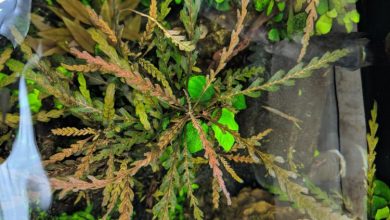
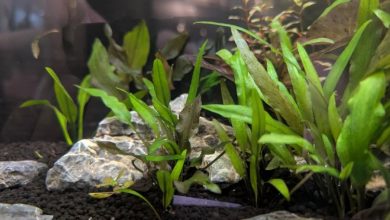
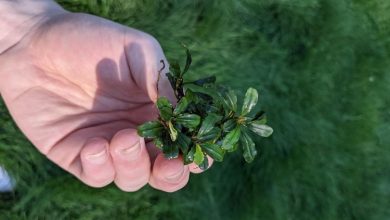
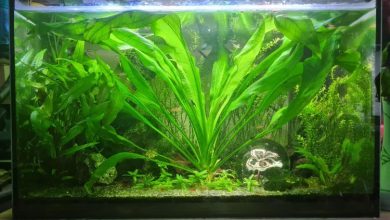
Not every aquarium plant needs vibrant colors to stand out. Bolbitis heudelotii, commonly known as the African Water Fern, captivates aquascapers with something far more subtle—graceful, lace-like fronds that sway effortlessly in the current, bringing a calm, natural elegance to any freshwater layout. Native to the clear, fast-flowing rivers of tropical Africa, this unique fern naturally anchors itself to rocks, driftwood, and submerged tree roots instead of growing in the substrate.
Its slow, steady growth and ability to thrive in low-tech aquariums have made it a favorite for Nature Aquarium and jungle-style aquascapes alike. While it doesn’t demand intense lighting or constant maintenance, providing stable conditions allows the plant to develop larger, richer green foliage and a lush, mature appearance over time.
Essential Water Parameters
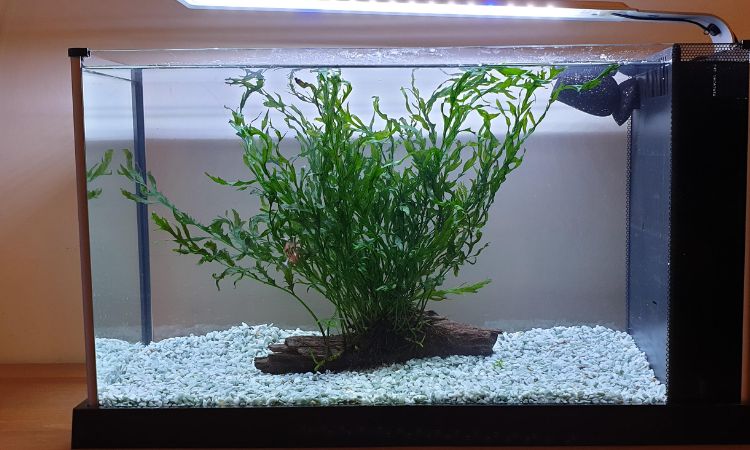
Healthy Bolbitis heudelotii starts with stable water conditions. Unlike many fast-growing stem plants that quickly adapt to changing environments, African Water Fern prefers consistency. It naturally grows in cool, clean, fast-moving streams where water chemistry changes very little throughout the year. Recreating those conditions in your aquarium encourages healthier fronds, stronger rhizome growth, and fewer problems with algae or leaf damage.
| Parameter | Recommended Range | Why It Matters |
| Temperature | 68–82°F (20–28°C) | Promotes steady growth and healthy foliage. |
| pH | 5.5–7.5 | Slightly acidic to neutral water supports long-term health. |
| General Hardness (GH) | 2–10 dGH | Soft to moderately hard water helps reduce stress. |
| Carbonate Hardness (KH) | 0–8 dKH | Moderate buffering maintains stable pH without excessive hardness. |
| Water Flow | Moderate to high | Delivers nutrients, improves oxygenation, and keeps leaves clean. |
Temperature Range
Bolbitis heudelotii grows best between 68 and 82°F (20–28°C), with many aquarists finding 72–78°F (22–26°C) to be the sweet spot for consistent development. Stable temperatures are more important than maintaining an exact number. Frequent swings caused by malfunctioning heaters or large, unconditioned water changes can stress the plant and slow the production of new fronds.
pH and Hardness
African Water Fern is naturally adapted to slightly acidic to neutral water, making a pH of 5.5–7.5 ideal. It also performs best in soft to moderately hard water, although established specimens can tolerate a broader range when changes occur gradually.
Very hard water isn’t always fatal, but it may contribute to slower growth, darker aging leaves, and reduced overall vigor. Rather than chasing perfect numbers, focus on maintaining stable water chemistry from week to week.
Water Flow
One of the most overlooked aspects of Bolbitis care is water movement. In nature, this fern grows in rivers and streams with continuous flow, where fresh, oxygen-rich water constantly passes over its leaves and rhizome.
Aim for moderate to high circulation using a canister filter, powerhead, or well-positioned filter outlet. Good flow provides several benefits:
- Delivers dissolved nutrients and CO₂ to the leaves.
- Prevents detritus from collecting on the fronds.
- Reduces the likelihood of algae settling on slow-growing foliage.
- Improves oxygen availability around the rhizome.
The current should be steady but not so forceful that it continuously bends or damages the leaves.
Avoid Sudden Changes and Organic Waste
Bolbitis heudelotii responds much better to stable conditions than frequent adjustments. Rapid shifts in temperature, pH, or hardness can stress the plant, sometimes causing older leaves to darken or deteriorate before new growth appears.
Organic debris can also become a problem because the fern grows slowly. Fish waste, uneaten food, and decaying plant material may settle on the foliage if circulation is poor, encouraging algae and reducing photosynthesis. Weekly water changes, regular filter maintenance, and gentle removal of accumulated debris help keep the plant healthy over the long term. Stable, clean water is often the single biggest factor separating an average Bolbitis from a truly thriving specimen.
Lighting Requirements
Low to Medium Lighting Supports Healthy Growth
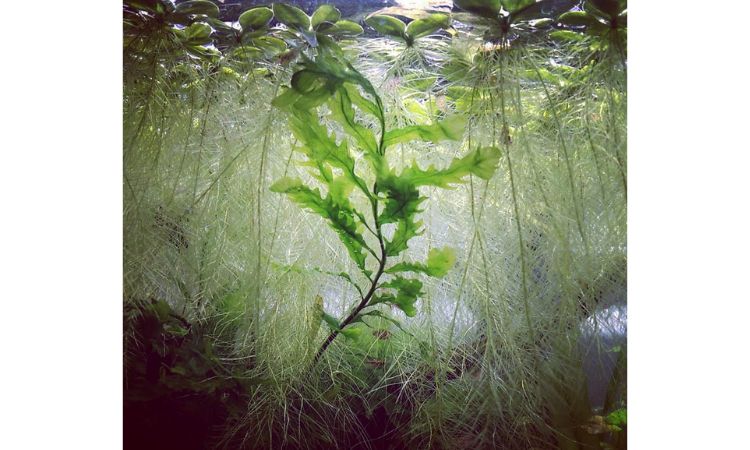
Bolbitis heudelotii thrives under low to medium lighting, making it an excellent choice for low-tech planted aquariums. A light intensity of 20–50 PAR is generally enough to support steady growth while keeping the fern healthy. Since this species naturally grows beneath overhanging vegetation in shaded African streams, it doesn’t require powerful lighting to flourish. Moderate illumination also helps maintain its rich green color without placing unnecessary stress on the plant.
Avoid Intense Light to Reduce Algae and Leaf Stress
Bright, direct lighting is one of the most common reasons African Water Fern struggles in an aquarium. Because it grows slowly, algae can quickly colonize its delicate fronds before new leaves have a chance to develop. Excessive light may also cause older foliage to fade, develop algae, or deteriorate more rapidly. If your aquarium uses high-output LEDs, position Bolbitis beneath driftwood, taller plants, or floating vegetation where it receives filtered light rather than direct exposure.
Maintain a Consistent 6–8 Hour Photoperiod
A daily photoperiod of 6–8 hours provides sufficient energy for photosynthesis while helping maintain a balanced aquarium ecosystem. Extending the lighting period rarely improves growth but significantly increases the risk of nuisance algae. Using an automatic timer is the easiest way to provide a consistent day-night cycle, promoting healthier plants and more stable conditions for fish, shrimp, and beneficial microorganisms.
| Lighting Factor | Recommended Range |
| Light Intensity | Low to medium (20–50 PAR) |
| Photoperiod | 6–8 hours per day |
| Light Type | Full-spectrum LED aquarium lighting |
| Best Placement | Shaded or partially shaded areas near driftwood or rock |
Placement and Aquascaping Techniques
Never Bury the Rhizome
The single most important rule when growing Bolbitis heteroclita is to keep the rhizome above the substrate. This thick, horizontal stem is where the plant produces both roots and new leaves. If it’s buried beneath gravel or aquasoil, oxygen cannot reach the tissue properly, greatly increasing the risk of rhizome rot. Over time, the rhizome may become soft, dark, and begin to decay, eventually killing the entire plant. Only the fine roots should be allowed to contact the hardscape or substrate while the rhizome remains fully exposed.
Attaching the Fern to Driftwood or Rocks
Because Bolbitis heteroclita is an epiphyte, it naturally grows attached to submerged wood and rocks rather than rooted in the aquarium floor. Position the rhizome against driftwood, lava rock, or other porous hardscape, then secure it using cotton thread, fishing line, or a small amount of aquarium-safe cyanoacrylate gel. Avoid wrapping the ties too tightly, as the rhizome should have room to expand as it grows. After several weeks, the roots will naturally anchor themselves to the surface, allowing you to remove any thread if desired.
Choosing the Best Location in Your Aquascape
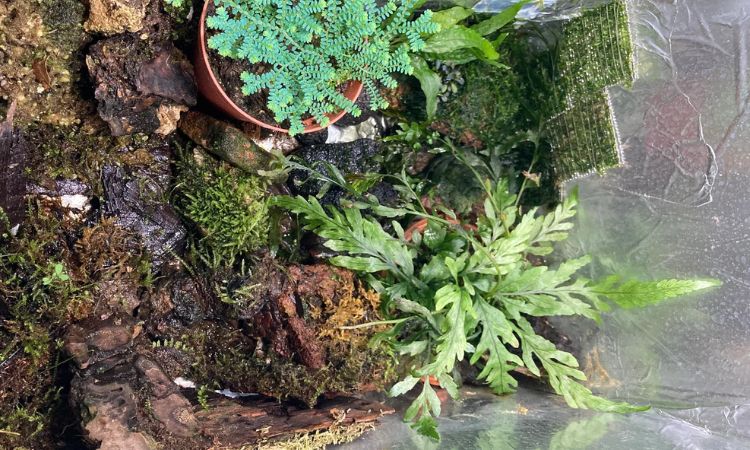
Bolbitis heteroclita works best as a midground accent plant, where its broad, textured foliage can soften the hard edges of rocks and driftwood without blocking the overall layout. It looks especially attractive when attached to branching wood, tucked into stone crevices, or positioned beneath taller background plants to recreate the appearance of a shaded tropical stream. Leave several inches of open space around the plant so new fronds can unfurl naturally without becoming crowded.
Place It Where Water Movement Is Strong
Unlike many low-light aquarium plants, Bolbitis heteroclita appreciates moderate water circulation. Positioning it near the outflow of a canister filter or in an area with steady current helps keep sediment from collecting on the leaves while delivering a continuous supply of oxygen, carbon dioxide, and dissolved nutrients. Good circulation also discourages algae from settling on the slow-growing fronds, allowing the plant to stay cleaner and healthier with less maintenance. Avoid stagnant corners where debris can accumulate around the rhizome, as poor flow often leads to slower growth and declining leaf quality.
Substrate and Nutrient Supplementation
Choosing the Right Substrate
Unlike rosette plants or heavy root feeders, Bolbitis heteroclita gets very little nutrition from the substrate. Because it is an epiphyte, its rhizome should remain attached to driftwood or rock rather than planted in the aquarium floor. As a result, both inert substrates, such as sand or gravel, and nutrient-rich aquasoils work equally well. Your substrate choice should be based on the needs of the rest of your aquascape rather than this fern alone.
| Substrate Type | Suitability | Notes |
| Sand | Excellent | Ideal when the fern is attached to hardscape. |
| Gravel | Excellent | Works well in community and low-tech aquariums. |
| Aquasoil | Excellent | Benefits nearby rooted plants but isn’t required for Bolbitis heteroclita. |
| Root Tabs | Usually Unnecessary | Provide little benefit unless nearby root-feeding plants need supplementation. |
Water Column Fertilization
Since its roots primarily anchor the plant instead of absorbing nutrients, Bolbitis heteroclita relies mainly on the water column for nutrition. Regular dosing of a comprehensive liquid fertilizer helps maintain healthy growth and supports the production of deep green, well-formed fronds. A balanced fertilizer should supply both macronutrients—nitrogen (N), phosphorus (P), and potassium (K)—and essential trace elements such as iron, manganese, and magnesium. In tanks with frequent water changes or heavy plant growth, consistent fertilization produces much better results than occasional large doses.
Carbon Dioxide (CO₂) Supplementation
Bolbitis heteroclita can thrive in low-tech aquariums without injected CO₂, making it an excellent choice for beginners. However, adding 20–30 ppm of carbon dioxide noticeably improves performance. Under stable CO₂ levels, new leaves emerge more frequently, foliage becomes fuller, and overall growth is more compact. The additional carbon also helps the fern compete more effectively with algae, particularly when paired with moderate lighting and balanced fertilization.
| Nutrient Source | Required | Benefit |
| Liquid Fertilizer | Recommended | Supplies nutrients absorbed through the water column. |
| Root Tabs | Optional | Mainly useful for nearby rooted plants, not the fern itself. |
| CO₂ Injection (20–30 ppm) | Optional but Beneficial | Encourages faster growth, denser foliage, and healthier leaves. |
| Trace Elements (Iron & Micronutrients) | Recommended | Supports rich green coloration and vigorous new growth. |
Propagation Methods
Dividing the Creeping Rhizome
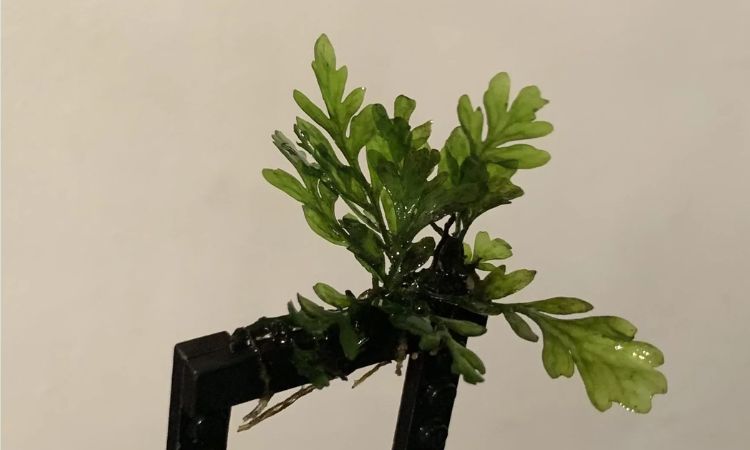
The easiest and most reliable way to propagate Bolbitis heteroclita is by dividing its creeping rhizome. Wait until the plant is well established and has produced multiple healthy leaves before making any cuts. Using a sharp, sterilized pair of aquascaping scissors or a razor blade, divide the rhizome into sections, making sure each piece retains several leaves and a healthy cluster of roots. Avoid cutting into the growing tip unless the rhizome is long enough to support multiple divisions. Healthy sections recover much faster and begin producing new fronds within a few weeks under stable conditions.
Propagating Adventitious Plantlets
Mature Bolbitis heteroclita may occasionally develop small adventitious plantlets along older fronds or near the rhizome. These tiny ferns gradually produce their own leaves and roots before separating naturally. Allow the plantlets to develop a small but established root system before removing them. Once they have several leaves and visible roots, gently detach them using clean scissors and prepare them for attachment elsewhere in the aquarium. Removing plantlets too early often slows their establishment and reduces survival rates.
Attaching Newly Divided Plants
After propagation, newly separated rhizomes should be secured to fresh driftwood, lava rock, or other porous hardscape rather than planted in the substrate. Use cotton thread, fishing line, or a small amount of aquarium-safe cyanoacrylate gel to hold each division firmly in place while leaving the rhizome fully exposed. Within several weeks, the roots naturally anchor themselves to the surface, allowing the plant to grow without additional support. Position new divisions in areas with gentle to moderate water movement to improve oxygen exchange, deliver nutrients, and reduce the chance of algae settling on young leaves.
Tips for Faster Establishment
Newly propagated Bolbitis heteroclita grows slowly, so patience is essential. Stable water parameters, moderate lighting, regular liquid fertilization, and clean, well-circulated water all help new divisions establish more quickly. Avoid moving the plant repeatedly during its first month, as frequent repositioning can interrupt root attachment and delay new growth. Once securely attached, the fern requires very little attention and will gradually expand into another attractive clump.