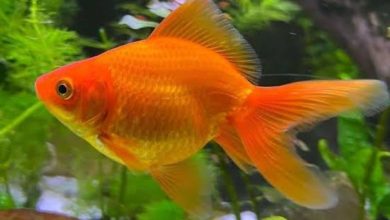
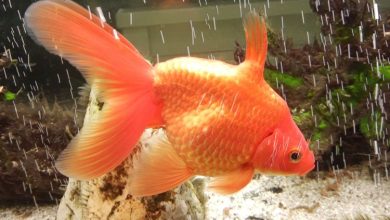
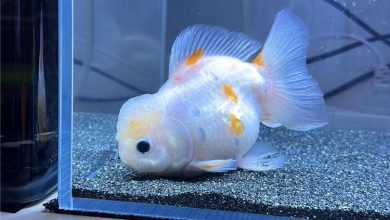
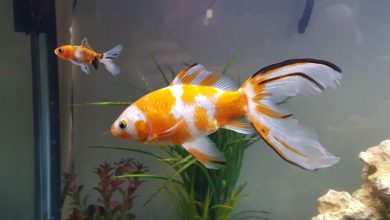
The Ranchu Goldfish is one of the most prized fancy goldfish varieties, often called the “king of goldfish” for its elegant shape and unique appearance. Originating in Japan, the Ranchu is recognized by its rounded body, smooth back without a dorsal fin, short tail, and distinctive head growth known as a wen.
Bred from lionhead-type goldfish, Ranchu have become popular among aquarists worldwide for their graceful movement, peaceful temperament, and wide range of colors. From classic red and white patterns to calico and black varieties, each Ranchu brings a unique beauty to the aquarium.
In this guide, we’ll explore the Ranchu Goldfish’s origin, physical characteristics, and essential care tips to help you understand what makes this fish such a beloved choice among goldfish keepers.
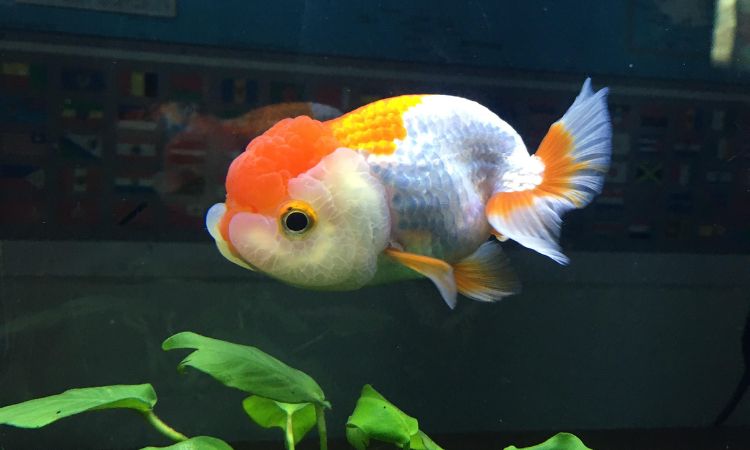
The History & Origin of the Ranchu Goldfish
The Ranchu Goldfish is the result of centuries of careful selective breeding, combining Chinese goldfish traditions with Japanese refinement. Today, it is considered one of the most valuable and admired fancy goldfish varieties, but its journey began long before it became a favorite among modern aquarium keepers.
From Ancient China to Feudal Japan
The Ranchu’s story traces back to China, where breeders developed early hooded goldfish varieties from common goldfish ancestors. These fish were selectively bred for unusual traits, including rounded bodies and fleshy head growths known as a wen. One of the important ancestors of the Ranchu was the Chinese Lionhead goldfish, also known as Maruko, which shared the characteristic head growth but had a different body structure.
During the Edo period in Japan (1603–1867), Japanese breeders continued improving these hooded goldfish through careful selection. They focused on creating a fish with a compact, rounded body, smooth curved back, and balanced proportions. Over generations, these breeding efforts transformed the Lionhead-type goldfish into the Ranchu we recognize today.
Unlike many goldfish varieties that were developed mainly for color, Ranchu breeders placed strong emphasis on body shape, movement, and overall harmony. The absence of a dorsal fin became one of the defining features of the breed, creating the smooth, rounded back that makes Ranchu instantly recognizable.
Japanese Breeding Standards & Culture
In Japan, Ranchu keeping became more than a simple hobby—it developed into a traditional art form. Breeders carefully selected fish based on strict standards, similar to the way enthusiasts judge koi. A high-quality Ranchu was expected to have a strong body, well-developed head growth, smooth back curvature, and a graceful swimming style.
Japanese breeders traditionally viewed Ranchu from above rather than from the side. This practice developed from the history of keeping goldfish in shallow containers and ponds, where the top view was the most important perspective. These viewing ponds, often called kanki, allowed keepers to appreciate the fish’s body shape, tail movement, and head development.
The ideal Ranchu was judged by balance and proportion rather than simply size or color. A broad head, rounded body, strong tail connection, and elegant movement were considered signs of quality. This careful approach helped establish the Ranchu as the “king of goldfish” and inspired dedicated breeding communities around the world.
Today, Ranchu remain highly respected among goldfish enthusiasts. While modern breeders in Thailand, China, Japan, and other countries have developed their own lines and styles, the foundation remains the same: creating a graceful fish that reflects generations of patience, skill, and dedication.
Key Physical Traits & Identification Guide
A Ranchu Goldfish is easy to recognize once you know the features that define this unique breed. Unlike many fancy goldfish, Ranchu are valued not just for their colors but for their overall body balance, head development, smooth back shape, and graceful swimming style.
Key physical characteristics of a Ranchu Goldfish:
- No dorsal fin: The Ranchu has a completely smooth back without a dorsal fin, creating its signature rounded profile.
- Prominent wen growth: A fleshy head growth develops around the head and cheeks, giving the fish its distinctive “hooded” appearance.
- Egg-shaped body: The body is short, deep, and rounded, resembling an oval shape rather than the streamlined form of common goldfish.
- Curved back and tucked tail: The back forms a smooth arch that flows into a downward-curving tail base.
- Short, paired tail fins: The tail is compact and fan-shaped, designed for controlled, graceful movement rather than speed.
- Wide range of colors: Ranchu are available in metallic, matte, and calico patterns, including red, white, black, chocolate, and Sakura varieties.
Head Growth (The “Wen”)
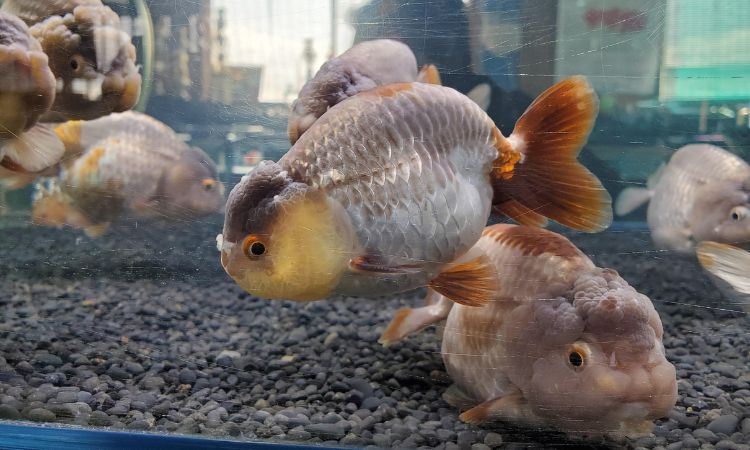
The most recognizable feature of a Ranchu is its wen, a soft, fleshy growth that develops on the head. This feature is one of the main traits breeders select for when producing high-quality Ranchu.
The wen does not appear immediately after hatching. Young Ranchu fry typically begin developing visible head growth at around 3 to 4 months of age, although the size and quality of the wen depend heavily on genetics, water quality, and nutrition. In many fish, the wen continues growing and reaches its strongest development between 1 and 2 years old, with some high-quality specimens continuing to improve as they mature.
Ranchu wen development is usually divided into three areas:
- Cranial growth: The growth on the top of the head, often considered one of the most important areas when judging Ranchu quality.
- Infraorbital growth: The wen that develops around the area beneath and beside the eyes, adding fullness to the face.
- Opercular growth: The growth covering the gill plates, creating the rounded “lion-like” appearance associated with premium Ranchu.
A well-developed wen should look balanced and proportional to the fish’s body. Excessive growth that blocks the eyes or interferes with breathing may require extra attention from the keeper.
The Egg-Shaped Body & Arching Back
The Ranchu’s body shape is one of its most important identifying features. A quality Ranchu has a short, deep, egg-shaped body with a smooth curve from the head to the tail.
Unlike Lionhead goldfish, which often have a flatter back, Ranchu are recognized by their rounded arch. The back should flow naturally toward the tail without any visible trace of a dorsal fin. This smooth curve is a defining characteristic developed through generations of Japanese breeding.
Another important feature is the tail tuck, sometimes referred to as the Ozaki-style tail connection. The caudal peduncle (the area connecting the body to the tail) should curve downward, creating the compact appearance that gives Ranchu their unique swimming posture.
Because Ranchu lack a dorsal fin, they have less stability in the water compared with regular goldfish. Their movement is slower and more deliberate, which is part of their charm. They are not built for speed but for graceful, balanced swimming.
Tail Fin Variations (Broad Tail vs. Butterfly Tail)
The Ranchu tail plays an important role in both appearance and movement. Traditional Ranchu usually have a short, rounded double tail that spreads outward like a small fan.
Common tail variations include:
- Broad Tail Ranchu: The classic style, featuring a wide, symmetrical tail that creates a balanced appearance when viewed from above. This is the preferred tail type in many traditional Japanese breeding lines.
- Butterfly Tail Ranchu: A newer variation with a wider, more flowing tail shape that resembles butterfly wings when viewed from above. This style is especially popular among hobbyists who appreciate a more dramatic appearance.
A healthy Ranchu should have a strong tail connection and smooth swimming ability. A poorly formed tail can affect balance and make movement more difficult.
Color Profiles & Scale Types
Ranchu Goldfish come in a wide variety of colors and scale patterns, making each fish unique. Their appearance can change as they mature, with some juveniles developing completely different colors as adults.
The main scale types include:
- Metallic scales: These have a shiny, reflective appearance similar to polished metal. Metallic Ranchu often display strong reds, oranges, whites, or blacks.
- Nacreous scales: A mixed scale type that creates a pearl-like appearance. These fish often show multiple colors and are common in calico patterns.
- Matte scales: These have a softer, non-reflective appearance and can create a more subtle, elegant look.
- Calico patterns: A combination of multiple colors created through nacreous scaling, often featuring patches of red, black, orange, and white.
Popular Ranchu color varieties include:
- Red and White (Sarasa): One of the most recognizable patterns, featuring a white body with red markings.
- Self-Red: A solid red Ranchu with a bold, uniform coloration.
- Black Ranchu: Known for its deep dark coloration, although some may lighten as they mature.
- Chocolate Ranchu: A rare brown-toned variety with warm, earthy coloring.
- Sakura Ranchu: A delicate red-and-white variety inspired by cherry blossom colors, highly valued among collectors.
Whether you prefer a classic Japanese-style Ranchu or a colorful Thai Ranchu with unique patterns, the breed’s beauty comes from the combination of body shape, wen development, movement, and carefully selected coloration. These features are what make Ranchu one of the most admired fancy goldfish varieties in the aquarium world.
Ranchu vs. Lionhead vs. Oranda: What’s the Difference?
Ranchu, Lionhead, and Oranda goldfish are three of the most recognizable fancy goldfish varieties, and they are often confused because they share several features, including rounded bodies and distinctive head growth known as a wen. However, each breed has its own unique appearance, breeding history, and body structure.
The easiest way to tell them apart is by looking at three key features: the presence or absence of a dorsal fin, the shape of the back, and how the wen develops around the head.
| Feature | Ranchu Goldfish | Lionhead Goldfish | Oranda Goldfish |
| Origin | Japan, developed from Chinese Lionhead-type goldfish | China, one of the earliest hooded fancy goldfish varieties | China, later refined in Japan and other countries |
| Dorsal fin | Completely absent | Completely absent | Present |
| Back shape | Smooth, rounded arch with a strong curve flowing toward the tail | Rounded back, but usually less defined than Ranchu | More similar to traditional goldfish body shape with a higher profile |
| Body shape | Short, deep, egg-shaped body with a compact appearance | Deep, rounded body with a fuller belly | Large, long, deep body with a flowing silhouette |
| Tail position | Tail is tucked downward at about a 45-degree angle | Tail sits lower and follows the rounded body shape | Tail spreads outward from the rear of the body |
| Wen development | Moderate, balanced growth covering the head and cheeks | Large, thick wen covering much of the head and face | Hood-like wen that grows mainly around the top of the head and face |
| Swimming style | Slow, graceful movement | Gentle swimmer, often slightly clumsy due to heavy body and wen | Calm swimmer but usually more stable than Ranchu or Lionhead |
| Main appeal | Traditional Japanese elegance and balanced proportions | Massive head growth and charming “lion-like” appearance | Unique hood, flowing fins, and wide range of colors |
| Best viewing style | Traditionally appreciated from above | Often admired from both top and side views | Commonly displayed in standard aquariums |
Ranchu Goldfish Care Requirements
Ranchu goldfish may look delicate with their rounded bodies and flowing tails, but they can thrive for many years when kept in the right environment. Because of their compact body shape, lack of a dorsal fin, and slower swimming ability, Ranchus need a setup that prioritizes clean water, gentle movement, and a safe aquarium layout.
Unlike common goldfish that can tolerate stronger currents and more open swimming conditions, Ranchus are slower and less agile. A carefully designed tank helps prevent stress, injuries, and health problems while allowing these beautiful fish to display their natural behaviors.
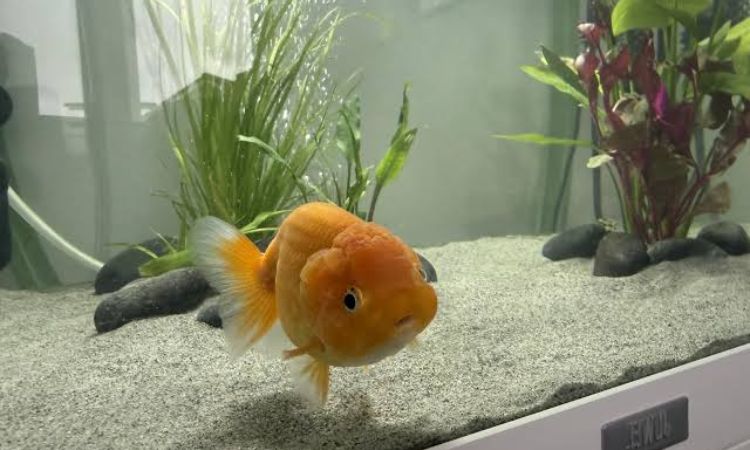
Tank Size & Habitat Setup
Minimum Tank Size
Ranchu goldfish require more space than their small appearance may suggest. They produce a significant amount of waste and need stable water conditions, so a spacious aquarium is essential.
A good starting point is:
- 20–30 gallons for one adult Ranchu
- Add 10–15 gallons for each additional Ranchu
While a single Ranchu can survive in smaller tanks temporarily, larger aquariums are much easier to maintain because water quality remains more stable. Extra swimming space also encourages healthier growth and reduces stress.
A longer tank is usually better than a tall tank because Ranchus are not powerful swimmers and benefit more from horizontal swimming space.
Substrate Selection
Ranchus spend a lot of time exploring the bottom of the aquarium, searching for leftover food and moving through the substrate. Choosing the right material helps protect their delicate bodies.
Recommended options include:
Fine Sand
Fine aquarium sand is one of the safest choices because Ranchus can sift through it without damaging their mouths or bodies.
Smooth River Stones
Large, rounded stones can also work well, especially when they are too large for the fish to accidentally swallow.
Avoid:
- Sharp gravel edges
- Crushed coral
- Rough decorative rocks
Small, jagged gravel can scrape the wen, damage fins, or become trapped in the mouth while the fish is foraging.
Submerged Décor & Safety
Ranchus have limited maneuverability compared with slimmer goldfish varieties. Their rounded bodies and large head growth make them more likely to bump into objects, so aquarium decorations should be chosen carefully.
A safe Ranchu aquarium should include:
- Smooth decorations with no sharp edges
- Open swimming areas
- Soft live plants or silk plants
- Securely placed ornaments
Avoid:
- Sharp rocks or driftwood with rough surfaces
- Hard plastic plants
- Narrow caves or decorations with small openings
The wen is especially vulnerable to cuts and irritation. Any injury to this head growth can create opportunities for bacterial infections, so a simple, open layout is usually the best choice.
Water Parameters & Quality Control
Maintaining excellent water quality is one of the most important parts of Ranchu care. Their compact bodies and heavy waste production make them sensitive to poor conditions, especially ammonia and nitrite buildup.
Regular testing, proper filtration, and consistent water changes help keep Ranchus healthy and active.
| Parameter | Target Range |
| Water Temperature | 65–72°F (18–22°C) |
| pH Level | 6.5–7.5 |
| Water Hardness (dGH) | 4–12 dGH |
| Ammonia | 0 ppm |
| Nitrite | 0 ppm |
| Nitrate | Ideally below 20–40 ppm |
Ranchus prefer stable conditions rather than frequent changes. Sudden shifts in temperature or water chemistry can cause unnecessary stress and increase the risk of disease.
Filtration: Strong Cleaning, Gentle Flow
Ranchus need efficient filtration because goldfish are heavy waste producers, but the water movement should remain gentle.
A powerful filter that creates strong currents can exhaust Ranchus because they are naturally slower swimmers. Constantly fighting the flow can lead to stress, fatigue, and difficulty feeding.
Good filtration choices include:
- Sponge filters — gentle, provide biological filtration, and add oxygen
- Throttled canister filters — effective for larger tanks when the flow is reduced
- Hang-on-back filters with adjustable output — suitable when modified for calmer movement
The goal is not simply maximum water movement but clean, oxygen-rich water with a comfortable current.
Water Changes and Maintenance
Routine maintenance is essential for long-term Ranchu health.
A typical schedule includes:
- Weekly water testing
- Regular partial water changes of around 25–50%
- Removing uneaten food and waste
- Cleaning filter media gently with old tank water
Avoid replacing all filter media at once, as beneficial bacteria are needed to maintain a stable aquarium cycle.
A clean environment supports healthy wen growth, stronger immunity, and better coloration.
Creating the Ideal Ranchu Environment
A well-designed Ranchu aquarium does not need to be complicated. The best setups focus on comfort and safety:
- Spacious tank with open swimming room
- Gentle filtration and good oxygenation
- Smooth substrate
- Stable water parameters
- Minimal decorations that could cause injury
With the right habitat, Ranchu goldfish can display their full beauty — from their rounded body shape and graceful movements to their unique head growth that makes them one of the most beloved fancy goldfish varieties.
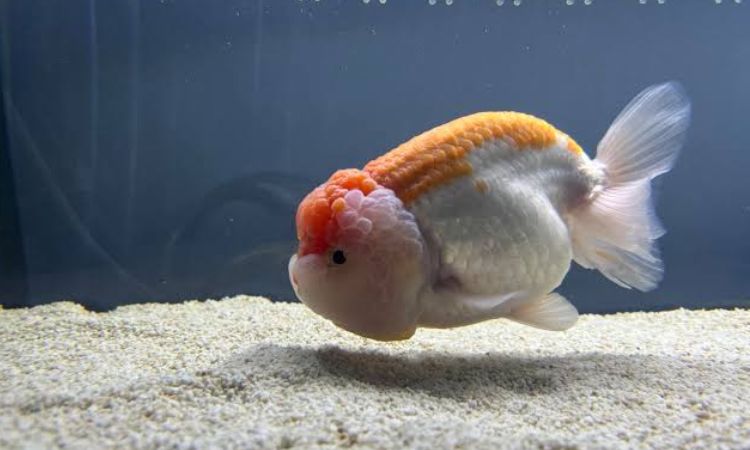
Diet & Nutrition Strategy
Ranchu goldfish need a balanced diet that supports healthy growth, strong immunity, and proper digestion. Because their compact body shape makes them more prone to digestive issues, feeding quality foods in controlled portions is essential.
Feeding Frequency
Feed Ranchu goldfish 2–3 small meals per day instead of one large feeding. Each meal should be an amount they can finish within about 2 minutes.
Small, frequent feedings help prevent:
- Overeating
- Constipation
- Poor water quality from leftover food
Young Ranchus may need slightly more frequent feeding during growth, while adults should receive more controlled portions.
Best Foods for Ranchu Goldfish
A varied diet provides the best nutrition.
High-quality sinking pellets
- Should be the main food source
- Provide balanced protein, vitamins, and minerals
- Reduce the risk of swallowing excess air compared with floating foods
Live or frozen foods
Offer occasionally as protein-rich treats:
- Bloodworms — support growth and conditioning
- Daphnia — provide protein and aid digestion
- Brine shrimp — a nutritious supplement
Frozen foods are generally safer than live foods because they reduce the risk of introducing parasites.
Preventing Swim Bladder Issues
Ranchus are more prone to buoyancy problems because of their short, rounded bodies. Feeding habits can influence these issues.
Avoid relying heavily on floating flakes or pellets because Ranchus may swallow air while feeding at the surface. Excess air intake can contribute to:
- Floating problems
- Loss of balance
- Difficulty swimming normally
Sinking pellets are usually the better everyday choice. If floating foods are used, soaking them before feeding can help soften the food and reduce air intake.
Blanching Vegetables for Digestive Health
Vegetables provide fiber that supports digestion and helps prevent constipation.
Good options include:
- Peas — remove the shell and soften before feeding
- Zucchini — slice and blanch for easier eating
- Spinach and leafy greens — offer small amounts as a supplement
Vegetables should complement, not replace, a quality goldfish diet.
A combination of sinking pellets, occasional protein foods, and blanched vegetables helps Ranchu goldfish maintain healthy growth, vibrant colors, and better overall condition.