If you’re building your first planted aquarium, choosing the right plants can make the difference between a thriving underwater landscape and a frustrating experience. Fortunately, many aquatic plants are naturally hardy, adaptable, and capable of growing beautifully without expensive equipment or constant maintenance. The 8 best low-maintenance aquarium plants for beginners in 2026 are excellent choices for low-tech setups, offering vibrant greenery, natural shelter for fish, and lasting beauty with minimal care.
1. Anubias (Anubias barteri / Anubias nana)
Care Level: Extremely Easy
Lighting Requirements: Low
Growth Rate: Slow
Placement: Attach to driftwood, rocks, or other hardscape (never bury the rhizome)
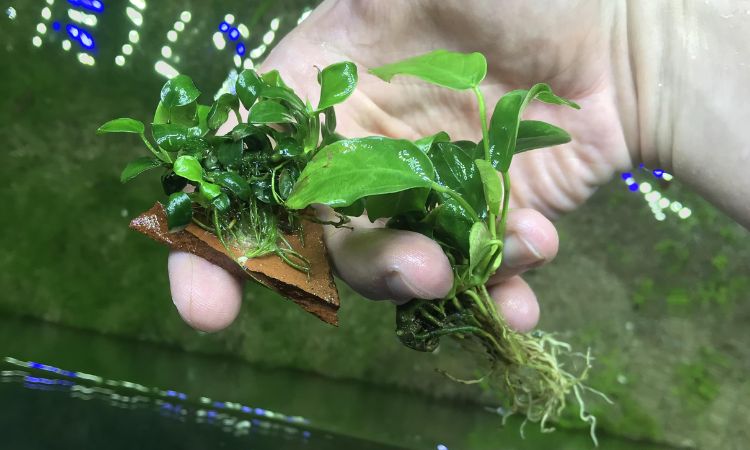
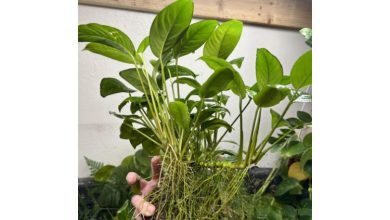
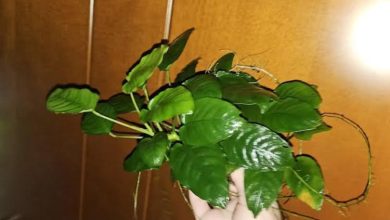
Anubias is widely regarded as one of the easiest freshwater aquarium plants for beginners. Its thick, dark green leaves are durable enough to withstand curious fish and are less likely to be damaged by species that occasionally nibble on vegetation, including some goldfish and cichlids. Because it grows slowly, Anubias requires very little pruning and fits well in both small and large aquariums.
Unlike rooted plants, Anubias grows from a horizontal rhizome. This rhizome should always remain above the substrate, as burying it can lead to rot. The plant is best secured to driftwood or rocks using cotton thread, fishing line, or aquarium-safe cyanoacrylate gel glue until its roots naturally attach.
Why beginners love it: Anubias tolerates low light, adapts to a wide range of water conditions, and remains attractive with minimal maintenance, making it one of the most forgiving aquarium plants available.
2. Java Fern (Microsorum pteropus)
Care Level: Very Easy
Lighting Requirements: Low to Moderate
Growth Rate: Slow to Moderate
Placement: Attach to driftwood, rocks, or porous decorations while keeping the rhizome exposed
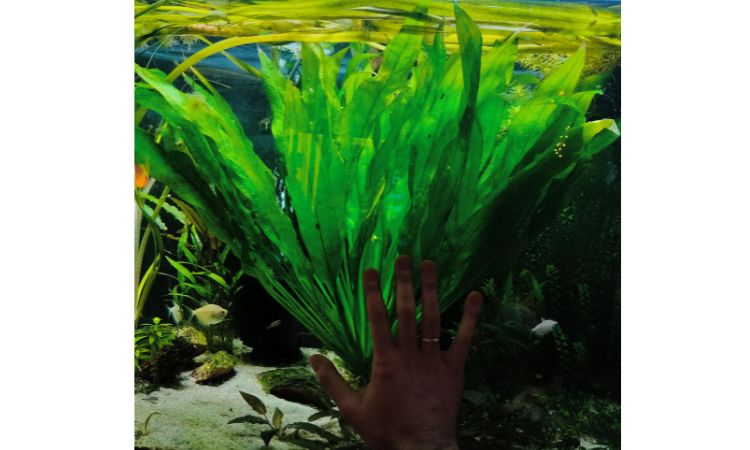
Java Fern has been a favorite among aquarium hobbyists for decades because of its exceptional adaptability. It grows well in low-tech aquariums without pressurized CO₂ and tolerates a broad range of temperatures, pH levels, and water hardness. Several attractive varieties—including Windelov, Trident, Narrow Leaf, and Philippine Java Fern—offer different leaf shapes while sharing the same straightforward care requirements.
Like Anubias, Java Fern should not be buried in the substrate. Instead, attach the rhizome to hardscape and allow the roots to anchor naturally over time. Mature plants often reproduce by producing tiny plantlets along older leaves, which can be removed and attached elsewhere once they develop roots.
Why beginners love it: Java Fern is remarkably resilient, requires very little attention, and naturally propagates without complicated care techniques.
3. Java Moss (Taxiphyllum barbieri)
Care Level: Easy
Lighting Requirements: Low
Growth Rate: Slow to Moderate
Placement: Attached to driftwood, rocks, decorations, or used as a carpeting plant
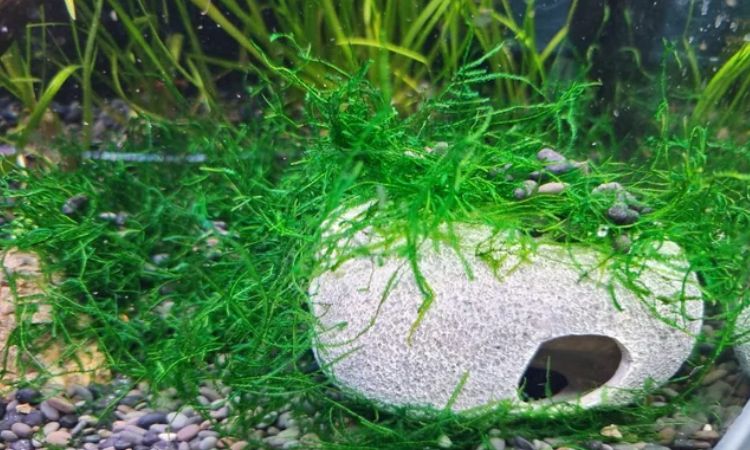
Java Moss is one of the most versatile aquarium plants available. It grows across a variety of surfaces and adapts to nearly any freshwater aquarium without specialized equipment. Its soft, branching growth creates a natural appearance while providing valuable shelter for shrimp, fry, and other small aquatic animals.
Many aquascapers attach small portions of Java Moss to driftwood or stones using aquarium-safe glue or thread. Over time, the moss spreads to form dense cushions or textured coverings that enhance natural-looking aquascapes. Occasional trimming keeps it compact and encourages healthy new growth.
Why beginners love it: Java Moss grows under a wide range of conditions, requires little maintenance, and provides excellent cover for breeding fish, shrimp, and other invertebrates.
4. Cryptocoryne wendtii (Crypts)
Care Level: Easy
Lighting Requirements: Low to Moderate
Growth Rate: Slow
Placement: Foreground to midground; planted in the substrate as a root-feeding species
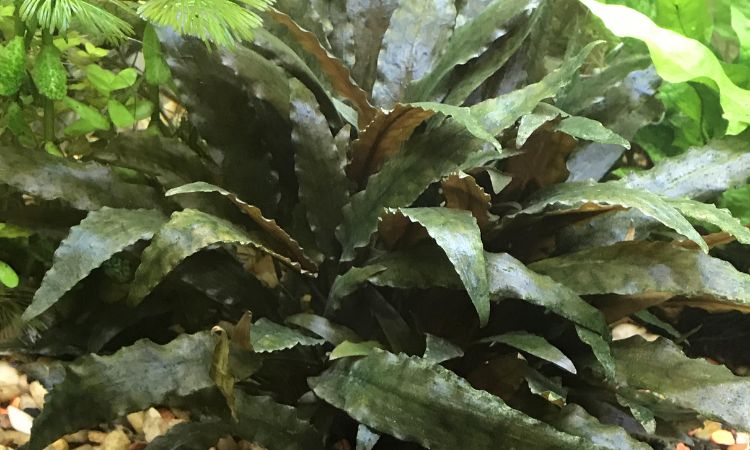
Cryptocoryne wendtii is one of the most dependable rooted plants for beginner aquariums. Available in green, bronze, brown, and reddish forms, it adds color and texture without requiring intense lighting or CO₂ injection. Once established, it forms attractive clumps that spread gradually through underground runners.
Newly planted Cryptocorynes commonly experience “crypt melt,” a temporary loss of older leaves caused by adjusting to new water conditions. Although the foliage may disappear, the root system usually remains healthy. With stable water parameters and patience, fresh submerged leaves typically emerge within a few weeks.
Because Cryptocorynes obtain most of their nutrients through their roots, they perform especially well in nutrient-rich aquarium soil. In inert gravel or sand, occasional root tabs can support steady long-term growth.
Why beginners love it: Cryptocoryne wendtii offers attractive leaf colors, tolerates low-light conditions, and requires very little maintenance after it adapts to its new environment.
5. Amazon Sword (Echinodorus grisebachii)
Care Level: Easy
Lighting Requirements: Moderate
Growth Rate: Moderate to Fast
Placement: Background
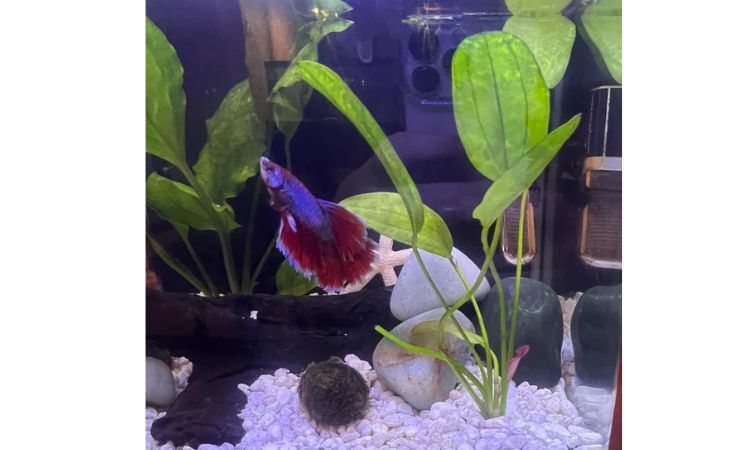
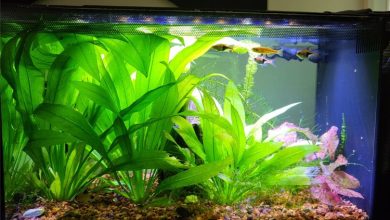
Amazon Sword is one of the most recognizable freshwater aquarium plants and an excellent choice for medium to large tanks. Its broad, bright green leaves grow in a rosette pattern, creating a natural focal point while providing shelter for fish. As the plant matures, it can develop into an impressive background specimen that adds height and depth to an aquascape.
This species is primarily a root feeder, so it performs best when planted in nutrient-rich aquarium soil or supplemented with root tabs in inert gravel or sand. Newly purchased plants often shed their emersed-grown leaves after being submerged, replacing them with longer, narrower underwater foliage adapted to aquarium life. This transition is normal and should not be mistaken for poor health.
Why beginners love it: Amazon Sword grows reliably in most freshwater community aquariums, develops into an attractive centerpiece with minimal effort, and responds well to occasional root fertilization rather than frequent liquid fertilizer dosing.
6. Anacharis / Waterweed (Egeria densa)
Care Level: Foolproof
Lighting Requirements: Low
Growth Rate: Fast
Placement: Background or floating
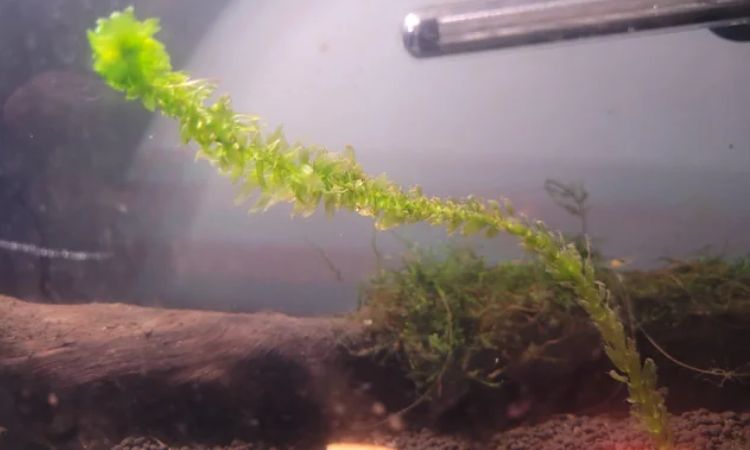
Anacharis, also known as Waterweed, is one of the fastest-growing beginner aquarium plants. Its long stems are covered with bright green leaves that quickly fill background areas while absorbing excess nutrients from the water column. This rapid growth can help reduce nitrate accumulation and limit the nutrients available to nuisance algae, particularly in newly established aquariums.
The plant adapts well whether rooted in the substrate or left floating near the surface. Floating stems often develop faster because they receive stronger light and unrestricted access to dissolved carbon dioxide. Healthy stems can be trimmed regularly, and the cuttings can simply be replanted to produce additional plants.
Why beginners love it: Anacharis grows quickly under basic lighting, tolerates a wide range of water conditions, and is exceptionally forgiving, making it ideal for first planted tanks.
7. Hornwort (Ceratophyllum demersum)
Care Level: Foolproof
Lighting Requirements: Low to High
Growth Rate: Extremely Fast
Placement: Floating or loosely anchored in the background
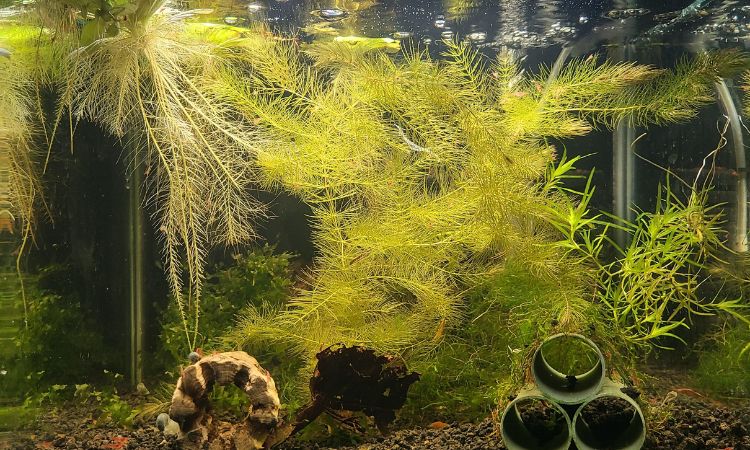
Hornwort is a hardy, rootless aquatic plant that adapts to nearly every freshwater aquarium. Unlike most stem plants, it does not require planting and can simply float at the surface or be gently secured behind decorations. Its fine, needle-like foliage creates dense cover for fry, shrimp, and shy fish while contributing to a more natural appearance.
As a fast-growing species, Hornwort efficiently absorbs ammonia, nitrates, and other dissolved nutrients from the water column. This vigorous growth helps compete with algae for available nutrients and can support improved water quality in lightly to moderately stocked aquariums. Regular trimming prevents it from becoming overly dense.
Why beginners love it: Hornwort requires no specialized substrate, grows under almost any lighting level, and offers excellent biological filtration while providing valuable shelter for aquarium inhabitants.
8. Marimo Moss Balls (Cladophora aegagropila)
Care Level: Absolute Easiest
Lighting Requirements: Low
Growth Rate: Extremely Slow
Placement: Foreground or along the aquarium bottom
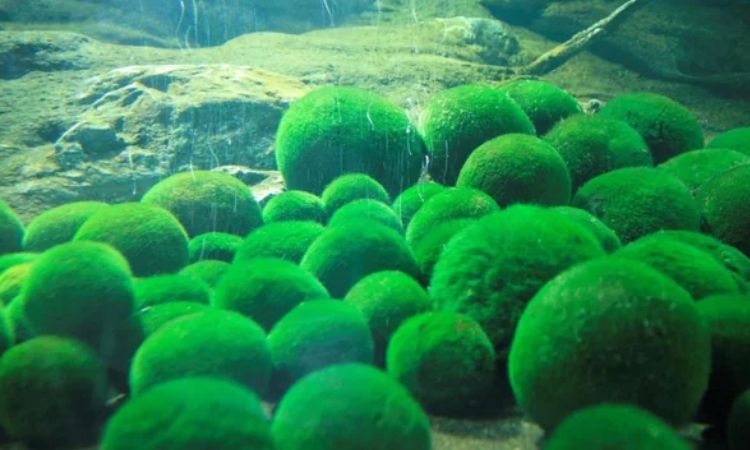
Despite its common name, the Marimo Moss Ball is not a true moss or even a true aquatic plant. It is a naturally occurring spherical colony of filamentous green algae that has become popular in freshwater aquariums because of its unusual appearance and exceptionally simple care requirements.
Marimo Moss Balls require very little maintenance beyond occasional cleaning during water changes. Gently rinsing them in aquarium water removes accumulated debris, while rolling them between your hands helps maintain their characteristic round shape and ensures all sides receive light exposure. They can be placed directly on the substrate, arranged among rocks, or used as decorative accents in nano aquariums.
Why beginners love it: Marimo Moss Balls thrive under low light, require virtually no pruning, and are among the easiest living additions to maintain in a freshwater aquarium, making them an excellent choice for first-time plant keepers.