Java Fern (Leptochilus pteropus, formerly Microsorum pteropus) is one of the easiest and most reliable aquarium plants you can grow. Its long, deep green leaves, adaptable nature, and low-maintenance care have made it a favorite among both beginners and experienced aquarists. Because it grows attached to driftwood and rocks instead of rooting in the substrate, it works well in everything from nano tanks to large aquascapes.
Whether you’re setting up your first planted aquarium or adding texture to an established layout, Java Fern is a dependable choice. This Java Fern Care Guide covers everything you need to know, including planting, lighting, propagation, maintenance, and common problems, so you can keep your plant healthy and thriving.
What Is Java Fern?
Java Fern (Leptochilus pteropus, formerly Microsorum pteropus) is one of the most trusted and widely grown freshwater aquarium plants in the hobby. Its hardy nature, attractive foliage, and simple care requirements have made it a favorite for decades. Whether you’re setting up your first planted tank or designing an intricate aquascape, Java Fern offers reliable growth without demanding specialized equipment or constant maintenance.
Unlike rooted aquarium plants, Java Fern is an epiphyte, meaning it naturally grows attached to hard surfaces instead of rooting in the substrate. This unique growth habit makes it incredibly versatile, allowing hobbyists to create natural-looking layouts using driftwood, rocks, and other decorative hardscape.
Origin and Natural Habitat
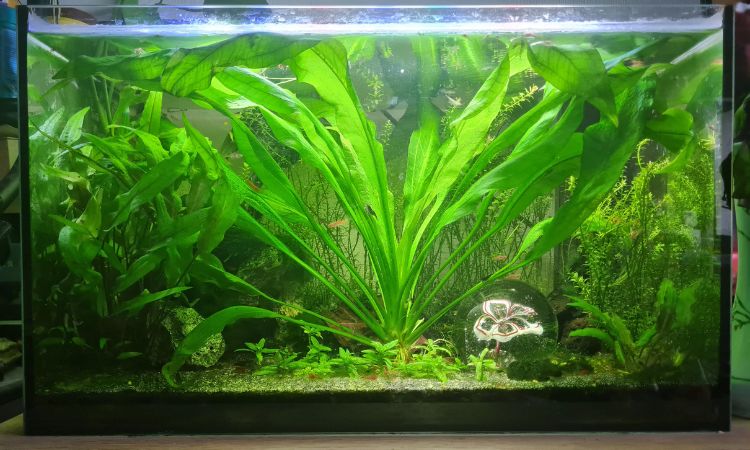
Java Fern is native to tropical and subtropical regions of Southeast Asia, including parts of Malaysia, Indonesia, Thailand, northeastern India, and southern China. In the wild, it grows along shaded rivers, forest streams, waterfalls, and flood-prone riverbanks.
Rather than anchoring itself in mud or sand, the plant attaches to tree roots, fallen branches, and rocks where water flows continuously over its roots. Depending on seasonal water levels, Java Fern may grow fully submerged or partially above the waterline. This ability to adapt to changing environments is one reason it performs so well in home aquariums.
Because it evolved in shaded habitats beneath dense forest canopies, Java Fern naturally prefers moderate to subdued lighting instead of intense illumination.
Physical Characteristics
One of the defining features of Java Fern is its thick horizontal rhizome. This stem-like structure slowly creeps across hard surfaces, producing both leaves and roots as it grows. The rhizome serves as the plant’s main storage organ and should always remain exposed above the substrate, as burying it can lead to rot.
From the rhizome emerge clusters of long, leathery leaves that range from bright green on new growth to deep green as they mature. Their sturdy texture makes them more resistant to damage than many delicate aquatic plants, allowing Java Fern to thrive even in aquariums with larger or more active fish.
Fine brown roots extend downward from the rhizome, wrapping tightly around driftwood, rocks, and decorations. These roots primarily anchor the plant rather than absorb nutrients from the substrate, since most nutrients are taken directly from the water column.
Java Fern is a relatively slow grower, but its leaves are long-lasting and retain their attractive appearance for months with minimal maintenance.
Popular Java Fern Varieties
One of the reasons Java Fern remains so popular is the wide selection of cultivars available. Although they share nearly identical care requirements, each variety offers a distinct leaf shape that adds different textures to an aquascape.
Standard Java Fern (Microsorum pteropus)
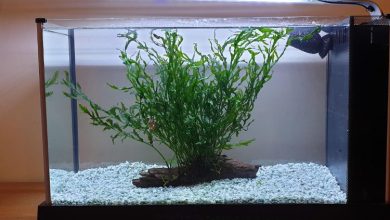
The classic form features long, broad, strap-shaped leaves with a graceful arching habit. It typically reaches 8–12 inches (20–30 cm) tall, making it ideal for midground or background placement. This is the most common variety found in aquarium stores and an excellent choice for beginners.
Needle Leaf Java Fern
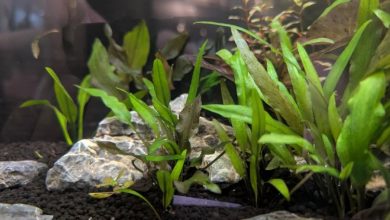
Needle Leaf Java Fern produces much narrower leaves than the standard form, creating a finer, more delicate appearance. Despite its slender foliage, it retains the same durability and easy-care characteristics. Its elegant shape works particularly well in nature-style aquascapes and smaller planted tanks.
Windelov (Lace) Java Fern
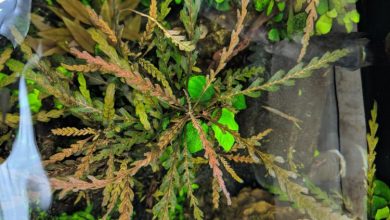
Windelov, often called Lace Java Fern, is instantly recognizable by its finely branched leaf tips that resemble delicate antlers or lace. The intricate foliage creates a softer, more decorative texture while maintaining the same low-maintenance growth habit as other Java Fern varieties. It is frequently used as a focal point on driftwood.
Narrow Leaf Java Fern
Narrow Leaf Java Fern develops longer, slimmer leaves than the standard variety while maintaining a fuller overall growth pattern. Its upright habit adds height without appearing bulky, making it a popular option for aquariums where a lighter visual effect is desired.
Trident Java Fern
Trident Java Fern features deeply divided leaves that branch into three or more narrow lobes, giving each leaf a unique, fern-like silhouette. This variety adds exceptional texture and movement to an aquascape, making it a favorite among experienced aquascapers looking to create a more intricate, natural design.
Although each cultivar has its own appearance, all Java Fern varieties thrive under similar conditions. They prefer low to moderate lighting, do not require injected CO₂, grow best when attached to hardscape, and remain among the easiest freshwater plants to keep healthy over the long term.
Java Fern Water Parameters and Tank Requirements
Java Fern is one of the most adaptable freshwater aquarium plants available. It tolerates a wide range of water conditions, making it suitable for both beginner and experienced aquarists. While it isn’t demanding, stable parameters will encourage healthier growth and reduce the risk of algae and transplant stress.
Tank Size
Java Fern grows well in aquariums of almost any size. Small varieties are suitable for 5-gallon nano tanks, while the standard form looks best in aquariums of 10 gallons or larger. Since it grows slowly, it won’t quickly outgrow its space.
Temperature
Maintain a water temperature between 68–82°F (20–28°C) for the best results. This range suits most tropical freshwater fish, including bettas, tetras, rasboras, corydoras, gouramis, and shrimp.
pH and Water Hardness
Java Fern adapts to both soft and moderately hard water.
Recommended parameters:
| Parameter | Ideal Range |
| Temperature | 68–82°F (20–28°C) |
| pH | 6.0–7.5 |
| Hardness | 2–15 dGH |
Stable water chemistry is more important than achieving an exact value.
Lighting
Low to moderate lighting is ideal. Under intense light, the slow-growing leaves are more likely to develop algae. A photoperiod of 6–8 hours per day is sufficient for healthy growth in most planted aquariums.
Water Flow
Java Fern prefers gentle to moderate water movement. Good circulation keeps debris from settling on the leaves and helps distribute nutrients throughout the tank. Avoid placing it directly in front of a strong filter outlet.
Substrate
Substrate choice has very little impact because Java Fern is an epiphyte, not a root-feeding plant. It grows equally well with:
- Sand
- Gravel
- Aquasoil
- Bare-bottom aquariums
The important rule is to keep the rhizome above the substrate. Only the fine roots may extend into the gravel or sand.
CO₂ and Fertilizer
Injected CO₂ is optional. Java Fern grows well without it, making it an excellent choice for low-tech aquariums.
Because it absorbs nutrients mainly from the water column, a quality liquid fertilizer is usually more beneficial than root tabs. Fertilize lightly according to the manufacturer’s instructions if growth slows or the leaves lose color.
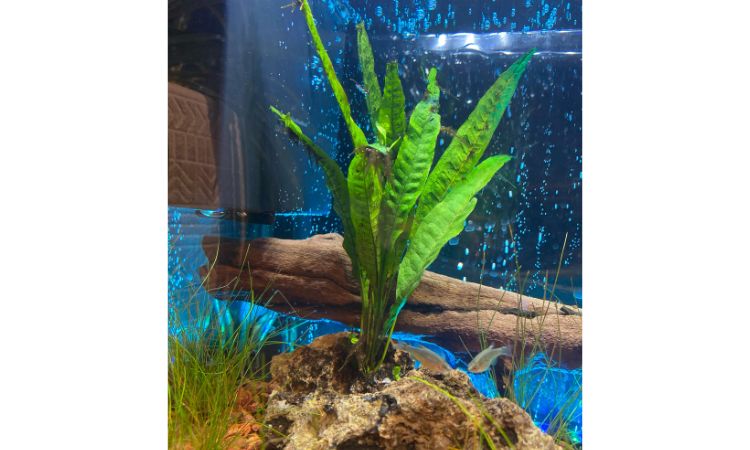
Tips for Healthy Growth
To keep Java Fern thriving:
- Maintain stable water parameters.
- Use low to moderate lighting.
- Keep the rhizome exposed.
- Perform regular water changes.
- Remove damaged or algae-covered leaves as needed.
With consistent care, Java Fern will produce healthy new leaves and remain an attractive feature in the aquarium for many years.
How to Plant Java Fern (The Golden Rule)
The most important thing to remember when planting Java Fern is simple: never bury the rhizome.
The rhizome is the thick, horizontal stem that connects the leaves and roots. Unlike the roots, it needs constant exposure to water. If it’s covered with gravel, sand, or aquarium soil, it can begin to rot, eventually killing the plant. This is the most common reason new Java Ferns fail after being added to an aquarium.
Instead, only the fine brown roots should be allowed to touch the substrate, while the rhizome remains completely exposed.
The Best Way: Attach It to Hardscape
Java Fern naturally grows on rocks, driftwood, and tree roots in the wild, so attaching it to hardscape is the healthiest and most natural planting method.
Place the rhizome against a piece of driftwood or rock, then secure it using aquarium-safe cyanoacrylate gel, cotton thread, or fishing line. Within a few weeks, the roots will wrap around the surface, allowing you to remove any thread if desired.
This method improves water circulation around the rhizome and greatly reduces the chance of rot.
Planting in Substrate
If you prefer placing Java Fern near the bottom of the aquarium, it can sit on top of the substrate with only the roots extending into the gravel or sand.
Avoid burying the entire plant. Keep the rhizome visible at all times while allowing the roots to anchor naturally below.
Let It Attach Naturally
Java Fern doesn’t always need to be tied down. If you wedge the rhizome into a crack between rocks or driftwood, the roots will often secure themselves over time. Some hobbyists even let new plants float temporarily until they settle against hardscape and begin attaching on their own.
Check After Planting
After placing the plant in the aquarium:
- Confirm the rhizome is fully exposed.
- Make sure the plant is firmly secured.
- Avoid moving it repeatedly while the roots establish.
- Remove any wrapping material only after the roots have attached naturally.
Following this one rule—keeping the rhizome above the substrate—will prevent the vast majority of Java Fern problems and give the plant the best chance to establish, grow, and produce healthy new leaves.
How to Propagate Java Fern
One of the best things about Java Fern is how easy it is to multiply. Unlike many aquarium plants that require frequent trimming or complicated propagation techniques, Java Fern naturally produces new plants on its own. You can also create additional plants by dividing a mature rhizome once it has grown large enough. Both methods are beginner-friendly and don’t require any specialized equipment.
Natural Adventitious Plantlets
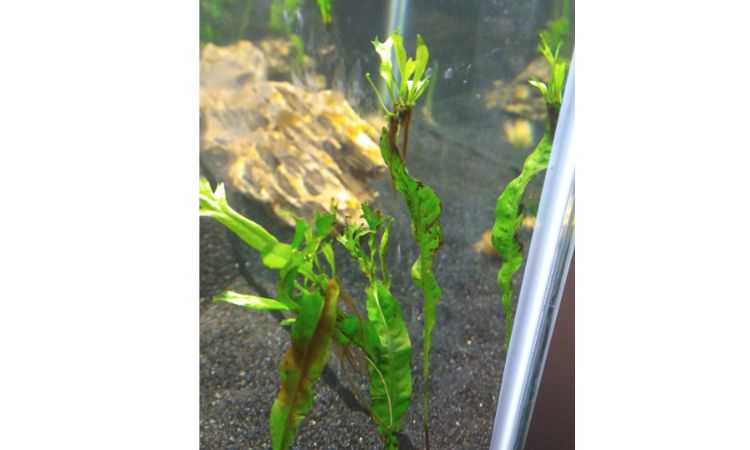
The most common way Java Fern reproduces is by producing tiny plantlets directly on its leaves. These baby plants usually develop along the leaf tips or on the undersides of mature leaves, where they gradually form their own roots and miniature leaves.
At first, the plantlets look like small green bumps. Over the following weeks, they continue growing until they become fully independent. It’s perfectly normal for a single mature leaf to produce several plantlets at once.
Avoid removing them too early. Wait until each one has:
- At least 3–5 small leaves
- Several healthy roots about 1–2 inches (2.5–5 cm) long
- A firm attachment to the parent leaf
At this stage, the young fern has enough stored energy to establish itself successfully.
How to Remove Plantlets
Once the baby plant has developed a healthy root system, gently separate it from the parent leaf using your fingers or a pair of sterilized aquascaping scissors. There’s no need to pull forcefully—a mature plantlet usually detaches with very little effort.
After removal, attach it to a piece of driftwood, rock, or other hardscape using aquarium-safe super glue gel, cotton thread, or fishing line. Within a few weeks, the roots will naturally anchor themselves to the surface.
You can also allow detached plantlets to float temporarily until you’re ready to place them elsewhere in the aquarium.
Manual Rhizome Division
If your Java Fern has grown into a large, healthy clump, dividing the rhizome is the fastest way to create multiple mature plants.
Before cutting, make sure the plant has:
- A well-established rhizome
- At least 6–8 healthy leaves
- Strong roots without signs of rot
Remove the plant from the aquarium if possible, or carefully work inside the tank if it’s firmly attached to hardscape.
Using clean, sharp aquascaping scissors or a sterilized blade, cut the rhizome into separate sections. Each division should include:
- 3–4 healthy leaves or more
- A portion of the rhizome
- Several intact roots
Avoid making very small divisions, as tiny pieces often take much longer to recover and establish new growth.
Once divided, attach each section to its own piece of driftwood or rock while keeping the rhizome fully exposed above the substrate.
Caring for Young Java Fern Plantlets
Newly propagated Java Ferns don’t require special treatment, but stable conditions greatly improve their survival and growth.
Place young plants in an area with low to moderate lighting and gentle water movement. Excessively bright light can encourage algae before the new leaves have time to mature, while strong current may prevent small roots from attaching securely.
For the best results:
- Keep the rhizome above the substrate at all times.
- Avoid moving the plant repeatedly while roots are attaching.
- Maintain stable water parameters with regular water changes.
- Dose a complete liquid fertilizer if nutrients are limited.
- Be patient—Java Fern naturally grows at a slow pace.
Don’t expect rapid growth immediately after propagation. New divisions often spend several weeks establishing their root system before producing fresh leaves. Once settled, they’ll continue growing steadily and can eventually be propagated again, allowing you to expand your aquascape without purchasing additional plants.