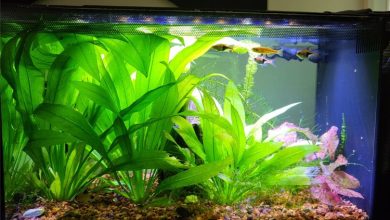
A well-planted betta tank can be more than a beautiful display—it can give your fish shade, shelter, resting spots, and a more natural environment to explore. From trailing roots to lush surface cover, the right floating plants can transform an ordinary aquarium into a calm, living habitat.
Here are 10 best floating plants for betta fish to help your betta feel comfortable, secure, and right at home.
1. Amazon Frogbit (Limnobium laevigatum)
Amazon frogbit is a popular floating plant recognized by its rounded, relatively thick leaves and long, trailing roots. When established, a small group can produce a loose surface canopy while the roots extend several inches into the water. That hanging growth gives bettas additional structure to investigate without filling the entire aquarium from top to bottom.
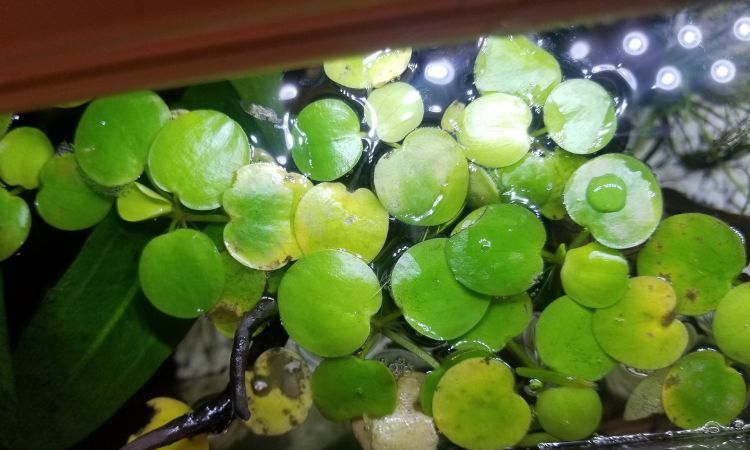
For a betta, the main advantage is the combination of shade and underwater cover. The roots create a maze-like environment where the fish can move between strands, while the leaves soften bright overhead lighting. Frogbit generally performs well under low to moderate light, although stronger illumination can encourage faster growth. Gentle surface movement is preferable because vigorous agitation can damage or repeatedly submerge the leaves.
| Care factor | Amazon Frogbit |
| Scientific name | Limnobium laevigatum |
| Light | Low to moderate |
| Water movement | Gentle |
| Growth | Moderate to fast |
| Main benefit | Shade and long underwater roots |
| Maintenance | Easy to moderate |
| Key concern | Keep leaves dry and thin excess growth |
A common problem with frogbit is moisture collecting on the foliage. Water droplets from an air stone, filter outlet, or condensation beneath a tight lid can cause the leaves to deteriorate. Keep the leaves exposed to air, maintain a calm surface, and remove older or crowded rosettes as necessary.
2. Dwarf Water Lettuce (Pistia stratiotes)
Dwarf water lettuce forms small rosettes with soft, ridged leaves and a mass of fine roots hanging underneath. The roots can become surprisingly extensive, particularly when the plant receives adequate nutrients and light. In a betta aquarium, this creates a substantial area of cover beneath the surface.
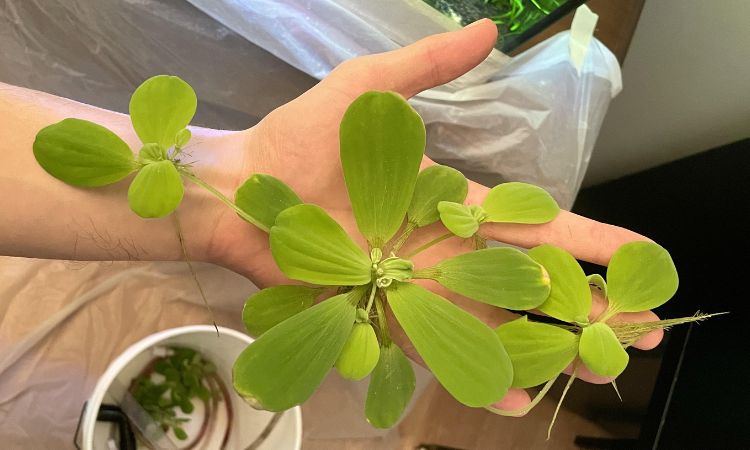
The dense root network can function as a visual barrier, which may be useful in setups where a betta benefits from having areas to retreat from activity elsewhere in the tank. The floating rosettes also diffuse overhead light. Moderate illumination generally supports healthy growth, but the plant should not be allowed to spread across the entire surface.
| Care factor | Dwarf Water Lettuce |
| Scientific name | Pistia stratiotes |
| Light | Low to moderate, depending on growth conditions |
| Water movement | Gentle |
| Growth | Fast under favorable conditions |
| Main benefit | Dense roots and surface shade |
| Maintenance | Easy |
| Key concern | Excessive surface coverage and wet foliage |
Regular thinning is especially important in smaller betta tanks. Remove excess rosettes before they form a continuous mat, leaving open areas where the fish can easily reach the surface. In covered aquariums, also watch for condensation dripping continuously onto the leaves.
3. Red Root Floater (Phyllanthus fluitans)
Red root floater offers a very different appearance from frogbit and water lettuce. Its small, rounded to heart-shaped leaves can range from green to reddish tones, while the submerged roots may develop a pronounced red coloration under suitable lighting. Tiny white flowers may occasionally appear when the plant is growing well.
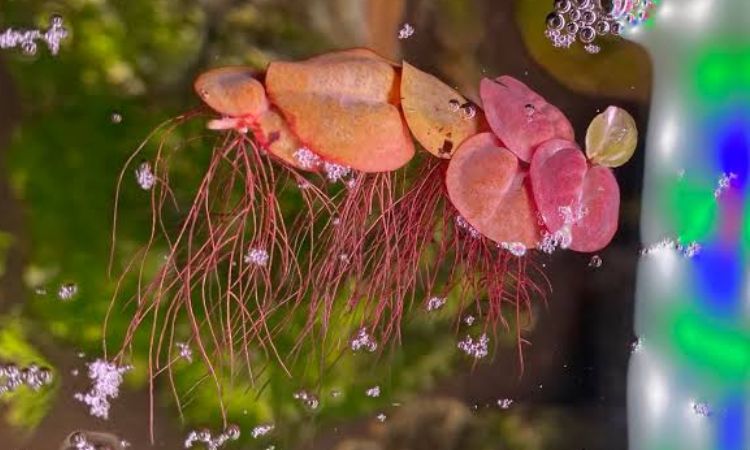
For bettas, its value comes primarily from the shade and surface structure rather than any special nutritional benefit. The leaves form a relatively low canopy, while the dangling roots provide some additional cover beneath the surface. Stronger lighting can encourage red coloration, but this species is considerably less forgiving of poor surface conditions than tougher floaters.
| Care factor | Red Root Floater |
| Scientific name | Phyllanthus fluitans |
| Light | Moderate to high |
| Water movement | Low |
| Growth | Moderate |
| Main benefit | Surface shade and compact root growth |
| Maintenance | Moderate |
| Key concern | Water sitting on the leaves and excessive flow |
Keep filter outlets from repeatedly splashing the foliage. Wet leaves can deteriorate, particularly when water remains trapped on their surfaces. If you want the plant primarily for its red coloration, provide sufficient light while avoiding unnecessarily long photoperiods that could encourage algae.
4. Water Spangles (Salvinia minima)
Water spangles, commonly sold as Salvinia minima, is a small floating fern with paired oval leaves that form loose clusters across the surface. The upper leaves have specialized water-repellent hairs, giving them a distinctive textured appearance and helping keep water from remaining on the foliage.
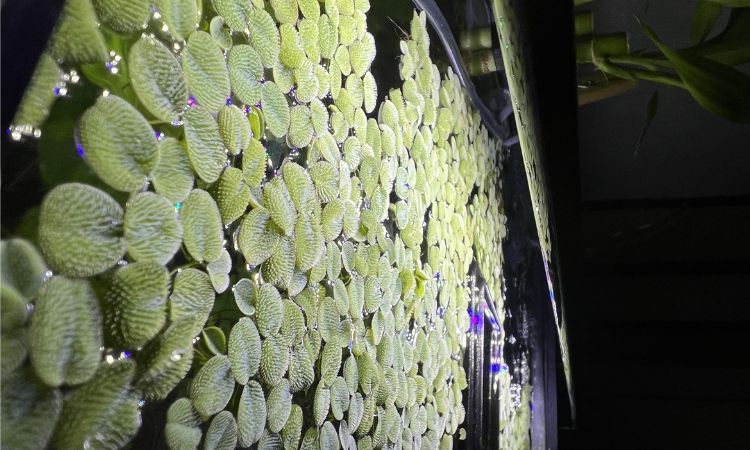
Its small size makes water spangles particularly useful when you want floating cover without the larger rosettes produced by frogbit or water lettuce. The clusters can break up bright lighting and provide some surface structure while still allowing plenty of open water between groups when properly managed.
| Care factor | Water Spangles |
| Scientific name | Salvinia minima |
| Light | Low to moderate |
| Water movement | Gentle to moderate |
| Growth | Fast |
| Main benefit | Fine surface cover |
| Maintenance | Very easy |
| Key concern | Rapid multiplication |
The biggest challenge is controlling its spread. Under favorable conditions, water spangles can multiply rapidly and form a dense layer. Scoop out excess plants regularly rather than waiting until the entire surface becomes covered. This is particularly important in betta aquariums because the fish must be able to reach the surface easily.
5. Hornwort (Ceratophyllum demersum)
Hornwort is not a true floating plant in the same sense as frogbit or salvinia, but it is commonly used as a floating aquarium plant. Its long stems carry dense whorls of narrow, needle-like leaves, creating a feathery mass that can be allowed to drift beneath the surface.
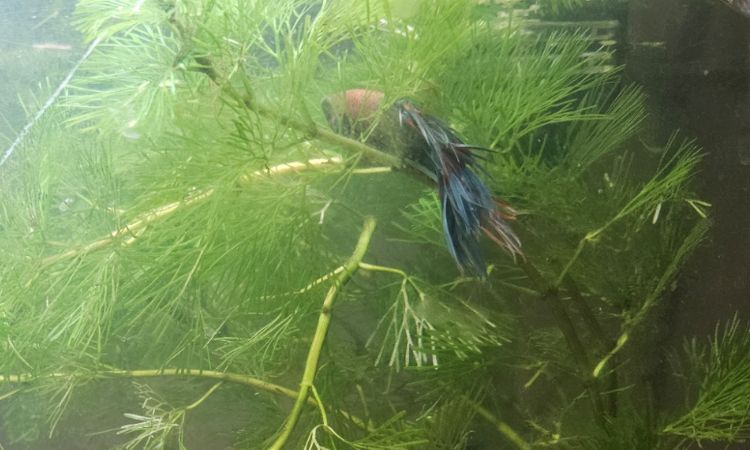
This growth habit works well for bettas because it provides cover at multiple depths rather than concentrating everything directly at the waterline. A loose bundle can create a sheltered area while still allowing the fish to move freely around it. Hornwort is also highly adaptable and can grow without being rooted into substrate.
| Care factor | Hornwort |
| Scientific name | Ceratophyllum demersum |
| Light | Low to high, depending on conditions |
| Water movement | Low to moderate |
| Growth | Fast |
| Main benefit | Dense midwater and surface cover |
| Maintenance | Very easy |
| Key concern | Frequent trimming and possible shedding |
Hornwort can become bulky quickly, so regular pruning is often necessary in a betta tank. Simply cut or separate healthy sections and remove excess material. Some specimens may shed older needles when introduced to a new aquarium or after environmental changes; this does not necessarily mean the entire plant is failing. Remove loose debris and allow healthy new growth to develop.
6. Water Sprite (Ceratopteris thalictroides)
Water sprite is a fast-growing aquatic fern with finely divided, lace-like fronds. Although it can be planted in substrate, it can also be left floating, where its stems and foliage spread across the upper portion of the aquarium. Floating specimens often develop a loose, tangled appearance that provides cover without requiring roots to be established in the substrate.
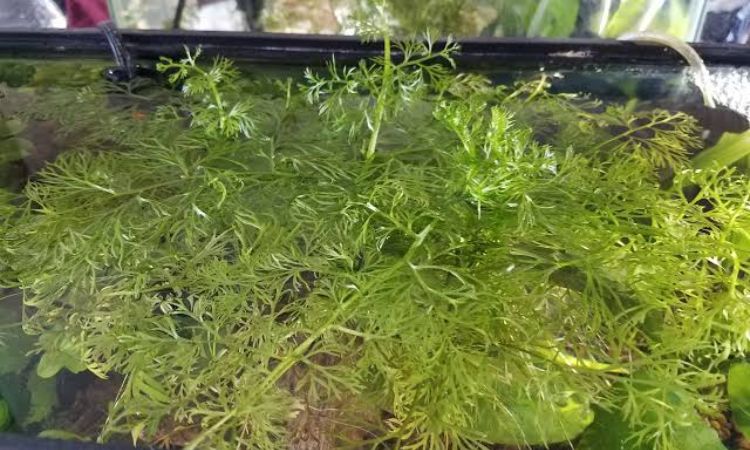
For bettas, that structure can create sheltered areas away from strong activity elsewhere in the aquarium. The plant may also soften overhead lighting as it spreads. Because water sprite grows quickly when conditions are favorable, it can consume substantial amounts of dissolved nutrients, although it should not be considered a replacement for water changes or biological filtration.
| Care factor | Water Sprite |
| Scientific name | Ceratopteris thalictroides |
| Growth habit | Floating or rooted |
| Light | Low to moderate; adaptable |
| Growth rate | Fast |
| Main benefit | Dense cover and nutrient uptake |
| Maintenance | Easy |
| Key concern | Requires regular thinning |
Keep an eye on how much surface area it occupies. A few floating stems can become a substantial mass in a relatively short time, potentially shading plants below. Trim or remove excess growth whenever the canopy becomes too dense.
7. Duckweed (Lemna minor)
Duckweed is one of the smallest commonly encountered floating plants. Each plant consists of tiny green structures called fronds, often with a single simple root extending into the water. Under favorable conditions, duckweed reproduces rapidly and can spread across the surface surprisingly quickly.
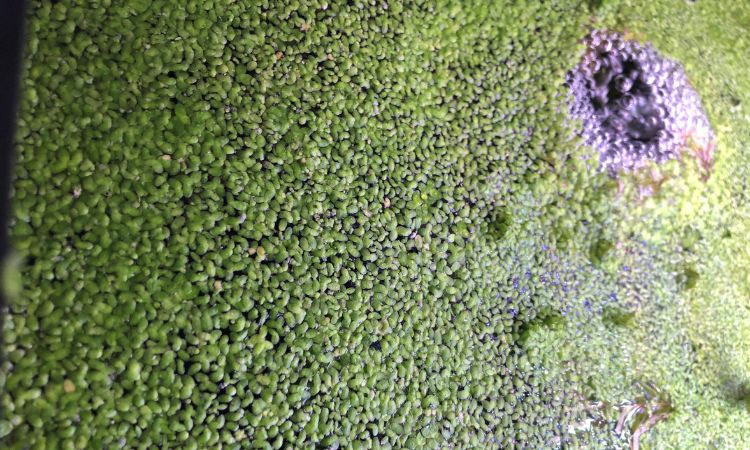
That dense coverage can provide shade and reduce the intensity of overhead lighting, which some bettas may appreciate. However, duckweed’s rapid reproduction is also its biggest drawback. A neglected colony can cover most or even virtually all of the water surface, making routine removal essential in a betta aquarium.
| Care factor | Duckweed |
| Scientific name | Lemna minor |
| Size | Very small |
| Light | Low to moderate; highly adaptable |
| Growth rate | Very fast |
| Main benefit | Rapid surface cover |
| Maintenance | Easy to grow, demanding to control |
| Key concern | Can quickly cover the entire surface |
Use a fine net, cup, or floating plant skimmer to remove excess periodically. Leaving an unobstructed area is especially important for bettas because they routinely swim to the surface to breathe atmospheric air. Duckweed is best chosen by aquarists who do not mind frequent maintenance.
8. Crystalwort (Riccia fluitans)
Crystalwort, or Riccia fluitans, is a liverwort rather than a true moss. When allowed to float freely, it forms tangled green masses that can collect near the surface. Its branching structure gives it a soft, cushion-like appearance, although it does not produce the broad individual leaves found on frogbit or water lettuce.
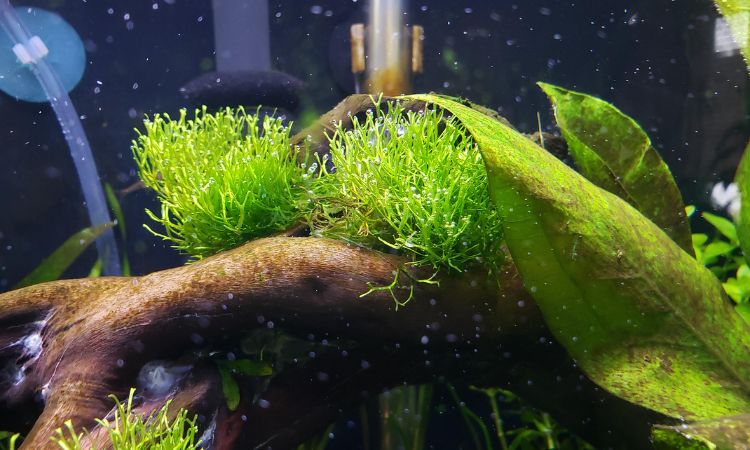
A floating mass can provide additional cover in the upper part of a betta aquarium and can help break up direct lighting. Because Riccia can become quite dense, it needs periodic thinning to prevent it from forming an excessively thick mat.
| Care factor | Crystalwort |
| Scientific name | Riccia fluitans |
| Growth habit | Floating or attached |
| Light | Moderate to high for vigorous growth |
| Nutrients | Benefits from balanced nutrients |
| Main benefit | Dense green surface cover |
| Maintenance | Moderate |
| Key concern | Can become tangled and difficult to manage |
Lighting requirements depend on the intended growth. It can survive under less intense illumination, but stronger light generally produces more compact, vigorous growth when nutrients and carbon availability are adequate. If you use it as a floating plant, periodically separate or thin the mass before it becomes difficult to handle.
9. Fairy Moss (Azolla filiculoides)
Fairy moss, also called Pacific mosquito fern or water fern, is a small floating fern that forms overlapping clusters across calm water. Its tiny leaves can range from green to reddish tones depending on growing conditions, particularly light and nutrient availability.
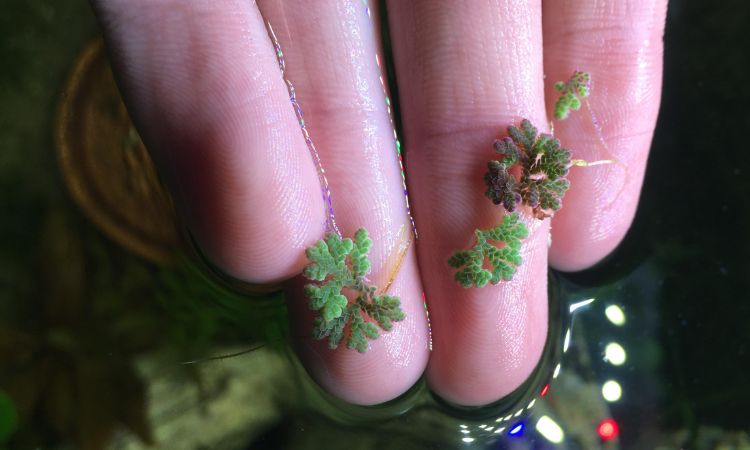
Unlike larger floaters, Azolla filiculoides does not develop the long, dangling roots associated with frogbit or water lettuce. Instead, it forms a relatively compact surface layer. That makes it useful when you want shade without introducing a large root network into the swimming area.
| Care factor | Fairy Moss |
| Scientific name | Azolla filiculoides |
| Growth habit | Free-floating fern |
| Light | Low to moderate |
| Water movement | Still to gentle |
| Main benefit | Compact surface coverage |
| Maintenance | Easy |
| Key concern | Rapid spread in favorable conditions |
Azolla has a notable relationship with nitrogen-fixing cyanobacteria living within its leaf structures, which allows it to obtain biologically fixed nitrogen. That does not mean an aquarium containing Azolla no longer needs normal nutrient management. Monitor its growth and remove excess material before the surface becomes overcrowded.
Because the plant prefers relatively calm water, strong filter discharge can push the colonies together or damage the delicate foliage. A floating corral can help keep it distributed where you want it.
10. Brazilian Pennywort (Hydrocotyle leucocephala)
Brazilian pennywort is a highly adaptable stem plant that can grow either submerged or with its stems and leaves trailing across the surface. Its rounded leaves develop along flexible stems, giving floating specimens a loose, vine-like appearance.
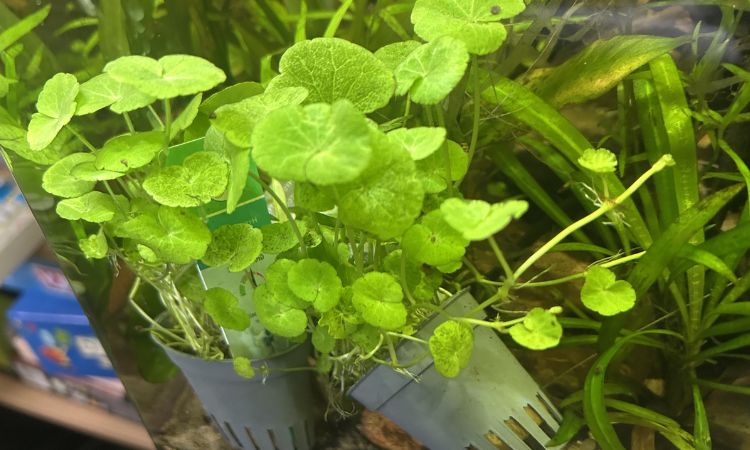
When allowed to grow horizontally at the surface, the leaves can provide shaded areas and physical structure near the waterline. Bettas may also use broad leaves as temporary resting points, particularly when the foliage is positioned close to the surface.
| Care factor | Brazilian Pennywort |
| Scientific name | Hydrocotyle leucocephala |
| Growth habit | Floating or submerged |
| Light | Low to high |
| Growth rate | Moderate to fast |
| Main benefit | Versatile surface cover |
| Maintenance | Very easy |
| Key concern | Needs pruning as stems become long |
Brazilian pennywort is forgiving about placement. You can anchor part of a stem in the substrate and allow the remaining growth to reach the surface, or simply let portions float. Regular trimming keeps long stems from forming an unruly mass and provides cuttings that can be used to produce additional plants.