Not every planted aquarium needs fancy aquasoil or a complicated setup. If your tank already has gravel, you can still create a lush underwater garden—you just need to choose plants that can handle the conditions. Here are 8 easy aquarium plants for gravel that are forgiving, beginner-friendly, and far less likely to give up on you.
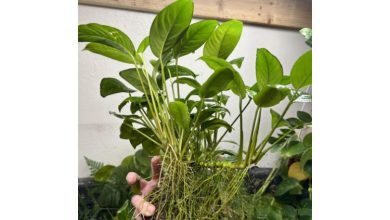
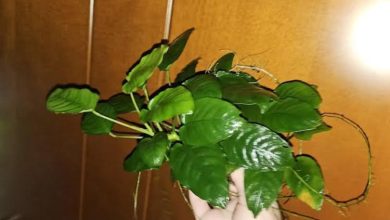
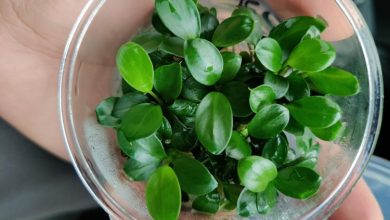
1. Anubias Barteri / Anubias Nana
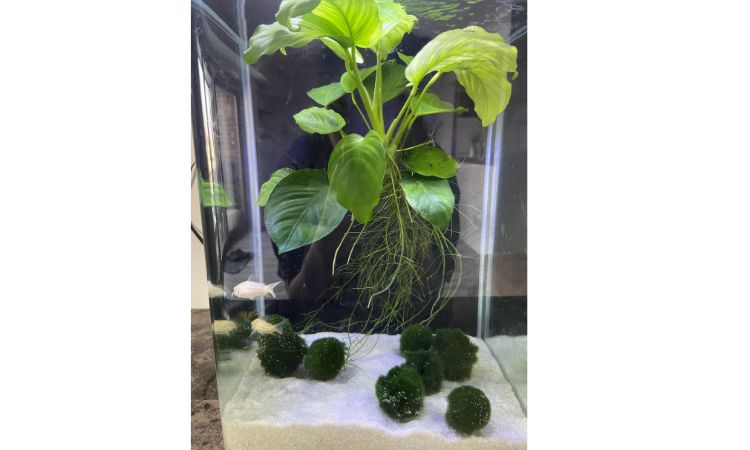
Anubias is an epiphytic plant, meaning it naturally grows attached to hard surfaces rather than depending on buried roots for its nutrition. Its roots can extend into the gravel for support, but the plant’s thick rhizome should remain exposed.
This makes Anubias an excellent option when you have ordinary, nutrient-poor gravel. It can grow without being planted in the substrate at all, so you don’t have to create a deep nutrient layer just to keep it healthy.
Planting Method
Attach Anubias to driftwood, rocks, or other hardscape using thread, fishing line, or a small amount of aquarium-safe cyanoacrylate gel. You can also position the roots lightly among the gravel while leaving the rhizome above the surface.
The rhizome is the horizontal stem from which the leaves and roots emerge. Never bury it beneath the gravel. Constantly covering this structure can restrict it and increase the risk of decay.
Light & Nutrient Needs
Anubias is well suited to low-light aquariums and generally grows slowly. Most of its nutrients can be obtained from the water column, so inert gravel is not a major disadvantage. A balanced aquarium fertilizer can be useful when other nutrient sources are limited, but heavy dosing is usually unnecessary for a slow-growing plant.
Pro Tip: Don’t mistake the roots growing into the gravel for a reason to bury the entire plant. Let the roots anchor themselves naturally while keeping the rhizome visible. If algae begins accumulating on the leaves, check the lighting and photoperiod before simply adding more fertilizer.
| Anubias factor | Practical guideline |
| Substrate | Gravel is suitable; substrate is not required |
| Planting | Attach to rocks or wood |
| Rhizome | Keep completely above the gravel |
| Lighting | Low to moderate |
| Feeding | Primarily from the water column |
| Growth | Slow |
| Difficulty | Very easy |
2. Java Fern (Microsorum pteropus)
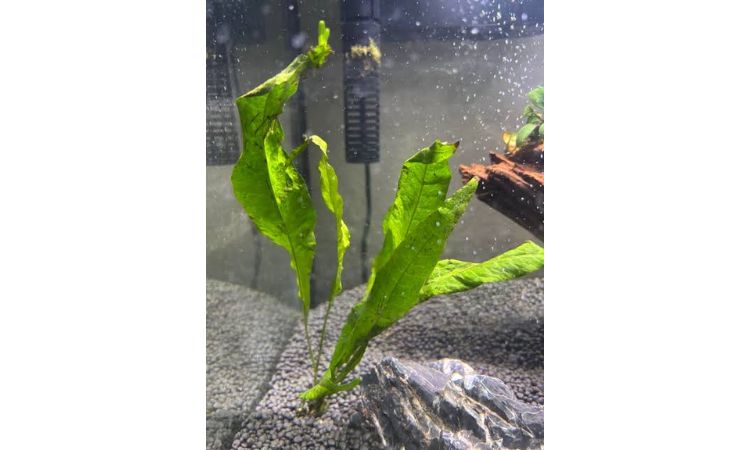
Java fern is another hardy rhizome plant that does not need to be rooted in nutrient-rich substrate. Its thick rhizome produces leaves above and roots below, allowing the plant to attach itself to hardscape over time.
It is particularly useful in a gravel aquarium because the substrate can remain completely inert without preventing the plant from establishing itself. This also makes Java fern a good choice for aquariums where you want greenery but don’t want to disturb the gravel.
Planting Method
Secure the plant to driftwood or rock, or allow its roots to rest naturally across the gravel. As the plant matures, its roots will grip nearby surfaces.
As with Anubias, avoid burying the rhizome. If the entire rhizome is covered by gravel, it can deteriorate even while the leaves initially appear healthy.
Maintenance Level
Java fern is slow growing and generally requires little pruning. Depending on the variety and growing conditions, older leaves may eventually develop plantlets along the edges or tips. Once these young plants have developed sufficient roots and leaves, they can be separated and attached elsewhere.
Different cultivars, including narrow-leaved, trident, and Windelov forms, can give a gravel aquarium considerably different textures without changing the basic care requirements.
| Java fern factor | Practical guideline |
| Substrate | Not required |
| Planting | Attach to hardscape |
| Rhizome | Keep exposed |
| Lighting | Low to moderate |
| Fertilization | Primarily water-column nutrients |
| Growth | Slow to moderate |
| Propagation | Plantlets and rhizome division |
| Difficulty | Very easy |
3. Cryptocoryne wendtii ‘Bronze’ or ‘Green’
Why It Works in Gravel: Unlike Anubias and Java fern, Cryptocoryne wendtii is a true rooted plant that benefits from nutrients around its root system. Fortunately, it can establish itself very well in ordinary gravel when supplemental nutrition is provided.
Its relatively compact growth makes it particularly useful for the middle or foreground areas of many aquariums. Once established, the plant develops a substantial root network that helps anchor it securely in the substrate.
Planting Method
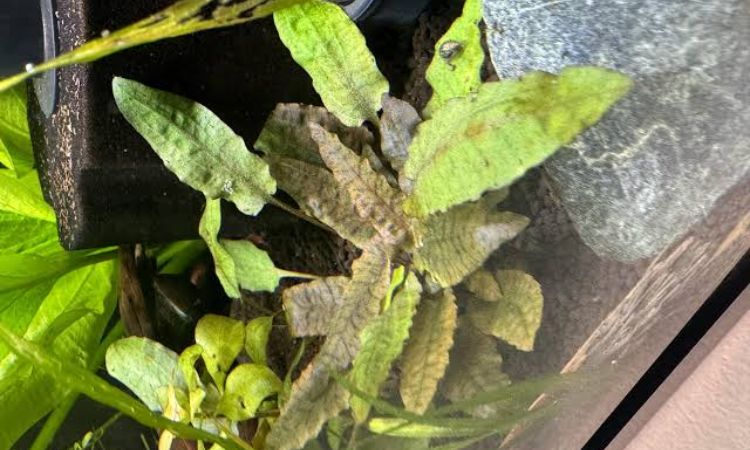
Gently place the roots into the gravel and cover them while keeping the crown—the point where the leaves emerge—at or just above the substrate surface. Avoid burying the entire base of the plant.
In an inert gravel aquarium, place an appropriate root tab near the root zone rather than relying exclusively on liquid fertilizer. Root tabs can provide nutrients directly within the substrate where a rooted plant can access them.
Care Note
Cryptocoryne is famous among aquarists for “crypt melt.” After being moved into a new aquarium or exposed to substantially different growing conditions, the plant may shed some or even most of its existing leaves.
That can look alarming, but it does not necessarily mean the plant is dead. Leave the root system undisturbed and remove badly deteriorated leaves as needed. If the conditions are suitable, new foliage can emerge that is better adapted to the aquarium.
| Cryptocoryne factor | Practical guideline |
| Substrate | Gravel works well |
| Planting | Bury roots, keep crown exposed |
| Nutrition | Benefits from root tabs |
| Lighting | Low to moderate is often sufficient |
| Growth | Slow to moderate |
| Common issue | Crypt melt after transition |
| Difficulty | Easy |
4. Amazon Sword (Echinodorus bleheri)
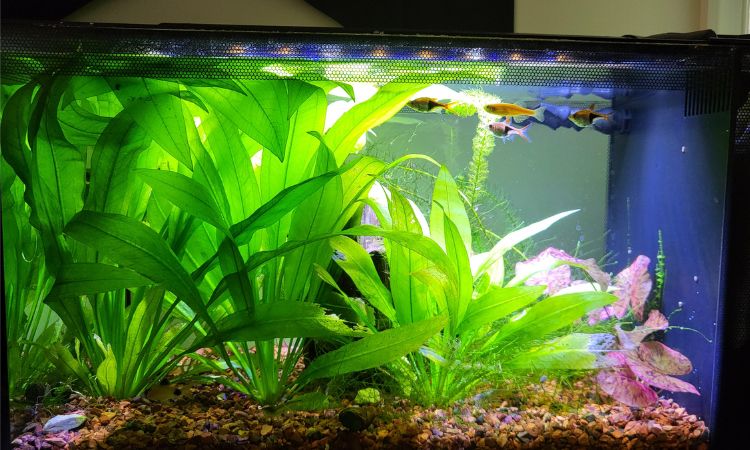
Amazon swords are robust rooted plants that can grow successfully in gravel, but they have considerably greater nutritional demands than Anubias or Java fern. The gravel provides physical support while the plant’s extensive root system develops through the substrate.
Because sword plants can become large, they are generally better suited to medium or large aquariums. A healthy specimen can eventually produce numerous broad leaves that make it an effective background or centerpiece plant.
Planting Method
Carefully spread the roots through the gravel and cover them without burying the crown. The central growing point must remain above the substrate so new leaves can emerge normally.
If the roots are densely packed, avoid forcing them into a tiny planting hole. A wider opening allows you to position the root system naturally before replacing the gravel around it.
Nutrient Requirement
Amazon swords are heavy root feeders and generally perform best when their substrate contains an accessible supply of nutrients. In plain gravel, root tabs are a practical way to supplement the root zone.
There is no universal requirement to replace a root tab on an exact three- or four-month schedule because fertilizer longevity varies by product and aquarium conditions. Follow the specific manufacturer’s dosing instructions and monitor the plant rather than relying on a fixed calendar. Yellowing or increasingly pale new growth can be one indication that nutrition needs closer attention, although lighting and other nutrient deficiencies can produce similar symptoms.
| Amazon sword factor | Practical guideline |
| Substrate | Gravel is suitable with supplemental nutrition |
| Planting | Bury roots, expose the crown |
| Nutrition | Strongly benefits from root feeding |
| Root tabs | Use according to product directions |
| Lighting | Moderate light is commonly suitable |
| Growth | Moderate to fast under good conditions |
| Mature size | Large |
| Difficulty | Easy to moderate |
5. Java Moss (Taxiphyllum barbieri)
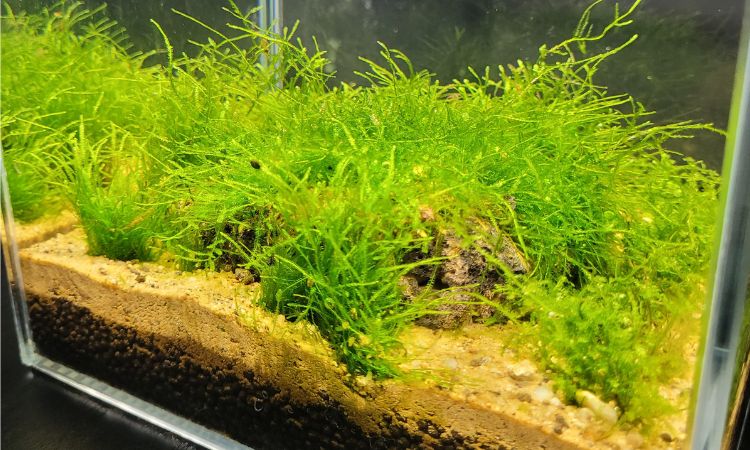
Java moss is one of the easiest ways to add greenery to a gravel-based aquarium because it does not depend on a conventional root system. Rather than growing from buried roots, it attaches itself to surfaces using fine structures called rhizoids. It can therefore grow across gravel, rocks, driftwood, and other aquarium decorations without needing a nutrient-rich substrate.
Although Java moss can survive simply resting over gravel, it generally establishes more securely when given a stable surface to attach to. Over time, it can form a dense mat that adds texture to otherwise bare areas of the aquarium.
Planting Method
Spread small portions loosely across the gravel or attach them to rocks and driftwood with aquarium-safe thread or a small amount of cyanoacrylate gel. Avoid piling a thick layer of moss on top of itself, as the inner portions can receive less light and water movement.
Regular trimming helps keep the growth compact and prevents debris from accumulating inside the mat. Small fragments can also establish elsewhere in the aquarium, so keep this in mind when pruning.
Bonus Benefit: Dense Java moss provides useful structure for fry, juvenile fish, and dwarf shrimp. Tiny aquatic organisms can move through the foliage, while newly hatched animals gain additional places to hide from larger tank mates.
| Java moss factor | Practical guideline |
| Substrate | Gravel, rock, or wood |
| True roots | No |
| Planting | Spread over gravel or attach to hardscape |
| Lighting | Low to moderate |
| Growth | Moderate |
| Fertilization | Benefits from nutrients in the water column |
| Maintenance | Occasional trimming |
| Best feature | Dense cover for small livestock |
| Difficulty | Very easy |
6. Vallisneria (Tape Grass)
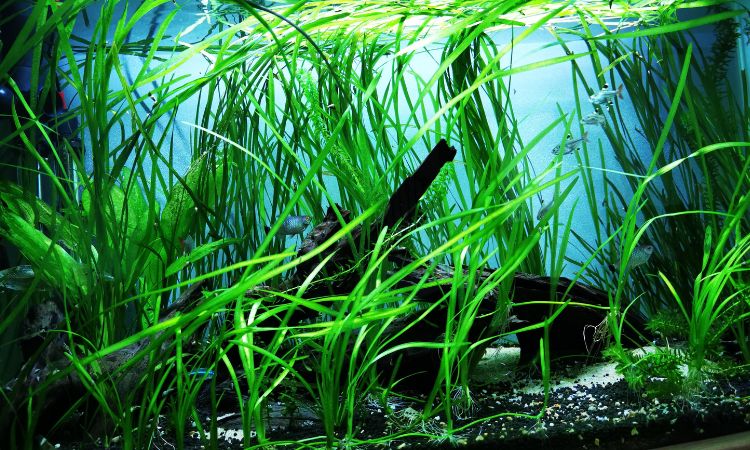
Why It Works in Gravel: Vallisneria is a rooted aquatic plant that can establish particularly well in gravel. Once its root system becomes established, the plant can spread horizontally by producing runners that develop into new plants.
This natural propagation makes Vallisneria useful when you want to create a tall background planting without purchasing large numbers of specimens. Depending on the species and growing conditions, the leaves can form a dense vertical backdrop that also provides visual separation within the aquarium.
Planting Method
Place the roots beneath the gravel while keeping the crown—the point where the leaves emerge—at or just above the substrate surface. Planting the crown too deeply can interfere with healthy growth.
Give individual plants some space rather than packing them tightly together. This allows water movement around the foliage and gives new runners room to develop.
Nutrient Requirement
Vallisneria can obtain nutrients from both the substrate and water column, although rooted plants generally benefit from adequate nutrition around their roots. In inert gravel, an appropriate root-tab fertilizer can provide additional nutrients, while a balanced water-column fertilizer may supplement elements available through the leaves.
Vallisneria does not require a specialized aquasoil substrate to grow, but its performance will depend on lighting, available nutrients, water chemistry, and overall aquarium conditions.
| Vallisneria factor | Practical guideline |
| Substrate | Gravel works well |
| Planting | Cover roots while keeping crown exposed |
| Propagation | Horizontal runners |
| Lighting | Low to moderate, depending on species |
| Nutrition | Root and water-column nutrients can both contribute |
| Growth | Moderate to fast |
| Maintenance | Thin runners and remove damaged leaves |
| Best feature | Tall background growth |
| Difficulty | Easy |
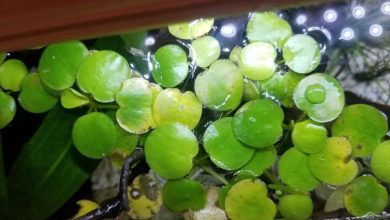
7. Water Sprite (Ceratopteris thalictroides)
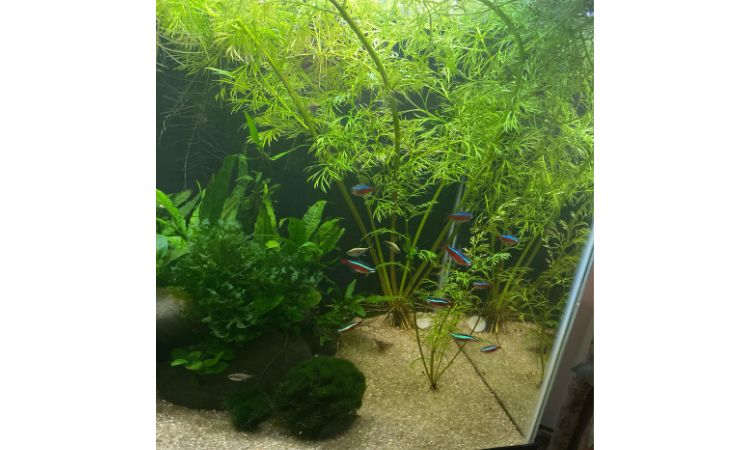
Water Sprite is a particularly versatile choice because it can either be planted in the substrate or allowed to float freely. When planted, it develops roots that anchor it in gravel; when floated, its foliage remains near the surface and can grow rapidly under favorable conditions.
Its relatively fast growth can help remove dissolved nutrients from the water column. This can be useful in aquariums with a substantial nutrient load, although live plants should not be relied upon as the sole method of controlling ammonia, nitrite, nitrate, or algae.
Planting Method
If you want Water Sprite to grow as a background or midground specimen, gently place the roots into the gravel and cover them while keeping the central growing point exposed. Avoid crushing the stems or burying too much of the plant.
Alternatively, simply allow the plant to float. Floating specimens often have excellent access to light and atmospheric carbon dioxide, which can support vigorous growth.
Water Quality Perk
Rapidly growing plants can consume nitrogen and other nutrients from the water as they produce new tissue. Water Sprite can therefore be useful as part of a broader nutrient-management strategy.
However, rapid plant growth does not automatically prevent algae. Algae can still appear when light, nutrients, and maintenance are poorly balanced. Regular water changes, appropriate feeding, reasonable lighting, and removal of excess plant growth remain important.
| Water Sprite factor | Practical guideline |
| Substrate | Gravel or no substrate |
| Planting | Root into gravel or float |
| Lighting | Low to moderate |
| Growth | Fast under favorable conditions |
| Nutrient uptake | Strong water-column uptake |
| Maintenance | Frequent trimming may be necessary |
| Best feature | Versatile, fast-growing cover |
| Difficulty | Easy |
8. Marimo Moss Ball
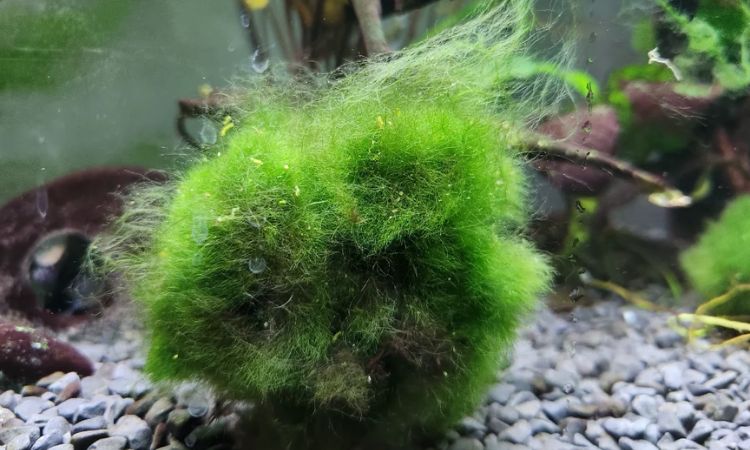
Marimo moss balls are different from the other plants on this list because they are not actually moss or a conventional aquarium plant. They are spherical growth forms of the filamentous freshwater alga Aegagropila linnaei.
They require no planting technique and can simply rest on the gravel. Their compact shape adds a different texture to planted aquariums, particularly when you want greenery without committing to rooted plants.
Maintenance Level
Care is relatively simple. During routine water changes, gently roll or rotate the ball occasionally if you want to encourage a more even shape. It can also be gently rinsed in removed aquarium water if debris accumulates.
Avoid squeezing it aggressively or exposing it to sudden changes in temperature or water chemistry. If the aquarium receives excessive light and develops elevated temperatures, the marimo may struggle.
Light Needs
Marimo generally does well under low to moderate light and does not require intense illumination. Indirect or subdued lighting is often preferable to placing it directly beneath a very strong aquarium lamp for extended periods.
Because it is algae rather than a vascular plant, its care differs from species such as Vallisneria or Amazon swords. It does not need to be planted in nutrient-rich gravel, and its slow growth means it should not be expected to provide substantial nutrient removal from the aquarium.
| Marimo factor | Practical guideline |
| Substrate | Can rest directly on gravel |
| Planting | None required |
| True aquatic plant | No; it is a filamentous alga |
| Lighting | Low to moderate |
| Growth | Very slow |
| Maintenance | Occasional rotation and gentle cleaning |
| Fertilization | Usually unnecessary |
| Best feature | Simple, compact greenery |
| Difficulty | Very easy |