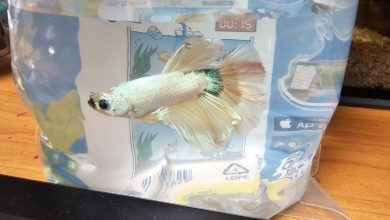
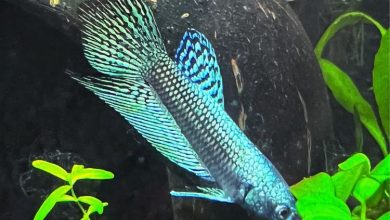
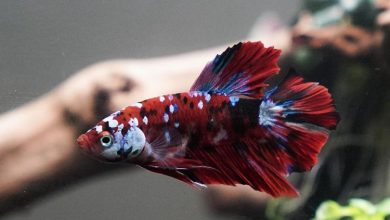
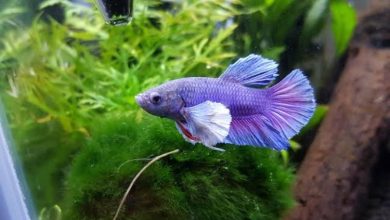
Few freshwater fish capture attention quite like the Halfmoon Betta. Famous for its spectacular 180-degree fan-shaped tail and graceful, flowing fins, this selectively bred form of Betta splendens has become one of the most admired centerpiece fish in the aquarium hobby.
Whether displaying brilliant solid colors, intricate butterfly patterns, or eye-catching marble designs, a healthy Halfmoon Betta brings elegance and personality to any aquarium. In this complete guide, you’ll learn everything you need to know about Halfmoon Betta fish, including their care requirements, lifespan, temperament, color varieties, and practical tips for choosing a healthy specimen.
What Is a Halfmoon Betta Fish?
The Halfmoon Betta is one of the most recognizable and admired varieties of Betta splendens, prized for its dramatic fins, brilliant colors, and engaging personality. While all Halfmoon Bettas belong to the same species as other Siamese fighting fish, they have been selectively bred to produce an impressive tail that opens into a near-perfect 180-degree semicircle when fully flared. This combination of graceful movement and vibrant appearance has made the Halfmoon one of the most popular centerpiece fish in freshwater aquariums.
Although they’re undeniably beautiful, Halfmoon Bettas are much more than ornamental fish. They are intelligent, interactive, and surprisingly curious pets that often recognize their owners, investigate activity outside the tank, and quickly learn feeding routines.

Origin and History
The ancestors of today’s Halfmoon Betta originated in the shallow freshwater habitats of Thailand, Cambodia, Vietnam, Laos, and parts of Malaysia. In the wild, these fish inhabit slow-moving or still waters such as rice paddies, marshes, floodplains, canals, and densely vegetated streams.
These environments are naturally warm and often contain low levels of dissolved oxygen. To survive in these conditions, bettas evolved a specialized breathing structure called the labyrinth organ, allowing them to breathe atmospheric air directly from the water’s surface. This unique adaptation helps explain why bettas frequently swim upward for a gulp of air, even in well-oxygenated aquariums.
The Halfmoon variety itself is a relatively modern development. Through decades of careful selective breeding—primarily by breeders in Thailand—enthusiasts focused on producing fish with wider tail spreads, improved fin symmetry, stronger body structure, and increasingly vibrant colors. Their efforts eventually produced the spectacular 180-degree tail that defines the Halfmoon Betta today.
Modern breeding has also introduced hundreds of color combinations and patterns, including solid reds, metallic blues, butterfly, marble, koi, dragon scale, copper, and many other designer varieties.
Key Physical Characteristics
The defining feature of the Halfmoon Betta is its large caudal (tail) fin, which forms an almost perfect half-circle when the fish flares its fins. A true show-quality Halfmoon displays a tail spread approaching 180 degrees, creating an elegant fan-like silhouette that distinguishes it from other betta varieties.
In addition to the impressive tail, Halfmoon Bettas typically feature:
- Long, flowing dorsal, anal, and ventral fins.
- A streamlined body measuring about 2.5 to 3 inches as an adult.
- Brilliant colors ranging from solid shades to intricate multicolor patterns.
- Iridescent scales that shimmer under changing light.
- A small upturned mouth adapted for feeding near the water’s surface.
Male Halfmoon Bettas generally develop longer fins, richer coloration, and more dramatic displays than females. Female Halfmoons usually have shorter fins but can still exhibit beautiful colors and the characteristic Halfmoon tail shape.
Temperament and Personality
Despite their elegant appearance, Halfmoon Bettas are famous for their bold personalities and territorial instincts.
Male Halfmoon Bettas are highly territorial and should almost always be housed alone. When two males encounter one another, they typically flare their fins, spread their gill covers, and may fight aggressively if given the opportunity. For this reason, keeping multiple males in the same aquarium is not recommended.
Females are generally less aggressive than males and, in some cases, experienced aquarists successfully maintain carefully managed sororities. However, these setups require appropriate tank size, heavy planting, multiple hiding places, and close monitoring to minimize conflict.
Although territorial, Halfmoon Bettas are also remarkably interactive. Many owners notice their fish swimming to the front of the tank during feeding time, following movement around the room, or investigating new decorations added to the aquarium. Their curiosity and responsiveness make them feel more like interactive pets than passive display fish.
Providing a spacious, heated, and well-maintained aquarium with gentle filtration, live plants, and plenty of resting spots allows a Halfmoon Betta to display both its stunning appearance and its engaging personality. With proper care, these remarkable fish can become the unmistakable centerpiece of any freshwater aquarium.
Halfmoon Betta Colors and Tail Variations
One of the biggest reasons Halfmoon Bettas have become favorites among aquarium hobbyists is the incredible range of colors and patterns available today. Decades of selective breeding have transformed the wild brownish-green Betta into a living work of art, with everything from bold solid colors to intricate metallic and marbled designs. While every Halfmoon shares the same signature 180-degree tail spread, each fish has its own unique combination of color, pattern, and iridescence.
Common Color Morphs
Halfmoon Bettas are available in virtually every color imaginable, but a handful of classic morphs remain especially popular among hobbyists.
Solid Red
Solid red Halfmoon Bettas are timeless favorites. High-quality specimens display a rich, uniform crimson color that extends evenly from the body to the tips of the fins without pale patches or discoloration. Competition-grade fish are valued for their deep saturation and consistent pigmentation.
Blue
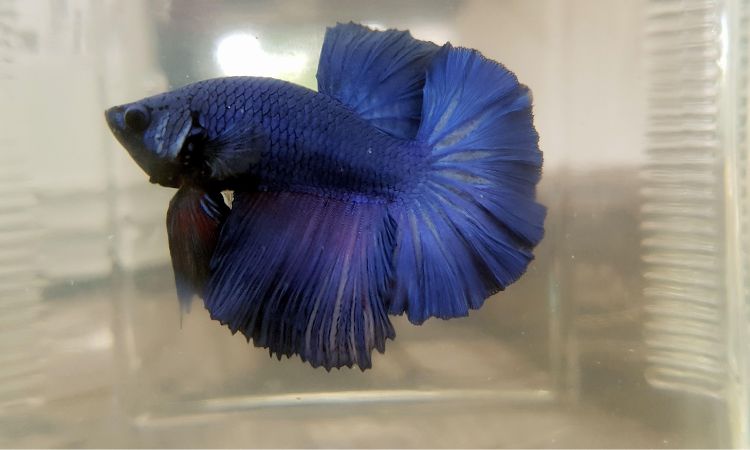
Blue Halfmoon Bettas come in several distinct shades, including royal blue, steel blue, and turquoise. Depending on the lighting, their scales often shimmer with iridescent reflections that shift between blue, teal, and violet, giving the fish a constantly changing appearance.
Black Orchid
Black Orchid Halfmoons combine a velvety black body with iridescent blue or metallic highlights throughout the fins. The dramatic contrast creates one of the most elegant and sought-after color combinations in the hobby.
Dragon Scale
Dragon Scale Halfmoon Bettas feature thick, metallic scales that resemble polished armor. Their bodies often appear coated in white, silver, gold, blue, or copper plating, while the fins provide striking contrast in red, black, blue, or other bold colors. This distinctive appearance has made Dragon Scale varieties extremely popular among collectors.
Cellophane
Cellophane Halfmoon Bettas have nearly transparent fins and pale bodies with only subtle hints of pink, cream, or light blue. Their delicate appearance stands out beautifully in planted aquariums where natural lighting highlights their translucent fins.
Koi and Marble
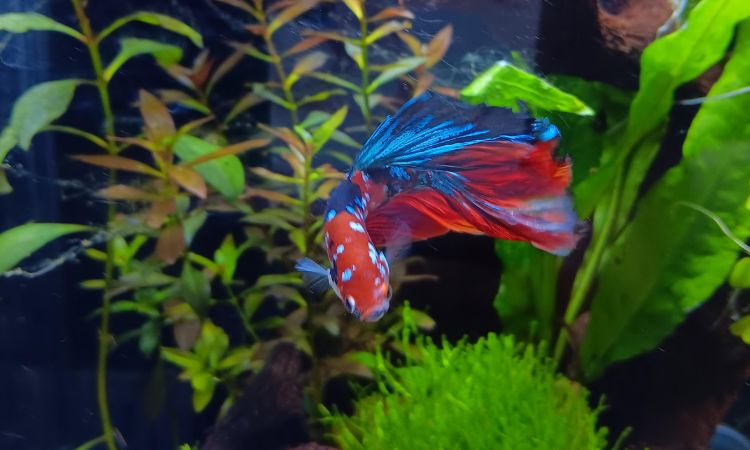
Koi and Marble Halfmoon Bettas are prized because no two fish look exactly alike. These varieties display irregular patches of red, orange, white, black, blue, or yellow that resemble ornamental koi carp or abstract artwork. Many Marble Bettas continue changing color as they mature due to a genetic trait commonly known as the “marble gene,” making them especially fascinating to watch over time.
Understanding Color Variations
Beyond basic colors, Halfmoon Bettas display several unique visual effects created by specialized pigment cells and selective breeding.
Iridescent Colors
Many Halfmoon Bettas possess iridescent scales that reflect light rather than producing a fixed color. As the fish changes position, its body may shift from sapphire blue to turquoise or even purple. This optical effect is one reason photographs rarely capture their full beauty.
Metallic Sheens
Metallic varieties contain reflective pigment layers that create a bright, almost mirror-like finish. Copper, platinum, gold, and metallic lavender Bettas are excellent examples. Under aquarium lighting, these fish often appear to glow, especially against darker backgrounds.
Multicolor Varieties
Multicolor Halfmoon Bettas combine three or more distinct colors across the body and fins. Popular examples include:
- Galaxy patterns with sparkling, star-like markings.
- Candy Bettas featuring bright pastel combinations.
- Nemo Bettas with vivid orange, red, yellow, and black coloration.
- Fancy Bettas displaying unpredictable mixes of multiple colors.
Each fish develops its own unique arrangement, making multicolor Halfmoons especially appealing to collectors looking for one-of-a-kind specimens.
Cambodian Types
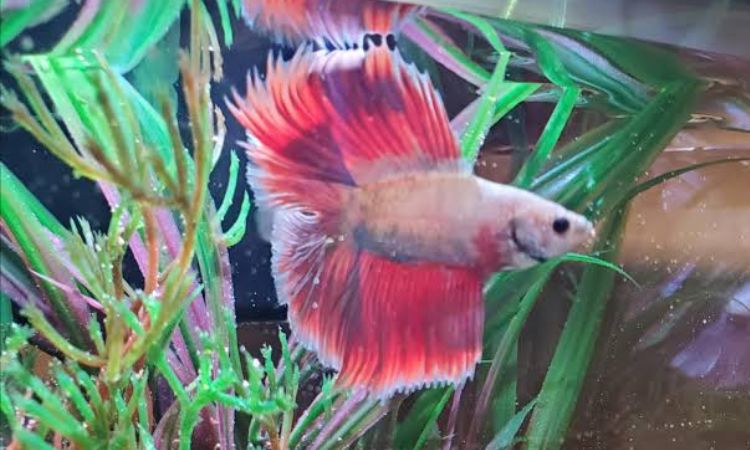
Cambodian Halfmoon Bettas are recognized by their pale or flesh-colored bodies paired with brightly colored fins. Traditionally associated with red fins, modern breeding has expanded this variety to include blue, yellow, orange, black, and multicolored fin combinations. Their high-contrast appearance remains one of the most recognizable Betta color patterns.
Vibrant Color as a Sign of Good Health
A Halfmoon Betta’s coloration often provides valuable clues about its overall health and living conditions. While genetics determine its natural colors, proper care allows those colors to reach their full potential.
Healthy Halfmoon Bettas typically display:
- Bright, saturated coloration.
- Fully extended, undamaged fins.
- Strong activity levels and curiosity.
- Clear eyes and smooth, intact scales.
Conversely, dull colors, fading pigmentation, or persistent stress stripes may indicate underlying problems such as poor water quality, improper temperature, illness, chronic stress, or inadequate nutrition.
Fin condition is equally important. Frayed edges, ragged fins, blackened tissue, or receding fin margins can be early signs of fin rot, a bacterial infection commonly triggered by poor water quality or injury. Addressing the underlying cause early—through regular water changes, stable water parameters, proper filtration, and a high-quality diet—often prevents minor damage from becoming a serious health problem.
Maintaining clean, heated water with stable parameters allows Halfmoon Bettas to display their brightest colors while supporting healthy fin growth. In many cases, improved husbandry leads to noticeably richer coloration within just a few weeks, making vibrant colors one of the clearest indicators that a Betta is thriving in its environment.
Ideal Tank Setup and Environment
Creating the right environment is one of the most important steps in keeping a Halfmoon Betta healthy. Their oversized fins, curious nature, and tropical origins mean they thrive in a stable, thoughtfully designed aquarium rather than a small bowl or vase. A properly equipped tank not only enhances their colors but also reduces stress, encourages natural behaviors, and supports a longer lifespan.
Minimum Tank Size
Although Halfmoon Bettas are often sold in cups at pet stores, they need far more space than many people realize. A 5-gallon aquarium should be considered the minimum size for a single adult Halfmoon Betta, while 10 gallons or larger provides an even better environment.
A larger aquarium offers several important advantages:
- More stable water temperature and chemistry.
- Greater swimming space without overwhelming the fish.
- Room for live plants, decorations, and natural enrichment.
- Easier maintenance due to slower waste buildup.
- Lower stress levels from a more natural environment.
Male Halfmoon Bettas should always be housed individually because they are highly territorial toward other males. Females can sometimes be kept in carefully managed sororities, but this requires larger aquariums, compatible fish, and close supervision, making it unsuitable for beginners.
Water Parameters
Stable water conditions are far more important than chasing exact numbers. Sudden fluctuations in temperature or water chemistry can weaken a Betta’s immune system and increase its susceptibility to disease.
Recommended water parameters include:
- Temperature: 78–80°F (25.5–26.5°C), with an acceptable range of 76–82°F (24–28°C).
- pH: 6.5–7.5, though healthy Bettas can adapt to slightly broader ranges if conditions remain consistent.
- Ammonia: 0 ppm.
- Nitrite: 0 ppm.
- Nitrate: Ideally below 20 ppm.
- Moderate water hardness is generally well tolerated.
Always treat tap water with a quality water conditioner before adding it to the aquarium to remove chlorine, chloramine, and harmful heavy metals.
Perform regular water changes—typically 20–30% each week—to maintain excellent water quality and minimize waste buildup.
Filtration
A filter is essential for maintaining clean, healthy water, but Halfmoon Bettas require gentle water movement because their long, flowing fins create extra drag while swimming.
The ideal filtration system should:
- Produce a low, adjustable flow.
- Provide effective biological filtration for beneficial bacteria.
- Remove suspended debris without creating strong currents.
Sponge filters are excellent choices for Betta aquariums because they provide gentle circulation while supporting a healthy biological filter. Hang-on-back filters with adjustable flow or pre-filter sponges can also work well when properly configured.
Strong currents may force a Halfmoon Betta to constantly fight the flow, leading to exhaustion, torn fins, and chronic stress.
Decor and Substrate
Halfmoon Bettas naturally inhabit heavily vegetated waters, so they appreciate aquariums filled with plants and places to explore.
An ideal setup includes:
- Live plants such as Anubias, Java Fern, Amazon Sword, Cryptocoryne, or floating plants.
- Silk plants if live plants are not practical.
- Smooth driftwood or rounded rocks without sharp edges.
- Caves, tunnels, or decorations that provide shaded resting spots.
- Broad plant leaves or Betta hammocks where they can rest near the surface.
Avoid decorations with rough or jagged edges, as Halfmoon Bettas’ large fins can easily tear when brushing against abrasive surfaces.
For substrate, both fine gravel and aquarium sand work well. Dark-colored substrates often enhance a Betta’s natural coloration while creating a more natural-looking aquarium.
Leaving some open swimming space is just as important as providing cover, allowing the fish to comfortably display its impressive fins.
Lighting
Moderate lighting is ideal for most Halfmoon Betta aquariums.
Proper lighting offers several benefits:
- Enhances the fish’s vibrant colors and iridescent scales.
- Supports healthy growth of live aquarium plants.
- Helps establish a consistent day-and-night cycle that promotes natural behavior.
Aim for approximately 8–10 hours of light per day, using a timer if possible to maintain a regular schedule.
Avoid leaving aquarium lights on continuously, as excessive lighting may encourage algae growth and disrupt your Betta’s natural rest cycle. Likewise, placing the aquarium in direct sunlight should be avoided because it can cause rapid temperature fluctuations and excessive algae blooms.
With warm, stable water, gentle filtration, abundant plant cover, and a thoughtfully arranged aquascape, a Halfmoon Betta will feel secure enough to display its full personality—from exploring every corner of the tank to confidently flaring its spectacular 180-degree tail.
Diet and Nutrition
A balanced, high-protein diet is essential for keeping a Halfmoon Betta healthy, active, and colorful. As carnivores, these fish require foods rich in animal protein rather than plant-based ingredients. Feeding the right foods in appropriate portions supports healthy fin growth, a strong immune system, and a longer lifespan while reducing the risk of digestive problems.
What Do They Eat?
In the wild, Halfmoon Bettas feed primarily on insects, mosquito larvae, tiny crustaceans, and other small aquatic invertebrates. Their captive diet should closely mimic these natural feeding habits by focusing on protein-rich foods.
Best Foods
A varied diet provides the most complete nutrition. Good options include:
- High-quality Betta pellets as the daily staple.
- Frozen or freeze-dried bloodworms as an occasional treat.
- Frozen or live brine shrimp for additional protein.
- Daphnia to add variety and support healthy digestion.
Rotating several food types throughout the week helps provide balanced nutrition while keeping feeding interesting.
Feeding Schedule
Feed your Halfmoon Betta 1–2 times per day in small portions. Only offer as much food as the fish can eat within about 2 minutes, removing any uneaten food afterward to maintain water quality.
Avoid overfeeding, as it can lead to bloating, constipation, obesity, and swim bladder disease. If your Betta develops a swollen belly or has trouble swimming, reduce portion sizes and consider skipping one feeding day to allow its digestive system to recover.
Consistent, moderate feeding combined with a high-quality diet will help your Halfmoon Betta maintain vibrant coloration, healthy fins, and excellent overall condition.
How to Choose a Healthy Halfmoon Betta
Selecting a healthy Halfmoon Betta is one of the most important decisions you’ll make as a fish keeper. A well-conditioned fish is more likely to adapt quickly, resist disease, and develop its full color and finnage in a proper aquarium. Take a few minutes to observe the fish before making your purchase rather than choosing based on color alone.
What to Look For
A healthy Halfmoon Betta should be active, alert, and interested in its surroundings. Many healthy Bettas will swim toward the front of the tank or investigate movement outside the glass. While they do rest periodically, they should not remain motionless on the bottom or appear lethargic.
Examine the fins closely. They should be:
- Full and well-shaped.
- Free of tears or missing sections.
- Open naturally rather than tightly clamped.
- Clean around the edges with no fuzzy growth, blackened tissue, or signs of fin rot.
The fish’s body should appear well-proportioned—not overly thin or noticeably bloated. Healthy Bettas also have clear, bright eyes, smooth scales that lie flat against the body, and vibrant coloration. Slightly pale colors may simply reflect temporary stress, but extremely dull colors combined with inactivity can indicate poor health.
If possible, watch the fish swim for a minute or two. It should move smoothly without struggling to stay balanced or floating abnormally.
Where to Buy
You can find Halfmoon Bettas at both local fish stores and specialized online breeders, but the quality often varies.
Local fish stores allow you to inspect the fish in person before purchasing. You can evaluate its activity level, body condition, and fin quality, making it easier to identify a healthy specimen. Stores that keep Bettas in clean, heated containers generally produce healthier fish than those with poor maintenance.
Specialized online breeders often offer a much wider selection of colors, patterns, and show-quality bloodlines. Many also sell individual WYSIWYG (What You See Is What You Get) fish, meaning the Betta pictured is the exact one you’ll receive. Reputable breeders typically quarantine their fish before shipping and provide clear photos, health guarantees, and detailed care information.
Whether buying locally or online, choose sellers with strong customer reviews, healthy livestock, and transparent shipping or live-arrival policies.
Cost Expectations
Halfmoon Bettas are available at a wide range of prices depending on their genetics, coloration, finnage, and breeding quality.
- Standard pet store Halfmoon Bettas: typically $15–30.
- Higher-quality breeder specimens: generally $30–60.
- Premium WYSIWYG or imported show-grade Halfmoons: often $75–200 or more, especially for rare colors, exceptional fin symmetry, or championship bloodlines.
Rare color morphs such as Black Orchid, Dragon Scale, Koi, Galaxy, or high-quality Marble varieties often command higher prices than more common solid-colored fish.
For most hobbyists, a healthy, well-bred Halfmoon from a reputable breeder offers the best balance of quality, appearance, and value. Prioritizing health over rarity will almost always lead to a more rewarding long-term aquarium experience.